Midsection Weight Gain in Perimenopause: What Works
Struggling with midsection weight gain during perimenopause? Discover why it happens and learn science-backed strategies that actually work in 2026.
During perimenopause, midsection weight gain is driven primarily by declining estrogen shifting fat storage toward the abdomen and reducing lean mass, not merely by eating more or moving less. In the menopausal transition, waist circumference can rise about 1.0% per year while overall weight rises about 0.6% per year, so your clothes may feel tighter even when the scale barely changes.
You may recognize the pattern. A pair of trousers that fit comfortably last year now presses against your waist, yet your meals look familiar, your walks haven't disappeared, and your weight seems almost unchanged. It's easy to conclude that you've lost discipline, but that conclusion misses an important biological change.
Perimenopause can alter where your body stores fat, how much muscle you retain, and how much energy you use at rest. The useful question isn't, "How can I lose weight?" It's, "What is changing in my body, and which response matches that change?"
Table of Contents
- Why Your Belly Changes During Perimenopause
- The Science Behind Midsection Weight Gain
- What Drives Abdominal Fat Accumulation
- How to Tell What Your Waist Change Really Means
- Evidence-Based Strategies to Reduce Abdominal Fat
- How Lila Helps Track Symptoms and Build Sustainable Habits
- Your Next Steps for Managing Midsection Weight Gain
Why Your Belly Changes During Perimenopause
The scale can stay steady while the waistband changes. That pattern is common in perimenopause, and it often reflects a shift in body composition rather than a simple jump in body weight.
In the Study of Women's Health Across the Nation, researchers followed 543 premenopausal and early-perimenopausal women aged 42 to 52 with yearly measurements of weight, waist circumference, and body composition. Across follow-up, weight increased about 0.6% per year, while waist circumference increased about 1.0% per year. In other words, the waist changed faster than the scale. That helps explain why trousers can feel tighter even when body weight looks nearly unchanged.

A change in shape, not a failure of willpower
During perimenopause, declining ovarian estrogen shifts where fat is stored. Fat that once collected more around the hips and thighs may move toward the abdomen, while lean mass gradually declines. Those are different processes. One changes fat distribution. The other changes how much muscle you carry. Together, they can alter shape even before they change the number on the scale in an obvious way.
This is why a growing waist does not automatically mean, “I'm just gaining weight.” Part of what you are seeing may be fat redistribution, part may be muscle loss, and part may be temporary factors such as bloating or fluid shifts. The key is to follow trends, not react to a single day or a single waistband test.
That distinction matters medically as well as emotionally. A stable weight with a larger waist can point to changes worth paying attention to, especially if strength, sleep, activity tolerance, blood pressure, glucose, or lipids are changing too. More aggressive food restriction does not correct every cause of abdominal change, and it can miss the actual issue if the bigger shift is loss of muscle rather than gain in total body weight.
A larger waist deserves curiosity, not self-criticism. It may reflect fat redistribution, muscle loss, bloating, fluid changes, or several factors at once.
If you are unsure where you are in the transition, this guide to perimenopause versus menopause can help put these changes in context.
The Science Behind Midsection Weight Gain
You may notice a familiar pattern. Your weight is roughly the same, but your waistband feels tighter and your shape looks different. That can happen because abdominal change is not only about how much fat you carry. It is also about which kind of tissue is changing and where that tissue is being stored.
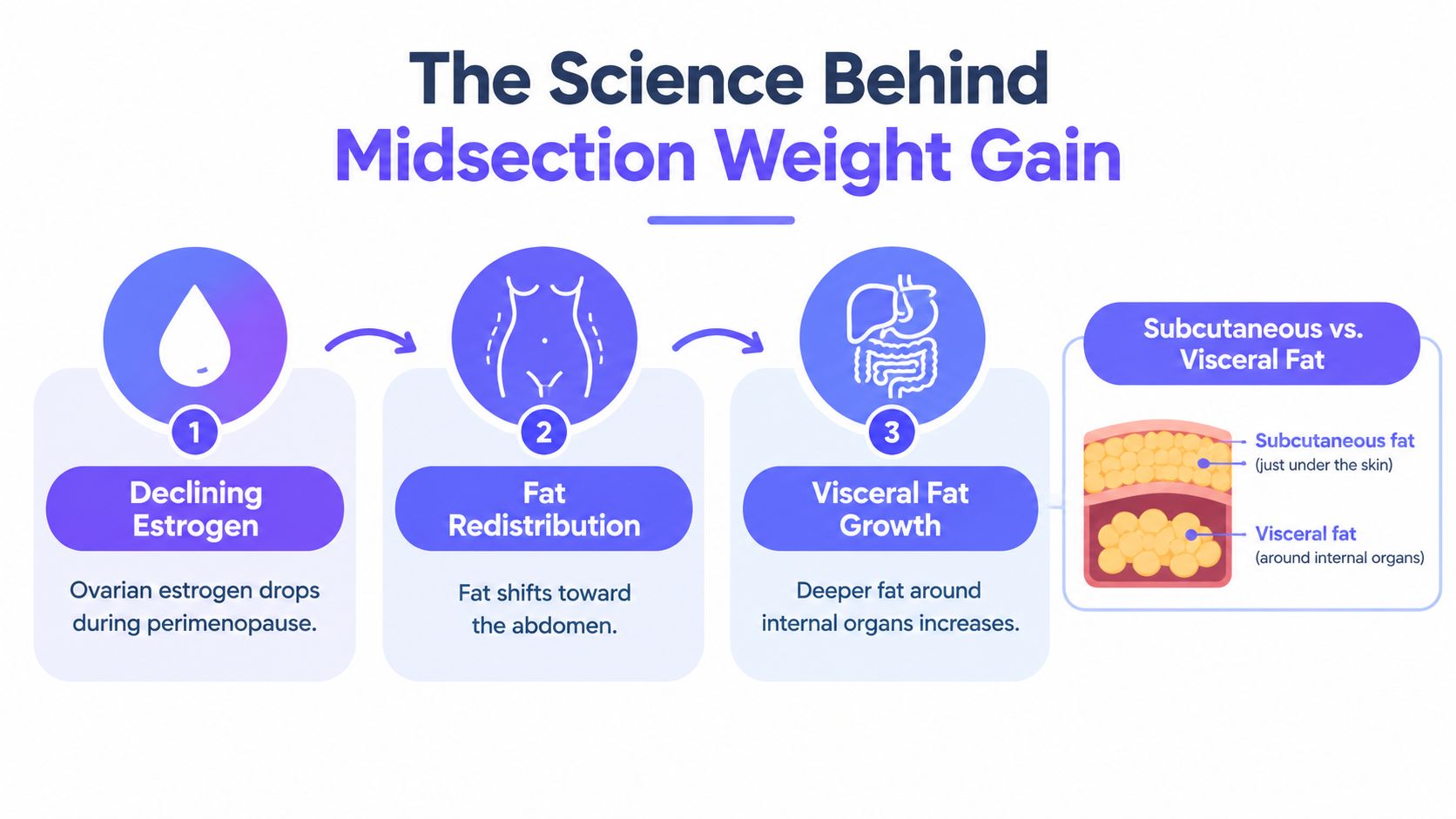
Estrogen affects fat storage well beyond the reproductive system. As ovarian estrogen declines during the menopausal transition, body fat tends to shift toward the abdomen, and fat-free mass can decline at the same time. In plain terms, the body may store more fat in the middle while carrying a little less muscle, even without a dramatic change in eating habits or total body weight.
Two types of abdominal fat
Subcutaneous fat sits under the skin. It is the softer layer you can usually pinch. It often changes how clothes fit, but a waist measurement by itself cannot tell you how much of that abdominal fullness comes from this layer.
Visceral fat sits deeper in the abdomen, around internal organs. It is more metabolically active than subcutaneous fat and is more closely linked with insulin resistance, abnormal blood lipids, inflammation, and cardiometabolic risk (review of menopause-related body-composition changes). Two people can have a similar waist size while having different mixes of subcutaneous fat, visceral fat, bloating, and muscle loss.
That is why the mirror has limits. You cannot look at your abdomen and tell which layer changed. Waist circumference is useful as a trend, not as a diagnosis. It becomes more meaningful when you consider blood pressure, glucose, lipids, strength, sleep, activity, and your overall health history.
Why the waist can change faster than weight
The key question is not only whether weight changed. It is whether body composition and fat distribution changed.
In longitudinal research summarized by UPMC summary of the research, women in the SWAN Michigan cohort had a 6% increase in waist circumference, a 10% increase in fat mass, and a 1% decrease in skeletal-muscle mass over the six years around the final menstrual period, after adjustment for chronological age. That combination helps explain why the waist may expand even when the scale change feels modest.
A broader evidence review also describes a shift in where fat is stored, with visceral fat making up a larger share of total body fat after menopause than before. So a stable or slowly changing weight can still come with a more noticeable abdominal change.
Calories still matter, but they do not explain the whole picture. They do not show whether the main trend is central fat storage, muscle loss, or both. For a fuller explanation of how these shifts affect energy use, see this guide to metabolism and menopause.
What Drives Abdominal Fat Accumulation
Estrogen decline is central, but it isn't the only contributor. Midsection weight gain usually develops through overlapping changes rather than one isolated cause.
When lean mass decreases, resting energy expenditure can fall because muscle tissue requires energy to maintain. You may still eat and exercise as you did before, but your body may use energy differently. At the same time, lower daily movement, interrupted sleep, hot flashes, fatigue, and stress can make it harder to preserve muscle and maintain the activity that once happened automatically.
The connected system
Think of the process as a set of linked adjustments:
- Fat redistribution: Declining estrogen favors more abdominal fat storage, including visceral fat.
- Lean-mass change: Reduced muscle can lower resting energy expenditure and affect strength.
- Activity change: Fatigue, joint discomfort, or poor sleep can reduce both structured exercise and everyday movement.
- Metabolic change: Visceral fat is associated with insulin resistance, abnormal blood lipids, inflammation, and cardiometabolic risk (review of menopause and adipose tissue).
- Symptom feedback: Night sweats, hot flashes, and mood changes may disrupt routines, appetite, and recovery.
This doesn't mean every woman with a larger waist has insulin resistance or excessive visceral fat. It means the waist shouldn't be interpreted in isolation. A change in abdominal shape may represent a combination of subcutaneous fat, visceral fat, muscle loss, bloating, and normal fluid variation.
A population-based study of 124 middle-aged women found that eating and physical-activity behaviors were inversely associated with metabolic inflammation through visceral fat, while physical activity most strongly weakened that relationship among less-active women (2025 study on visceral fat and inflammation). The finding supports a practical focus on movement and eating patterns, while also showing why simplistic “cortisol belly” explanations aren't enough. In that study, sleeping behavior wasn't indirectly associated with inflammation through visceral fat, so sleep matters for health and behavior, but it shouldn't be treated as the universal explanation for every waist change.
The aim isn't to find one villain. It's to identify which levers are changing for you. A visceral fat calculator can help organize questions, but it can't replace clinical assessment or imaging when a provider believes those are appropriate.
How to Tell What Your Waist Change Really Means
Start with a pattern, not a single morning measurement. Waist size can vary with meals, constipation, bloating, hydration, and the point in your menstrual cycle. Weight can fluctuate for similar reasons, while body composition changes slowly.
Measure under consistent conditions and record the result alongside weight, strength, activity, sleep, and symptoms. You're looking for direction over time, not a perfect number.
A practical comparison
| Cause | Typical signs | Best response |
|---|---|---|
| Visceral fat accumulation | Waist trend rises gradually, often with other metabolic concerns | Discuss blood pressure, glucose, lipids, and risk factors with a healthcare professional; prioritize resistance training and regular movement |
| Subcutaneous fat gain | Softer, pinchable tissue and a gradual change in clothing fit | Use sustainable nutrition and activity changes while protecting muscle |
| Bloating or gastrointestinal change | Abdomen varies noticeably through the day or after meals | Track food, bowel habits, symptoms, and triggers; seek medical advice for persistent or concerning symptoms |
| Muscle loss | Strength or physical capacity declines while weight may remain stable | Begin progressive resistance training and review protein intake with a qualified professional |
| Fluid shifts | Rapid changes over a short period, sometimes with swelling or cycle-related symptoms | Note timing and associated symptoms; contact a clinician for sudden, persistent, or unexplained changes |
Read several signals together
A stable scale with a growing waist and declining strength points toward a body-composition issue rather than simple total-weight gain. A fluctuating abdomen with meal-related discomfort points more toward bloating or gastrointestinal factors. A gradual waist increase accompanied by rising blood pressure or abnormal glucose or lipid results deserves medical attention, even if BMI changes very little.
BMI has limits because it doesn't show fat distribution or muscle mass. Home waist measurements have limits too. They can't distinguish visceral from subcutaneous fat and shouldn't be used to diagnose a disease.
Track the trend that changes your decision. If waist size rises while strength falls, protect muscle. If bloating dominates, investigate digestive patterns. If metabolic markers change, involve your clinician.
A structured menopause belly assessment can help you organize those observations before a medical appointment or lifestyle adjustment.
Evidence-Based Strategies to Reduce Abdominal Fat
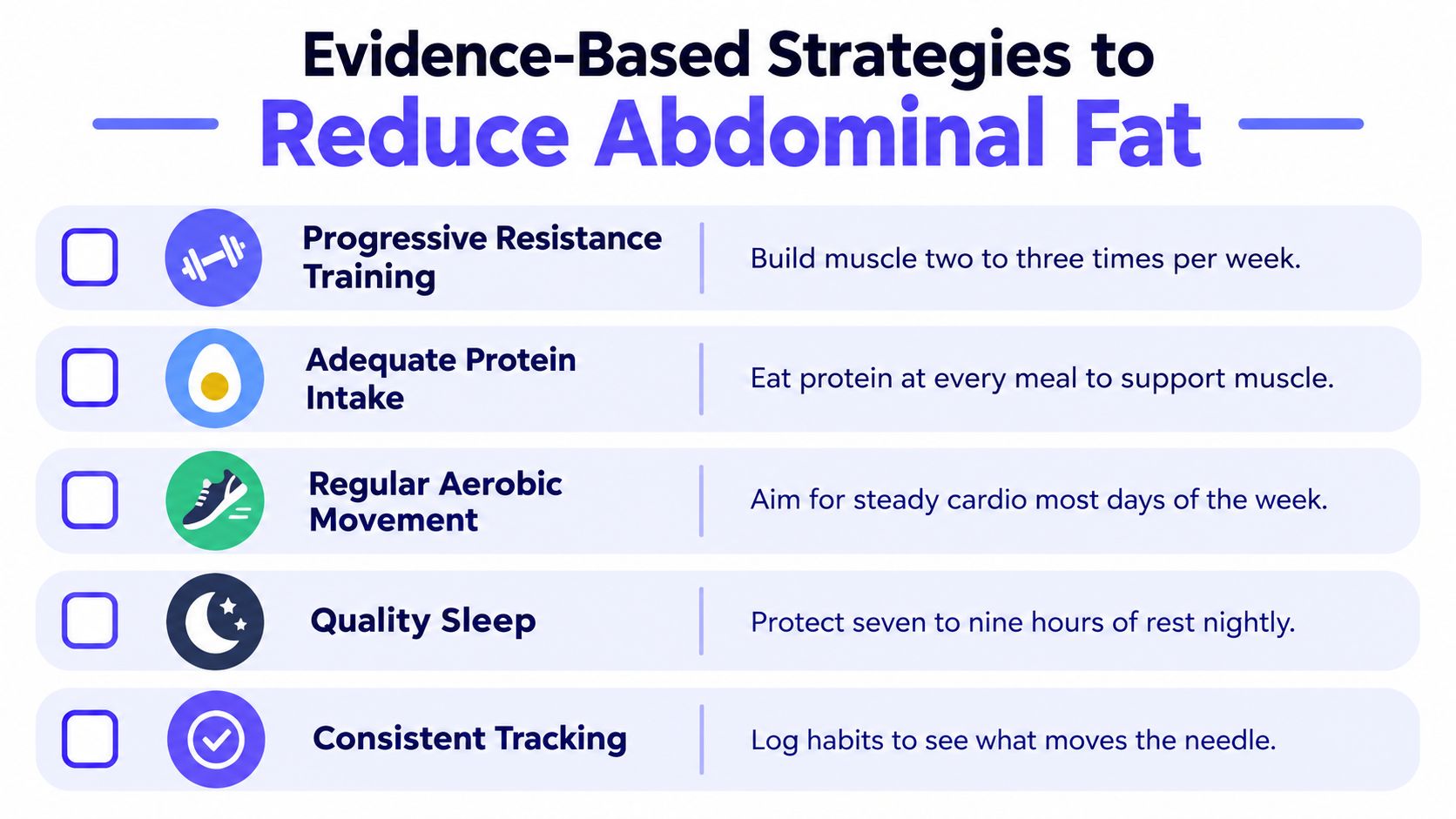
The most useful plan targets body composition, not just scale weight. Progressive resistance training deserves priority because it challenges the tissue most vulnerable to decline during midlife: skeletal muscle.
Start with strength
Use whole-body movements that train major patterns, such as squatting, hinging, pushing, pulling, and carrying. Begin at a manageable level and gradually add load, repetitions, or control. Two or more weekly sessions can create a practical foundation, especially when paired with regular aerobic movement.
A 12-week double-blind randomized trial in early postmenopausal women tested supervised progressive resistance training with transdermal estrogen or placebo. In the placebo group, total fat mass decreased 5.6% and visceral fat mass decreased 18.6%. The study found no statistically significant between-group difference for abdominal subcutaneous fat, showing that visceral and subcutaneous compartments can respond differently to the same intervention (randomized trial).
The result isn't a guarantee for every person, and the trial was small. It does support choosing progressive, whole-body resistance exercise over endless crunches. Abdominal exercises can strengthen your core, but they can't selectively remove belly fat.
▶ PlayBuild the rest of the plan around muscle
- Protein at meals: Include a reliable protein source at meals and adjust intake to your health needs, preferences, and guidance from a qualified professional.
- Aerobic movement: Walking, cycling, swimming, and other moderate activities support energy expenditure and cardiovascular fitness. Reducing prolonged sitting matters too.
- Sleep support: Treat sleep disruption as a practical barrier to recovery, appetite regulation, and activity. Address hot flashes, nighttime waking, and inconsistent routines rather than assuming poor sleep is a personal failure.
- Stress regulation: Breathing exercises, counseling, enjoyable hobbies, and social support may make consistent eating and movement easier. Don't reduce every abdominal change to cortisol.
- Medical review: Hormone therapy isn't a weight-loss intervention. It may affect symptoms, fat distribution, or metabolic markers for some women, but prescribing decisions depend on individual symptoms, risks, and goals.
For a broader practical resource on nutrition and movement, you can find fat reduction tips while keeping expectations realistic. No exercise, supplement, or food can promise spot reduction.
How Lila Helps Track Symptoms and Build Sustainable Habits
A plan often fails because the information is scattered. You may remember a poor night of sleep, a stressful day, a hot flash, or a skipped workout, but not see how those events relate to appetite, activity, bloating, or waist measurements.
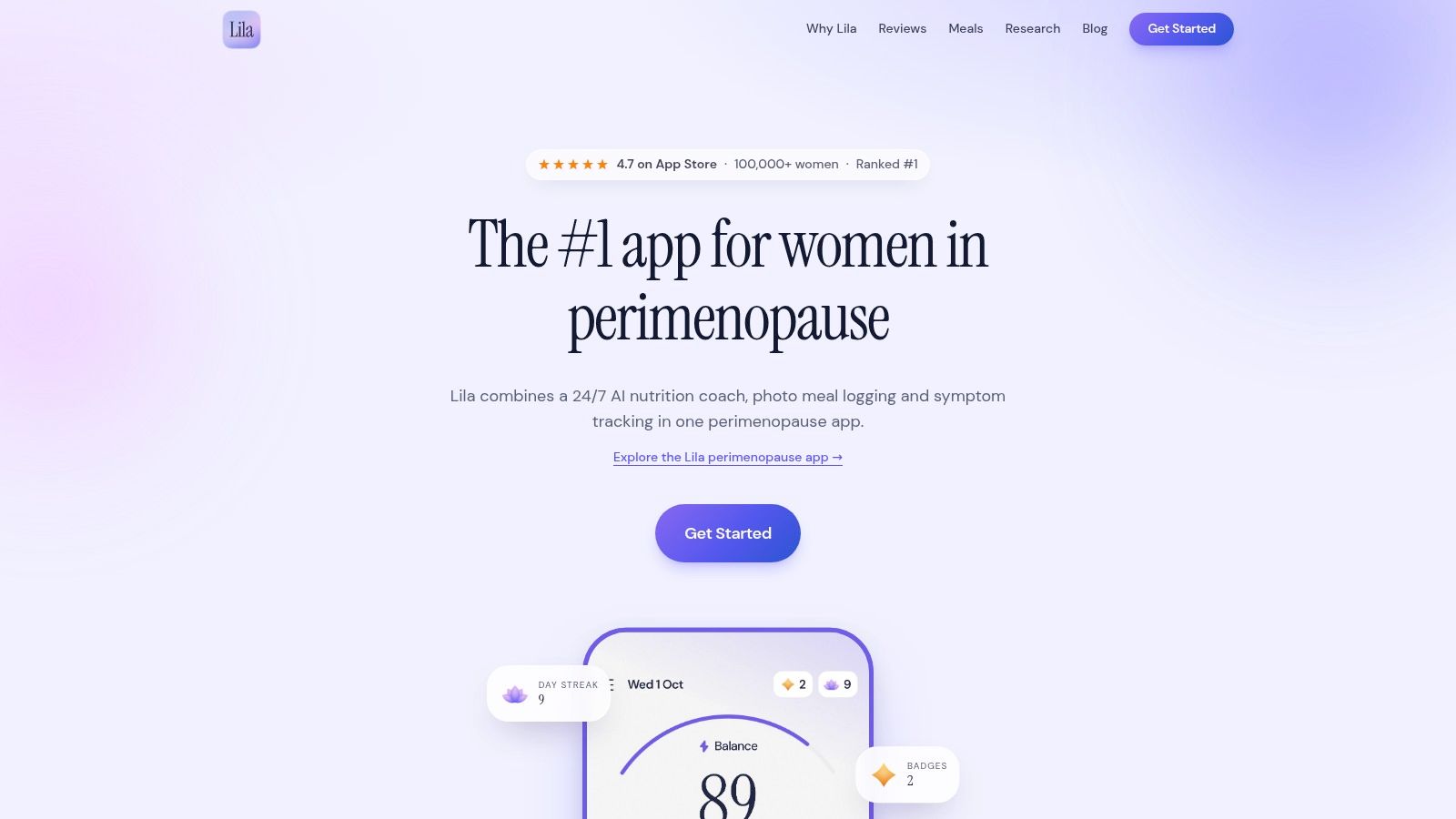
Lila brings daily check-ins, symptom tracking, meal logging, and a chat-based coach into one place. The value of that structure is not a magical explanation for midsection weight gain. It's the ability to notice patterns and make one informed adjustment at a time.
Turn observations into decisions
You might log fragmented sleep alongside fatigue and reduced activity, then notice that your waist measurement is stable but bloating is worse. Another pattern might show declining strength without major weight change, suggesting that resistance training and protein deserve more attention.
The app's symptom tracker can help centralize symptoms such as sleep disruption, mood changes, hot flashes, energy, meals, and cycles. That record can support better conversations with a healthcare professional, particularly when symptoms change over time.
A chat-based coach can also make the next step more concrete. Instead of trying to overhaul every habit, you can use a check-in to choose a manageable action, such as completing a strength session, planning a protein-containing meal, or recording how bloating changes across the day.
Tracking shouldn't become another source of pressure. Use it to answer practical questions:
- Which symptoms interfere with movement?
- Does poor sleep coincide with stronger hunger or lower activity?
- Is waist change gradual or highly variable?
- Is strength improving, stable, or falling?
- Which habit can you repeat this week?
That approach respects the complexity of perimenopause while keeping the focus on actions you can control.
Your Next Steps for Managing Midsection Weight Gain
Begin with measurement that informs rather than judges. Track waist circumference and weight under consistent conditions, then add strength, activity, sleep, bloating, symptoms, and relevant medical markers. Look for trends instead of reacting to one reading.
Next, protect lean mass. Schedule progressive resistance training and include protein regularly, adapting the plan to your fitness level and medical needs. Add aerobic movement and reduce long periods of sitting in ways you can repeat, not through punishment or exhaustion.
Treat sleep and stress as support systems for the plan. Address hot flashes, nighttime waking, persistent fatigue, or mood changes with a healthcare professional when they interfere with daily life. If your waist changes rapidly, symptoms are concerning, or blood pressure, glucose, or lipids shift, arrange a clinical review.
The goal isn't a perfectly flat stomach or rapid scale loss. A stronger body, better fitness, steadier energy, and lower metabolic risk are meaningful outcomes even when weight changes modestly. Perimenopause is a transition, not a sentence, and your strategy can change as your symptoms and body composition change.
Lila combines daily check-ins, symptom and meal tracking, personalized guidance, and a 24/7 chat-based coach to help you connect perimenopause symptoms with sustainable habits. Visit Lila to start tracking your patterns and create a more informed plan for managing midsection weight gain.
Get Lila, your personal coach for perimenopause.
Built for women in their 40s. 24/7 coaching, in your pocket.