
How to Relieve Perimenopause Symptoms: Your Complete Guide
Discover proven strategies for how to relieve perimenopause symptoms including hot flashes, sleep issues, and mood changes with practical daily plans.
Hot flashes affect up to 80% of women during the menopausal transition and last 7 to 10 years on average. The most useful way to relieve perimenopause symptoms is to combine symptom tracking, targeted lifestyle changes, and appropriate medical options rather than relying on one quick fix.
You may be waking after another night soaked in sweat, staring at the ceiling while your mind races, then trying to function through work, family responsibilities, bloating, irritability, and exhaustion. Perhaps you've already removed caffeine, bought supplements, or started exercising, yet your symptoms still seem to change without warning.
That unpredictability is one reason perimenopause can feel so difficult to manage. A strategy that helps one symptom may leave another untouched. Cooling the bedroom can reduce discomfort but won't necessarily address depression, medication effects, or persistent insomnia. Exercise may support sleep and mood, but frequent night sweats can still require clinical treatment.
The practical answer to how to relieve perimenopause symptoms is therefore an integrated plan. Track what happens, test specific changes, protect your sleep, and seek professional support when symptoms interfere with daily life.
Table of Contents
- Understanding Perimenopause Symptoms and Why They Matter
- Tracking Your Symptoms to Identify Personal Triggers
- Diet and Lifestyle Changes That Actually Reduce Symptoms
- Improving Sleep Quality During Perimenopause
- When to Consider Medical Options for Symptom Relief
- Building Your Personalized Perimenopause Action Plan
Understanding Perimenopause Symptoms and Why They Matter
Perimenopause doesn't arrive in a neat sequence. One month may bring irregular bleeding and anxiety, while the next brings night sweats, brain fog, or a sudden loss of energy. Hot flashes are especially disruptive because they can affect concentration during the day and repeatedly interrupt sleep at night.
A major review reports that hot flashes affect up to 80% of women during the menopausal transition, with an average duration of 7 to 10 years (The Menopause Society explains hot flashes and their duration). In the SWAN cohort, vasomotor symptoms rose from about 39% in the early transition to a 67% cumulative prevalence, showing that symptoms can intensify as perimenopause progresses.
That burden deserves more than reassurance to “wait it out.” If you're struggling to identify whether your symptoms fit perimenopause or another stage of the transition, comparing perimenopause versus menopause can help you organize the changes you're noticing before a healthcare appointment.
Why symptoms compound
Hot flashes, sleep disruption, mood changes, and weight concerns often reinforce one another. A night of broken sleep can lower your tolerance for stress, while stress may make a hot flash feel more intense. Fatigue can also make movement and meal planning harder, which may worsen energy and body-composition concerns.
This doesn't mean every symptom has one cause. Depression, chronic illness, medication effects, and sleep disorders can overlap with hormonal symptoms. The right plan starts by separating what happens, when it happens, and what affects your ability to function.
The practical starting point
Begin with the symptom that causes the greatest daily damage, not the one that's easiest to measure. For many women, that's waking at night. For others, it may be unpredictable hot flashes, anxiety, or bloating that makes work and social plans feel difficult.
A useful plan connects three actions:
- Observe: Record symptoms and possible triggers.
- Test: Change one or two relevant habits consistently.
- Escalate: Discuss medical options when self-care isn't enough.
That sequence replaces guesswork with information and makes clinical conversations far more specific.
Tracking Your Symptoms to Identify Personal Triggers
Symptom tracking works best when it's brief enough to continue. You don't need a detailed diary that takes half an hour each evening. A consistent check-in can reveal whether your most difficult nights follow alcohol, emotional stress, a late meal, a warm room, or a poor night of sleep.
What to record
Use a notes app, paper calendar, spreadsheet, or a dedicated tracker. Each day, capture:
- Hot flashes: Note the time, duration, intensity, and what you were doing immediately beforehand.
- Sleep: Record bedtime, waking time, night sweats, awakenings, and how refreshed you feel.
- Mood and stress: Add a short description of anxiety, irritability, low mood, or an unusually stressful event.
- Food and drinks: Include caffeine, alcohol, spicy meals, large evening meals, and hydration.
- Body signals: Track bloating, headaches, palpitations, energy, exercise, and cycle changes.
You're looking for repeatable associations, not proof that one food causes every flare. A symptom appearing after one cup of coffee doesn't establish a pattern. Repeated timing gives you a better reason to test a change.
Turn observations into experiments
Choose one variable at a time where possible. If evening hot flashes are common, try moving caffeine earlier, keeping the bedroom cooler, and using lighter layers. If you change everything at once, you may feel better but won't know which action helped.
Use a simple question at the end of each week: What happened before my hardest symptom, and what happened before my better days? That answer can guide the next experiment and give your clinician useful context. This practical guide to tracking perimenopause symptoms can help you create a repeatable routine.
A digital tracker may be useful if you want symptoms, meals, sleep, mood, energy, and cycles in one place. The advantage isn't the technology itself. It's the ability to see patterns without relying on memory, especially when poor sleep makes recall less reliable.
Use the video below as an additional prompt for building a consistent tracking and symptom-management routine.
▶ PlayPractical rule: Track enough to make a decision, not so much that tracking becomes another source of stress.
Diet and Lifestyle Changes That Actually Reduce Symptoms
Lifestyle changes can reduce the intensity or frequency of some symptoms, but they aren't interchangeable. Exercise may support hot flashes, mood, and sleep. Cooling strategies help during a flare. Removing a trigger can be useful for one woman and irrelevant for another.
Clinical guidance recommends at least 20 minutes of exercise most days to help hot flashes, alongside breathing exercises, yoga, and meditation (Cleveland Clinic outlines hot-flash management). Harvard Health describes paced respiration at about 6 to 8 breaths per minute as a technique that may help some women with menopausal symptoms.
Start with the changes most connected to your tracking data. A 20-minute walk after dinner may be more sustainable than an ambitious training plan. Slow, deep breathing when a hot flash begins can also give you a practical response instead of panic.
Match the change to the symptom
| Symptom | Lifestyle change | Expected impact |
|---|---|---|
| Hot flashes | Keep rooms cool, wear layers, drink cold water, and test reductions in alcohol, smoking, caffeine, or spicy foods | May reduce discomfort and make episodes easier to manage |
| Stress-related flares | Use slow breathing, yoga, meditation, or a short walk | Can improve your ability to respond to stress and symptom episodes |
| Low energy | Choose regular movement and balanced meals with adequate protein and fluids | Supports steadier daily energy |
| Bloating | Track meal timing, portions, hydration, and foods that repeatedly precede discomfort | Helps identify individual dietary patterns |
| Weight concerns | Combine regular activity with sustainable eating habits and clinical guidance where appropriate | May support symptom and metabolic goals |
Whole foods, adequate protein, fiber-rich choices, and hydration provide a useful foundation, but avoid treating a rigid diet as a cure. If alcohol reliably precedes night sweats, reducing it is a targeted experiment. If a food has no consistent relationship with symptoms, unnecessary restriction may add stress without benefit.
Mayo Clinic states that weight loss may help hot flashes and night sweats, particularly in early menopause for people with obesity (Mayo Clinic discusses perimenopause treatment options). That doesn't mean weight loss should be framed as the answer to every symptom. It means body composition, sleep, movement, and cardiometabolic health may deserve attention together.
For more ideas that distinguish practical self-care from overpromised remedies, review managing perimenopause naturally, then choose only the changes you can maintain.
Improving Sleep Quality During Perimenopause
Treating perimenopause sleep problems as generic insomnia often misses the driver. You may have difficulty falling asleep, wake because of a hot flash, become alert after checking the clock, or sleep poorly because depression, chronic illness, medication, or abdominal obesity is also affecting your nights.
A 2025 meta-analysis found that hot flashes increased the odds of sleep disorders, with an OR of 2.70. Depression was also associated with sleep disorders at OR 2.73, chronic disease at OR 1.39, and psychotropic drug use at OR 3.19 (the Frontiers in Neurology review discusses these risk factors). An NIH-hosted review summarized that 67.5% of perimenopausal women reported difficulty sleeping, while Harvard has noted that up to 70% report sleep problems during the transition.
Those figures point to a clinical distinction. If you wake drenched in sweat, cooling and hot-flash treatment matter. If you lie awake for a long time despite being comfortable, a structured CBT-style sleep intervention may be more relevant. If low mood or medication changes are present, address those rather than blaming every waking on hormones.
Build a cooler, steadier night
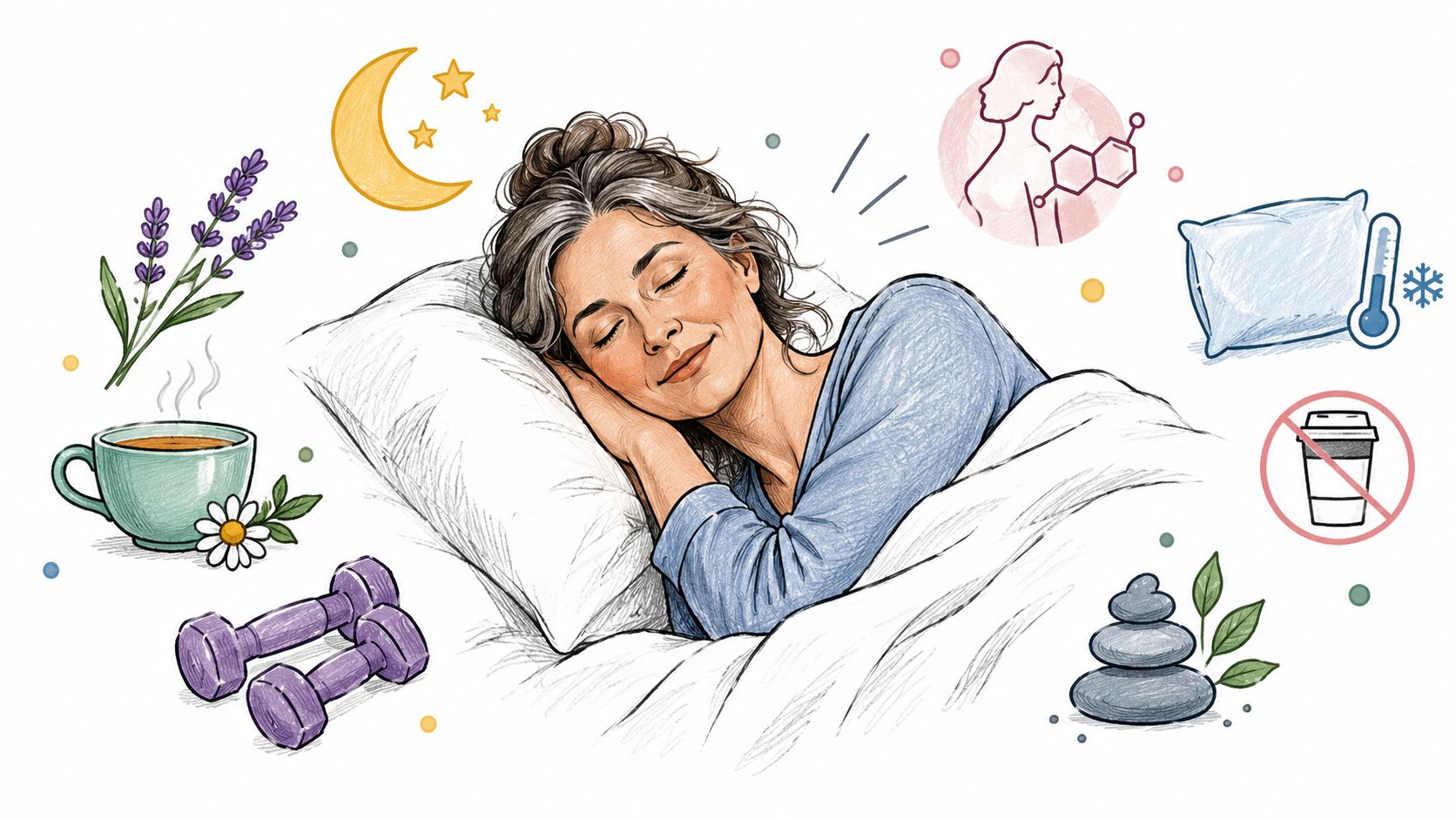
Keep your bedroom dark, quiet, and cool. Use breathable bedding, prepare a change of sleepwear if night sweats are common, and place cold water within reach. Layered clothing makes it easier to cool down without fully waking yourself.
Keep your sleep and wake times consistent, reduce evening screen exposure, and avoid caffeine after noon. Don't eat a large meal or drink alcohol immediately before bed, since both can make nighttime symptoms more difficult for some women.
Use the bed only for sleep and intimacy. If you're awake and frustrated, a calm, low-light activity can be more helpful than repeatedly checking the time. The aim is to rebuild the association between bed and sleep.
Some people also create a soothing evening routine with a warm shower and a nonessential sensory aid, such as nightly reset shower tablets. Treat this as a relaxation cue, not a treatment for hot flashes or insomnia.
Sleep insight: Repeated night waking is a symptom to investigate, not a personal failure in sleep hygiene.
If sleep remains poor, bring your tracker to a clinician. Ask whether hot flashes, depression, medication effects, restless legs, breathing-related sleep disorders, or another condition could be contributing. Improving sleep may require treating more than one factor.
When to Consider Medical Options for Symptom Relief
Self-care is appropriate for mild symptoms that respond to practical adjustments. It isn't a requirement to suffer through symptoms that repeatedly disrupt work, relationships, exercise, or sleep.
Hormone therapy has the strongest evidence for vasomotor symptoms. Multiple guidelines report about a 75% reduction in hot-flash frequency versus placebo, with severity dropping by roughly 87%, and benefits often appearing within about one month of starting treatment (this clinical review summarizes hormone-therapy evidence). Clinical summaries report 70% to 95% effectiveness across oral conjugated equine estrogen and transdermal estradiol.
Compare the trade-offs
Lifestyle approaches are low-risk for many people and can support overall health, but relief varies and may be incomplete when hot flashes are frequent or severe. They also require repeated effort, and avoiding triggers won't address every biological driver.
Medical options can provide stronger symptom control, but they require an individual risk assessment. A clinician should review your symptom pattern, medical history, contraindications, treatment route, dose, and whether a progestogen is needed when the uterus is present. Breast pain and uterine bleeding are common adverse effects to monitor.
Women who still have menstrual cycles may experience nuisance breakthrough bleeding with hormone therapy. That possibility doesn't automatically rule treatment out, but you should discuss what bleeding is expected, what requires assessment, and how long you're willing to trial an approach.
You can read more about what hormone therapy for menopause involves before your appointment. Ask about nonhormonal treatments too if hormone therapy isn't suitable or doesn't match your preferences.
Weight, sleep, mood, and cardiometabolic health also belong in the same conversation. A 2026 Medscape review highlighted obesity-related complications during perimenopause, including hot flashes, poor sleep, and mental health symptoms. Treating these factors together may produce a more durable plan than focusing on a single symptom.
Seek medical advice promptly for unusual bleeding, severe depression, chest pain, fainting, or new neurological symptoms. Don't assume a new or alarming symptom is hormonal just because you're in perimenopause.
Building Your Personalized Perimenopause Action Plan
A useful plan reduces decisions rather than creating another project. Choose one primary target, such as waking during the night, and one secondary target, such as afternoon fatigue or bloating. Keep other routines steady so you can see which change affects the pattern.
Use a weekly rhythm
Days one and two: Record your baseline. Note hot flashes, sleep interruptions, mood, energy, meals, caffeine, alcohol, activity, and cycle changes.
Days three through seven: Test one focused adjustment. Cool the bedroom, move caffeine earlier, add a 20-minute walk, or use paced breathing when a hot flash begins.
End of the week: Review the direction of change. One better night is encouraging, while repeated improvement gives you more confidence that the adjustment is useful.
Following week: Keep the habit that helps and test only one additional change. If symptoms remain severe, prepare a concise clinical summary instead of adding more supplements or restrictions.
A single tracking tool can bring symptoms, mood, sleep, energy, meals, and cycle changes together. Lila offers daily check-ins, personalized action plans, and chat-based coaching for perimenopause concerns. You can also use a paper diary or general health app. The best option is the one you will update consistently.
Keep supplements in perspective
A multivitamin can help fill nutritional gaps when your diet is limited, but it cannot explain persistent night sweats, depression, heavy bleeding, or disabling insomnia. If you are reviewing perimenopause multivitamin picks, check the ingredients with a clinician or pharmacist, particularly if you take medication or have a medical condition. Bring your recorded patterns to the appointment instead of a scattered list of symptoms. A full health assessment can help organize questions about sleep, mood, movement, nutrition, cycle changes, and symptom severity.
The aim is not perfect symptom control every day. It is a flexible system that shows you what to test, when to continue, and when to ask for more effective support.
Lila brings symptom, sleep, mood, energy, meal, and cycle tracking into one place, then turns check-ins into practical action steps and ongoing chat-based coaching. Visit Lila to identify patterns and build a perimenopause plan that fits your daily life.
Get Lila, your personal coach for perimenopause.
Built for women in their 40s. 24/7 coaching, in your pocket.