Perimenopause Symptom Relief: Feel Like Yourself Again
Find effective strategies for perimenopause symptom relief. Reclaim your well-being and feel like yourself again with real-world solutions.
 Michelle
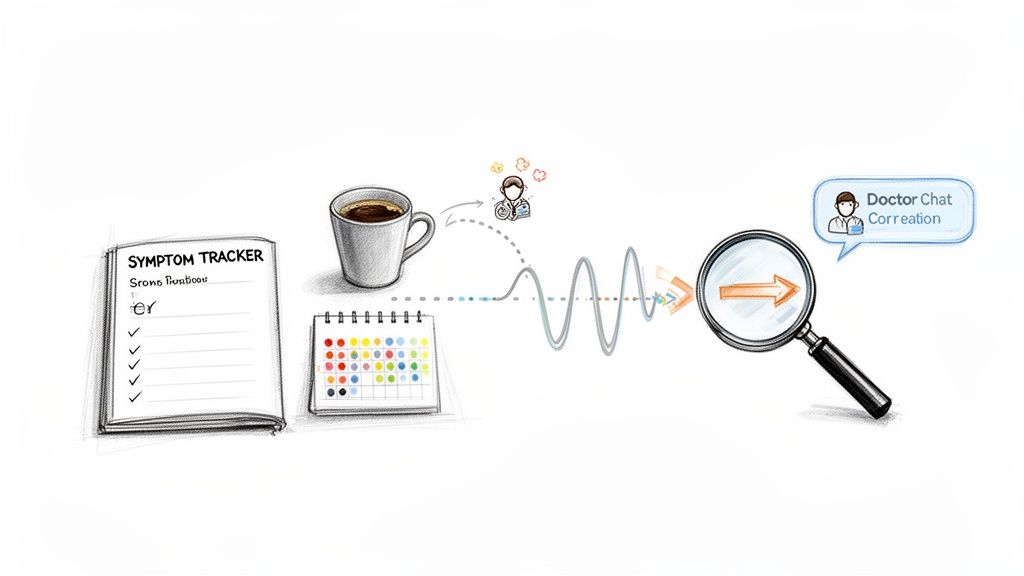
When you’re suddenly hit with a wave of confusing symptoms, it’s easy to feel completely overwhelmed. Many women I talk to feel this way during perimenopause. But I promise you, relief is absolutely within reach. The single most effective thing you can do to start feeling better is to begin tracking your symptoms.
This simple act takes those vague, frustrating feelings and turns them into something you can actually work with: data.
Your First Steps Toward Lasting Symptom Relief
If you feel like you’re navigating perimenopause without a map, you’re not alone. The good news is that you can create your own personalized guide. It all starts with paying closer attention to your body.
Think of it less as a chore and more like becoming a detective for your own well-being. You’re looking for clues that connect your daily habits to how you feel. That afternoon coffee, a stressful meeting, or even a late-night cookie could be the missing piece of the puzzle. When you see the patterns, you gain control.
Start a Simple Symptom Log
You don't need a fancy spreadsheet or a complicated system. A simple notebook or the notes app on your phone is all it takes to get started.
Each day, just take a moment to jot down how you’re feeling—physically and emotionally. Be specific.
To get going, here are a few key things I always recommend women monitor:
Hot Flashes: When did it happen? How intense was it? What were you doing or eating right before?
Sleep Quality: Note if you struggled to fall asleep, woke up frequently, or were drenched in night sweats.
Mood Swings: Did you feel a sudden rush of anxiety, irritation, or sadness?
Energy Levels: When did you feel sharp and energetic versus when you hit that afternoon wall of fatigue?
Brain Fog: Make a note of those moments when you felt forgetful or couldn't focus.
This straightforward process of tracking, identifying your personal triggers, and then taking action is the absolute foundation for managing your symptoms effectively.
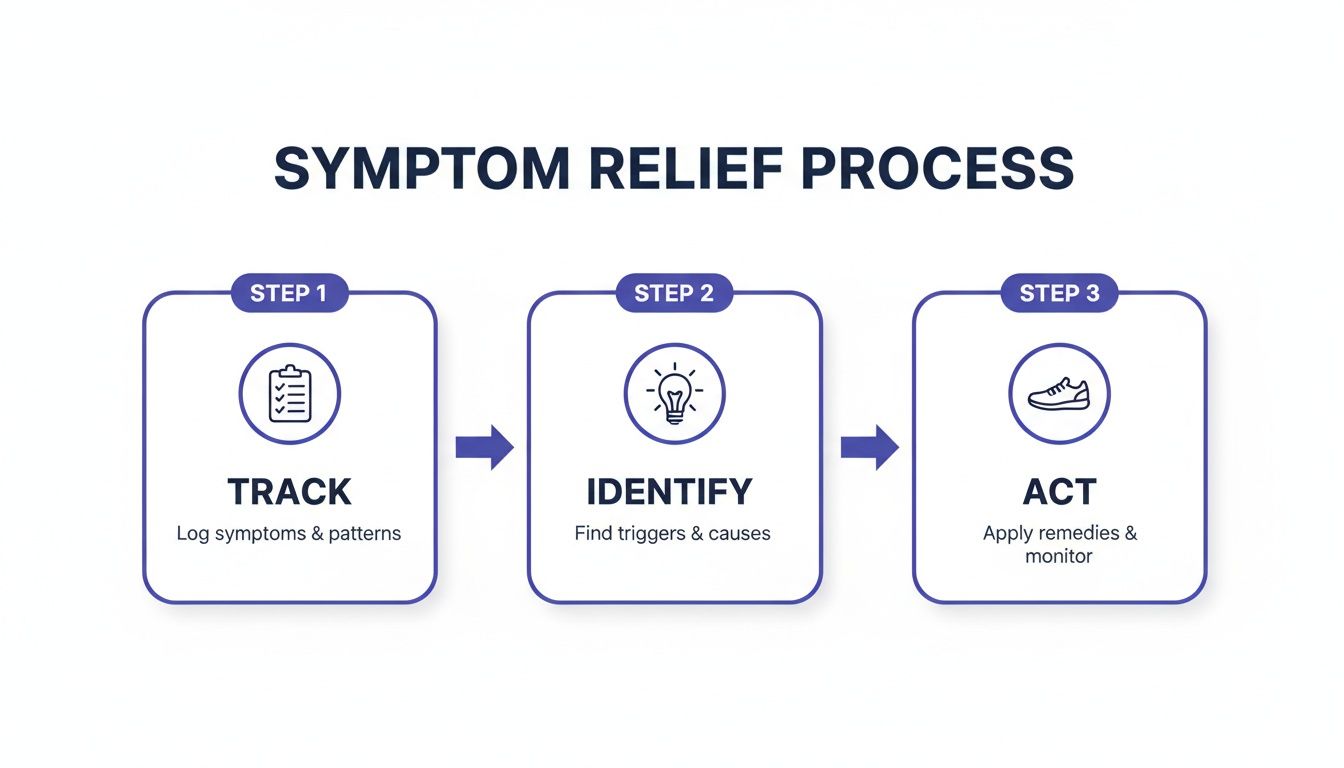
This simple flow—Track, Identify, Act—creates a powerful feedback loop that puts you in the driver’s seat. Each step builds on the last, helping you fine-tune your own relief plan.
From Vague Feelings to Clear Insights
After just a week or two of tracking, you'll be surprised at what you find. Patterns will start jumping out at you. Maybe you’ll notice your mood consistently tanks after a night of tossing and turning. Or perhaps you’ll see that hot flashes reliably hit after your second cup of coffee.
These aren’t just coincidences. They're clear, actionable insights.
This data is your most powerful tool. It changes the conversation with your doctor from, "I just don't feel like myself," to "I've noticed my anxiety spikes on days I get less than 6 hours of sleep."
This level of detail empowers you to make small, targeted adjustments that have a real impact. You could try swapping that afternoon coffee for herbal tea or creating a simple, relaxing wind-down routine before bed.
Tools like the Lila app are designed to make this even easier, helping you log symptoms and build a personalized plan based on what your body is telling you. It's all about turning information into action, one small step at a time.
Managing Hot Flashes and Night Sweats
It’s a feeling many of us know all too well: that sudden, intense wave of heat that radiates from your chest upwards, seemingly out of nowhere. When these hot flashes decide to show up at 2 a.m., they’re called night sweats, and they can leave you and your sheets completely drenched. It feels like your internal thermostat has gone haywire, and honestly, it’s one of the most disruptive parts of perimenopause.
And you're far from alone. Hot flashes are a classic sign of this life stage. One major global study found that over half of all middle-aged women experience them—the number was 52.65% across many different populations. That’s a staggering amount of women feeling the heat.
The good news is you can do more than just "dress in layers." Real relief comes from understanding what makes your body tick.
Identify Your Personal Triggers
The most powerful thing you can do is start playing detective with your own body. When a hot flash hits, don't just suffer through it. Pause and ask yourself: What was I just doing? What did I just eat or drink?
You might be surprised by what you find. For many women, the culprits are everyday things:
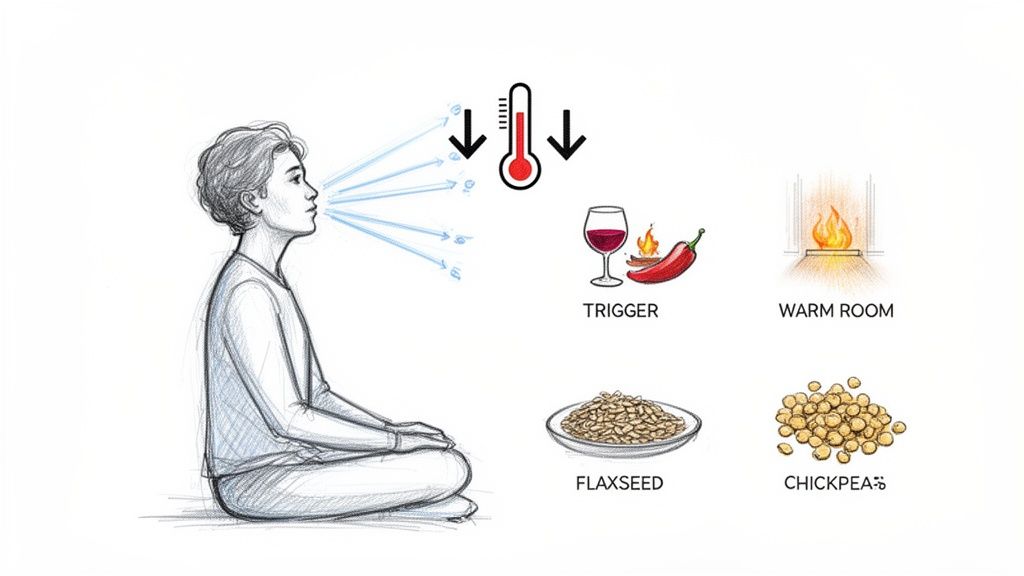
Spicy Foods: That delicious Thai curry you had for lunch might be why you’re fanning yourself at your desk two hours later.
Hot Beverages: It's not just the caffeine; the temperature of your morning coffee or tea can be enough to set off a flash.
Alcohol: A single glass of red wine is a notorious trigger for so many of us, often leading to night sweats later on.
Stress: Ever notice you flush during a tense meeting or a difficult phone call? That's your stress response kicking in.
Warm Environments: A stuffy room, a hot day, or even cozy flannel sheets can push you over the edge.
This is where logging your symptoms in an app like Lila becomes a game-changer. After just a week or two of noting when flashes happen and what was going on at the time, you'll start seeing connections. Maybe it's always 30 minutes after your second cup of coffee, or every time you have a glass of wine with dinner. That data is gold.
By simply pinpointing your top two or three personal triggers, you can make small, targeted changes that dramatically reduce your hot flashes without feeling like you have to overhaul your entire life.
Cool Down with Food and Mindfulness
Once you know your triggers, you can start building up your defenses. Food can be a fantastic ally here. Certain foods are rich in phytoestrogens, which are plant-based compounds that can gently mimic estrogen in the body and help stabilize that haywire thermostat.
Try weaving some of these into your meals:
Flaxseed: A tablespoon in your morning smoothie or sprinkled over yogurt is an easy win.
Chickpeas and Lentils: Think hummus, lentil soup, or roasted chickpeas for a snack.
Soy: A handful of edamame, some tofu in a stir-fry, or a glass of soy milk can make a real difference.
Beyond what you eat, what you do in the moment matters, too. When you feel a flash coming on, instead of panicking (which only makes it worse!), try a paced breathing exercise. It’s simple: breathe in slowly through your nose for a count of four, hold for a beat, and then breathe out slowly through your mouth for a count of six. This simple act can calm your nervous system and often dials down the intensity of the flash.
If you're looking for even more ideas, our guide on natural hot flash relief is packed with additional strategies you can try.
Reclaiming Your Sleep and Boosting Energy
If "tired" has become your default setting, you are not alone. That bone-deep exhaustion so many of us feel during perimenopause is real, and it’s often a direct consequence of sleep being completely sabotaged by our fluctuating hormones. When you can’t get that deep, restorative rest, your energy levels for the next day never really stand a chance.
The link between this life stage and poor sleep is incredibly strong. In fact, one major study highlighted just how common this is: while 68% of women recognized sleep as a problem, a full 76% were actually reporting significant sleep issues.
Often, the primary culprits are night sweats and a haywire internal thermostat. But here’s the good news: addressing your sleep hygiene is one of the most powerful things you can do to find relief. It all starts with treating sleep with the respect it deserves.
Create a Cool Sleep Sanctuary
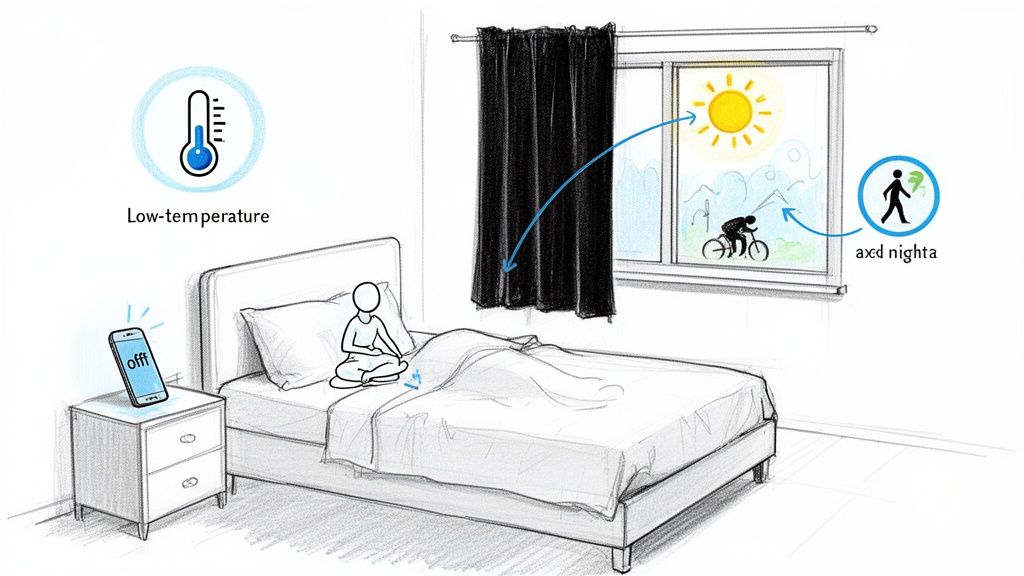
Think of your bedroom environment as your first line of defense. The mission is to create a cool, dark, and quiet space that sends a clear signal to your brain: it’s time to power down.
First, turn down the thermostat. A cooler room—ideally somewhere between 60-67°F (15-19°C)—can make a world of difference in taming night sweats. It’s also worth investing in breathable, natural fabrics for your pajamas and bedding. Cotton, bamboo, and linen are all great choices for wicking moisture away from your skin.
Light is another major factor. Even a sliver of light from a phone charger or a gap in the curtains can mess with your body's production of melatonin, our natural sleep hormone. I highly recommend blackout curtains and a strict "no phone in the bedroom" rule. It's tough at first, but it pays off.
Design a Calming Wind-Down Routine
Your brain craves predictability. Giving it a consistent wind-down routine is a powerful way to signal that the day is officially over. This isn't about adding another chore to your to-do list; it's about carving out 20-30 minutes just for you—an activity that actively soothes your nervous system.
Here are a few ideas that have worked for many of my clients:
A Warm Bath: Soaking in a warm tub about 90 minutes before bed can trigger a drop in your core body temperature, which is a natural cue for sleepiness.
Gentle Stretching: A few simple, restorative yoga poses can help release the physical tension that’s built up in your muscles throughout the day.
Reading a Real Book: Unlike the stimulating blue light from a screen, getting lost in a physical book is a meditative way to unwind your mind.
The real magic is in the consistency. The goal is to create a predictable sequence of events that tells your mind and body, "Okay, we're shutting down now." What you do is less important than doing it every night.
When perimenopause throws your sleep out of whack, having a toolbox of strategies is essential. You can explore these 12 practical tips for better sleep to help you get back on track.
Remember that your daytime habits have a huge impact on your nights. Something as simple as a brisk walk in the morning sunlight can help set your internal clock for the entire day. And it goes without saying that avoiding caffeine after 2 p.m. is a non-negotiable for protecting your sleep. For a deeper dive into this topic, check out our guide on how to start finding relief from menopause fatigue.
Tackling Mood Swings and Brain Fog
Feeling irritable one minute and weepy the next? Or maybe you're walking through a mental haze where simple thoughts feel just out of reach. If that sounds familiar, I want you to know: it’s not just in your head. The hormonal roller coaster of perimenopause directly messes with brain chemicals like serotonin and dopamine, the very things that keep our mood and thinking stable.
It's an incredibly common experience—up to 75% of women report mood swings during this transition. While it can feel destabilizing, the good news is that we have real, tangible ways to find our footing again. The secret is building a foundation of small, consistent habits that support your brain from the inside out.
Stabilize Your Mood Through Your Plate
One of the biggest culprits behind sudden mood shifts is unstable blood sugar. When your blood sugar spikes and then crashes, your energy and mood often crash right along with it. This is a huge trigger for that all-too-familiar irritability and anxiety.
A simple but incredibly powerful place to start is your diet. The goal is to make sure every meal contains a solid source of lean protein. Why? Protein slows down how quickly sugar enters your bloodstream, which helps you avoid those dramatic energy nosedives.
Here are a few easy swaps to try:
Instead of a plain bagel for breakfast, have a couple of eggs or a bowl of Greek yogurt.
Toss some grilled chicken, chickpeas, or tofu into your lunchtime salad. It makes a huge difference.
When that 3 p.m. slump hits, grab a handful of almonds or a piece of cheese instead of reaching for a cookie.
This one dietary change gives your brain a steady stream of fuel, which is absolutely critical for keeping your emotions on a more even keel. You'll likely be surprised by how much calmer and more stable you feel throughout the day.
Clear the Fog with Movement and Mindfulness
Then there's brain fog. It can feel like your mind is wrapped in cotton, making simple tasks feel overwhelming and conversations frustrating. This is a direct result of hormonal shifts, but you can fight back.
Movement is one of the best tools we have. Think of it as a natural mood and brain booster. Just a brisk 20-minute walk is enough to get more blood flowing to your brain, which sharpens your focus and lifts your spirits. Restorative practices like yoga are also fantastic because they help lower cortisol—the stress hormone that makes brain fog so much worse.
When anxiety flares or the fog rolls in, a simple grounding exercise can work wonders. I always recommend the 5-4-3-2-1 method. Just pause and name: 5 things you can see, 4 things you can feel, 3 things you can hear, 2 things you can smell, and 1 thing you can taste. This sensory check-in yanks your focus back to the present moment and instantly calms your nervous system.
By putting these strategies together, you create your own personal toolkit for managing perimenopause. Consistently fueling your body with the right foods while using movement and mindfulness to calm your mind really can make a profound difference. You’ll start to feel less at the mercy of your symptoms and much more in control.
A Guide to Medical Relief for Perimenopause Symptoms
You’ve been dedicated to your lifestyle changes—eating well, moving your body, prioritizing sleep—but some perimenopause symptoms just won't budge. This is incredibly common, and it’s a clear sign that it might be time to talk to your doctor about medical support.
Going into that conversation armed with a little knowledge can make all the difference. When lifestyle tweaks aren't enough, there are two main avenues for relief: hormonal therapies and non-hormonal prescriptions.
The Lowdown on Hormone Therapy
Let’s start with what many experts consider the gold standard for treating disruptive symptoms. Hormone Therapy (HT), sometimes called Menopause Hormone Therapy (MHT), is often the most effective way to tackle moderate to severe hot flashes and night sweats.
It’s pretty simple, really. HT works by giving your body back some of the estrogen it's losing during this transition. This helps to re-stabilize your body's internal thermostat, bringing you much-needed relief.
Hormone therapy isn't a one-size-fits-all solution; it comes in a few different forms:
Systemic Estrogen: This is the go-to for widespread symptoms. Delivered as a pill, patch, gel, or spray, it travels through your bloodstream to calm hot flashes, night sweats, and even help with mood swings and brain fog.
Local Estrogen: If your main concern is vaginal dryness or pain during sex, this is an amazing option. It comes in low-dose creams, tablets, or rings that work directly on vaginal tissue without sending hormones throughout your whole body.
A quick but important note: if you still have your uterus, your doctor will also prescribe a progestogen to take alongside estrogen. This is essential for protecting the lining of your uterus.
We have a complete guide that goes deeper into what hormone therapy for menopause is, who it’s best for, and what to expect.
What if Hormones Aren't for You?
HT is a fantastic tool, but it's not the right choice for everyone. Whether it's because of a personal health history (like certain cancers or blood clots) or simply personal preference, plenty of women look for other solutions. And the good news is, there are some excellent non-hormonal prescriptions available.
Interestingly, many of these medications were first developed for other conditions but proved to be surprisingly effective for perimenopause.
Antidepressants (SSRIs/SNRIs): In low doses, certain antidepressants can do wonders for hot flashes. For example, drugs like venlafaxine have been shown to reduce their severity by 60-65%.
Gabapentin: This medication is typically used for nerve pain, but it can be a lifesaver for taming night sweats and, as a result, dramatically improving your sleep.
Fezolinetant (Veozah®): This is a newer breakthrough drug. It’s not a hormone and was designed specifically to target the brain's temperature-control center to dial down moderate to severe hot flashes.
The most important step is talking to your doctor. They are your partner in this. Together, you can review your symptoms, your health history, and your comfort level to weigh the pros and cons of each path and find what truly works for you.
As you prepare for that conversation, you might also want to read up on perimenopause supplements for women's health to discuss them as part of your overall wellness plan.
Using Smart Tech to Personalize Your Perimenopause Plan
Trying to manage perimenopause can feel like a frustrating guessing game. One day you feel great, the next you're exhausted and foggy. With so much conflicting advice out there, it's tough to know what will actually work for you.
This is where smart technology can be a game-changer. An app like Lila acts like a personal health detective, helping you spot the hidden connections between your daily habits and how you feel. Instead of just throwing things at the wall to see what sticks, you can finally get clear feedback on what's moving the needle.
Turning Your Data Into Real Answers
Let’s walk through a common example I see all the time. You consistently hit an energy wall around 3 PM. You’re exhausted, and you log it in your daily check-in, along with noting you had a big, carb-heavy sandwich for lunch.
Here’s what that quick daily check-in can look like inside the Lila app.
After just a few days of making similar entries, the app's AI coach starts to see a clear pattern emerge. It flags a direct link: that midday carbohydrate overload is likely the culprit behind your afternoon crash. For many women, seeing this connection laid out so clearly is a huge lightbulb moment.
Instead of getting some generic advice, the app gives you a specific, practical suggestion.
AI Coach Tip: "I've noticed your energy dips after high-carb lunches. Let's try swapping your usual sandwich for a salad with grilled chicken and plenty of greens. This can help stabilize your blood sugar and keep your energy steady."
This is the real power of this approach. The technology isn’t just collecting information; it’s interpreting it and giving you personalized guidance. It helps you build better habits by showing you the almost-immediate effect of small, simple changes.
What this provides is something most of us are missing: consistent accountability and truly tailored support. You're no longer trying to figure this all out alone. You have a 24/7 coach in your pocket, helping you build a plan that is based entirely on your body’s own feedback. Many women who take this approach start to see and feel measurable improvements in just a few weeks.
Your Perimenopause Questions, Answered
If you're feeling a bit lost in the world of perimenopause, you're not alone. It’s a time filled with changes, and naturally, questions. Let's tackle some of the most common ones I hear from women just like you.
How Long Is This Going to Last?
This is the million-dollar question, isn't it? On average, perimenopause can last anywhere from 4 to 8 years, but that number doesn't tell the whole story.
The goal isn't just to white-knuckle it until it's over. True perimenopause symptom relief comes from actively managing what’s happening in your body day-to-day. By figuring out your personal symptom triggers and building a routine that supports you, many women start feeling dramatically better in just a few weeks.
Can I Really Get Through This Without Hormones?
You absolutely can. Many women find they can manage their symptoms incredibly well just by making smart, consistent lifestyle choices.
We're talking about things that have a huge impact, like:
Eating to keep your blood sugar stable
Moving your body regularly
Getting serious about stress-reduction (think meditation or even just quiet time)
Dialing in your sleep habits
For certain symptoms like intense hot flashes, there are also very effective non-hormonal prescription options available.
It is entirely possible to feel fantastic without hormone therapy. The secret is learning to listen to your body and giving it what it needs. This kind of personalized care is what truly moves the needle.
Why Are My Symptoms So Different From My Friend's?
This is completely normal and, honestly, expected. Perimenopause is your own personal journey—no two are alike.
The symptoms you experience, how intense they are, and how often they pop up are all influenced by your unique blend of genetics, daily habits, and overall health. This is precisely why generic advice often falls flat. Tracking your own experience is the only way to figure out what actually works for you.
Ready to stop guessing and start building a plan that works for you? The Lila app combines smart tracking with a personalized AI coach to help you understand your body and see measurable results. Find your path to relief with Lila.
Get Lila, your personal coach for perimenopause.
Built for women in their 40s. 24/7 coaching, in your pocket.