8 Science-Backed Methods for Natural Hot Flash Relief in 2026
Discover 8 effective strategies for natural hot flash relief. Explore diet, exercise, supplements, and mind-body techniques to manage symptoms and feel better.
 Michelle
Hot flashes can feel disruptive, unpredictable, and downright frustrating. They impact everything from your sleep quality to your daily confidence. While these sudden waves of heat are a hallmark of the menopausal transition, you are not powerless against them. In fact, the search for effective, non-hormonal solutions has uncovered a wealth of evidence-backed strategies that offer significant relief without resorting to hormone replacement therapy.
This guide cuts through the noise to provide a detailed roundup of the most effective methods for natural hot flash relief. We move beyond generic advice to offer actionable steps, specific techniques, and the science behind why they work. You will learn how to implement a variety of tools, including:
Dietary Adjustments: Incorporating specific foods like soy and flaxseed.
Behavioral Techniques: Using paced breathing and cognitive reframing to manage episodes.
Targeted Supplements: Understanding the role of options like Vitamin E and sage.
Lifestyle Practices: Integrating exercise and environmental cooling strategies.
By exploring these diverse options, you can build a personalized toolkit to manage symptoms effectively. The goal is to reduce both the frequency and intensity of your hot flashes, helping you regain a sense of control over your body's internal thermostat. This article is your practical roadmap to reclaiming your cool and navigating this transition with greater ease and empowerment.
1. Phytoestrogen-Rich Foods (Soy, Flaxseed, and Legumes)
Phytoestrogens are plant-derived compounds with a chemical structure similar to the body’s own estrogen. When estrogen levels fluctuate and decline during perimenopause and menopause, these plant-based compounds can offer a mild estrogenic effect, potentially stabilizing some of the hormonal chaos that triggers hot flashes. Incorporating foods rich in phytoestrogens, such as isoflavones from soy and lignans from flaxseed, provides a dietary approach to managing vasomotor symptoms.
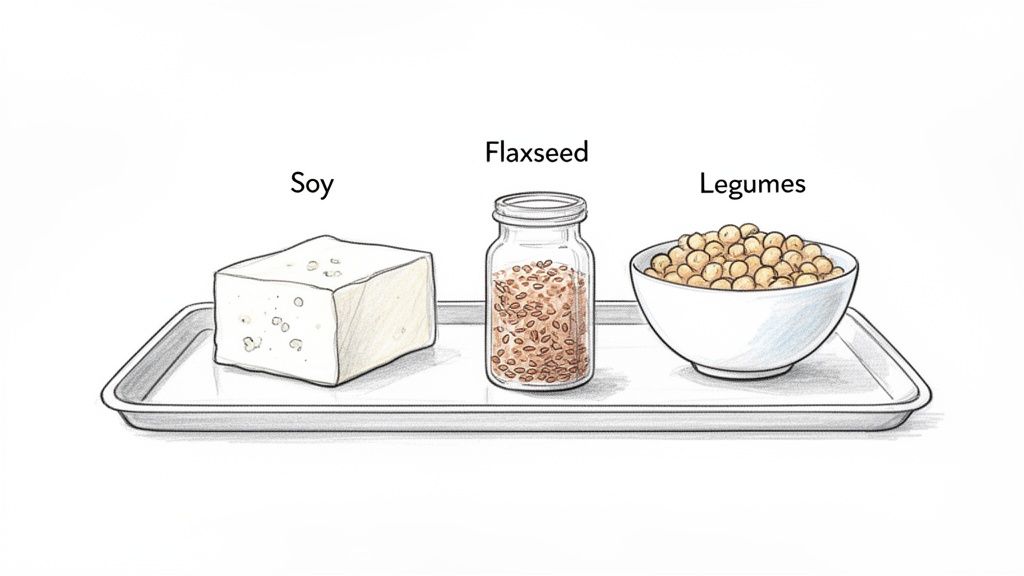
Clinical studies suggest that consistent intake can reduce the frequency and intensity of hot flashes by 20-30% for some women. This makes dietary modification a foundational strategy for natural hot flash relief. The mechanism involves phytoestrogens binding to the body's estrogen receptors, which helps compensate for the lower circulating estrogen levels.
How to Implement This Strategy
The key to success with phytoestrogens is consistency and choosing the right sources. You can integrate these foods into your daily meals with a few simple swaps.
Soy Products: Add edamame to salads, use firm tofu in stir-fries, or blend silken tofu into smoothies for a creamy, protein-rich base. Aim for 1-2 servings daily, which might look like a cup of soy milk and a half-block of tofu. A 2023 study in the journal Menopause found that women who incorporated this amount saw a significant reduction in hot flashes.
Ground Flaxseed: The body absorbs ground flaxseed much more effectively than whole seeds. Stir 2-3 tablespoons into oatmeal, yogurt, or protein shakes. Its nutty flavor is mild and easily complements many foods.
Legumes: Lentils, chickpeas, and beans are excellent sources of both fiber and phytoestrogens. Add them to soups, make a chickpea-based curry, or create a lentil salad for lunch.
Key Insight: The goal is a consistent daily intake, not a sporadic one. Aim for approximately 25-50 mg of isoflavones daily from food sources. Tracking your food intake alongside your symptoms in a journal or an app like Lila can help you identify your personal response over several weeks.
This food-first approach is supported by major health organizations, including the Mayo Clinic and the American College of Obstetricians and Gynecologists (ACOG), as part of a balanced diet for menopausal health. For more ideas on how to build a supportive meal plan, you can explore our guide to foods for menopause.
2. Deep Breathing and Paced Respiration Techniques
Slow, deep breathing, specifically a technique known as paced respiration, works by activating the body’s parasympathetic nervous system, our natural "rest and digest" mode. This calming response can directly counteract the "fight or flight" surge that often accompanies a hot flash, making it an effective form of immediate natural hot flash relief. Unlike many other interventions, this tool is always available and provides both in-the-moment relief and long-term stress reduction benefits.
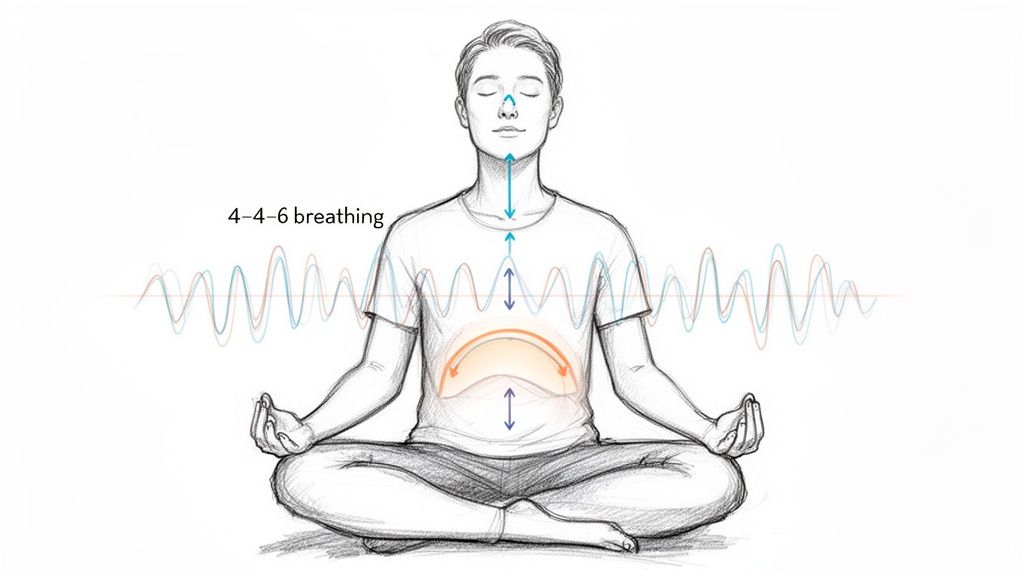
Major clinical trials have documented the power of this simple practice. The Study of Women's Health Across the Nation (SWAN), a large-scale Stanford study, found that daily paced respiration could reduce hot flash severity by up to 50%. The mechanism is thought to involve stabilizing the autonomic nervous system, which helps regulate body temperature and can become erratic during the menopausal transition.
How to Implement This Strategy
The goal is to master a slow, controlled breathing pattern that you can call upon both during a hot flash and as a daily preventative practice. A common and effective method is the 4-4-6 breathing technique.
Paced Respiration Practice: Sit comfortably and breathe in slowly through your nose for a count of 4, feeling your diaphragm expand. Gently hold the breath for a count of 4. Then, exhale slowly and completely through your mouth for a count of 6. The longer exhale is key to activating the relaxation response.
Consistency is Crucial: To see a significant reduction in symptoms, practice for 5-10 minutes twice daily. Many women find it helpful to pair this with their morning and evening routines. Women who follow this schedule often report improved sleep quality in addition to fewer hot flashes.
Use Technology for Guidance: Guided breathing apps like Calm, Headspace, or Insight Timer offer specific programs for perimenopause and can help you maintain the correct pace and rhythm, especially when you are just starting out.
Key Insight: Don't wait for a hot flash to strike before you practice. Building the skill during calm moments makes it an automatic, effective reflex when you need it most. Combining paced breathing with symptom tracking in an app like Lila allows you to see quantifiable data on how the practice reduces the frequency and intensity of your hot flashes over time.
This technique is widely recommended by menopause specialists, including at the Stanford Medicine Menopause Center, and has been popularized by mind-body experts like Dr. Herbert Benson of Harvard Medical School, who pioneered research on the Relaxation Response.
3. Regular Aerobic Exercise and High-Intensity Interval Training (HIIT)
Regular physical activity is a powerful tool for natural hot flash relief because it directly addresses the body's thermoregulatory system. Aerobic exercise helps stabilize the core body temperature and improve the body's ability to dissipate heat, which can reduce both the frequency and severity of hot flashes. This makes consistent movement a cornerstone of managing vasomotor symptoms.
Studies show that women who exercise for 150 minutes or more per week experience significantly fewer hot flashes, with some reporting a reduction of 30-50%. Beyond hot flashes, exercise also helps manage perimenopause-related weight gain, improves sleep, boosts mood, and supports metabolic health, making it a true multi-symptom solution.
How to Implement This Strategy
The goal is to find a routine that is both effective and sustainable. For many, a combination of moderate-intensity aerobic work and time-efficient high-intensity sessions offers the most benefits.
Moderate Aerobic Exercise: If you are new to fitness, start with activities like brisk walking, cycling, or swimming. The North American Menopause Society recommends aiming for at least 150 minutes of this type of activity per week.
High-Intensity Interval Training (HIIT): Once you have a fitness base, introduce HIIT. These workouts involve short bursts of intense effort followed by brief recovery periods. A 2021 study in Menopause found that women who did 30-minute HIIT workouts three times a week reduced hot flashes by 40% in just 12 weeks. For those looking to understand the broader impact, exploring the proven benefits of High-Intensity Interval Training can provide additional motivation and context.
Timing and Attire: Schedule workouts in the morning or early afternoon to avoid raising your core body temperature too close to bedtime. Wear layered, moisture-wicking clothing to help manage your temperature during exercise.
Key Insight: Consistency is more important than intensity, especially at the beginning. Tracking your hot flashes, energy levels, and sleep patterns alongside your exercise routine in an app like Lila can reveal how different types of movement personally affect your symptoms.
This approach is widely endorsed by health organizations like the Mayo Clinic for its comprehensive benefits during the menopausal transition. To build a well-rounded fitness plan, you can find the best exercises for menopause that incorporate both cardio and strength training.
4. Sage Leaf Tea and Herbal Infusions
The herb sage (Salvia officinalis) has a long history in traditional European medicine as a remedy for excessive sweating and menopausal symptoms. Modern clinical research is now providing evidence for its effectiveness, making it a prominent option for natural hot flash relief. Sage contains compounds that appear to help regulate the body's thermoregulatory center in the brain, which can become erratic during menopause.
A landmark 2011 Swiss clinical trial published in Advances in Therapy found that women taking a daily fresh sage leaf tablet saw a 50% decrease in the intensity of their hot flashes after just four weeks. By the end of the 12-week study, the reduction in intensity reached 64%, and the overall frequency of hot flashes dropped by 60%. This research suggests sage has a direct and significant impact on vasomotor symptoms.
How to Implement This Strategy
Consistency is the most important factor when using sage or other herbal infusions. Their effects build over time, so integrating them into your daily routine is essential for seeing results.
Brew Sage Tea: Steep one teaspoon of dried sage leaves (or 2-3 fresh leaves) in eight ounces of hot water for 5-10 minutes. You can also use pre-made, high-quality sage tea bags for convenience. Drink 1-2 cups daily. Many women find adding a slice of lemon or a small amount of honey makes the earthy taste more enjoyable.
Consider a Standardized Extract: For a more precise and potent dose, a standardized sage extract can be a good alternative. The dosage used in the successful Swiss study was equivalent to about 300mg of extract daily. This bypasses any taste aversion and ensures a consistent amount of active compounds.
Establish a Baseline: Before starting, track your hot flash frequency and severity for 1-2 weeks. This will give you a clear baseline to measure against, helping you determine how well the strategy is working for you after 4-8 weeks of consistent use.
Key Insight: Sage works best with consistent daily use over several weeks. Don't expect immediate overnight relief. A woman in the Advances in Therapy study noted that her night sweats improved first, followed by a noticeable reduction in daytime hot flashes around the one-month mark.
While sage is a powerful standalone herb, it is just one of many botanicals studied for menopausal health. To discover more about supportive herbs like black cohosh, red clover, and lemon balm, you can explore our guide to herbs for menopause.
5. Cooling Strategies and Environmental Temperature Management
Proactively managing your personal climate is a powerful, non-hormonal method for natural hot flash relief. Hot flashes are essentially a malfunction of the body's internal thermostat, the hypothalamus, triggered by declining estrogen. By controlling your external environment, you can prevent the overheating that often initiates or worsens these sudden waves of heat. Simple, strategic cooling measures can reduce the triggers and lessen the severity when a hot flash does occur.
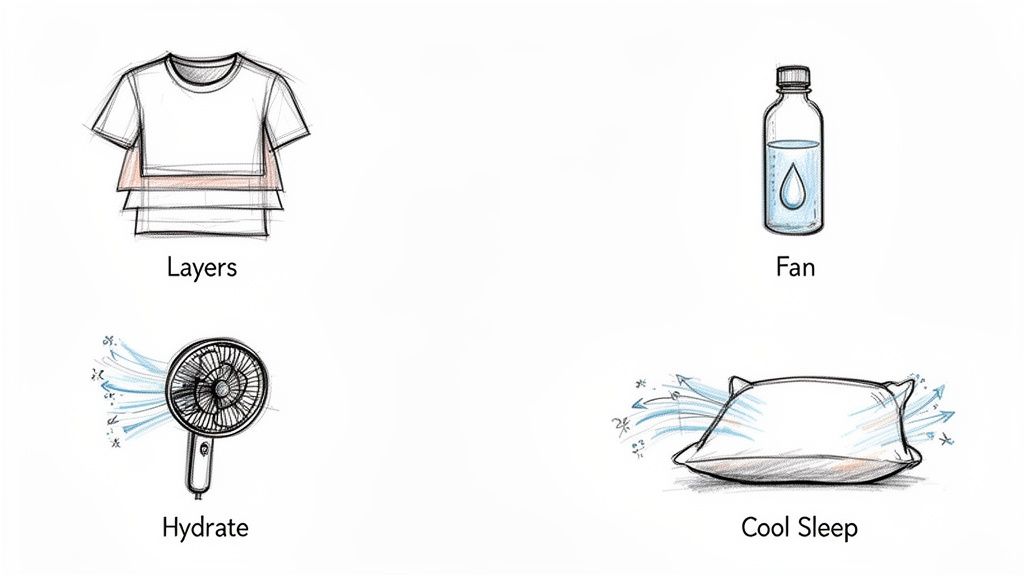
Studies and anecdotal reports show that women who adopt consistent cooling strategies can see a 20-40% reduction in symptom impact, especially regarding sleep disruption. For instance, women who switch to breathable sleepwear and use cooling bedding often report a 30-40% improvement in nighttime hot flashes and sweats. The core mechanism is straightforward: by keeping your core body temperature lower, you raise the threshold needed to trigger a vasomotor response.
How to Implement This Strategy
Integrating cooling techniques into your daily and nightly routines can provide immediate comfort and long-term control. The key is to be prepared and make your environment work for you, not against you.
Dress in Layers: Wear a base layer made of a moisture-wicking fabric like bamboo, merino wool, or a technical synthetic. Top it with easy-to-remove layers like a cardigan, zip-up fleece, or blazer. This allows you to adjust your clothing instantly when you feel a hot flash starting.
Optimize Your Sleep Environment: Aim to keep your bedroom temperature between 65-68°F (18-20°C). Invest in breathable bedding made from cotton, linen, or bamboo; a higher thread count is not always better, as it can trap heat. Cooling pillows, mattress pads, and moisture-wicking pillowcases can also make a significant difference.
Stay Hydrated with Cold Water: Keep an insulated bottle of ice water at your desk and bedside. Sipping cold water at the onset of a hot flash can help cool you from the inside out and temper the intensity.
Create Airflow: Use a portable or ceiling fan to keep air circulating. Managing your immediate environment is crucial. For instance, learning practical tips on how to how to cool a room without AC can provide significant relief during a hot flash.
Key Insight: Track environmental factors alongside your symptoms. Note the room temperature, your clothing, and recent activities when a hot flash occurs. Using an app like Lila to log this data can help you uncover personal patterns and identify your specific triggers, allowing you to proactively adjust your environment for better management.
6. Mindfulness Meditation and Cognitive Behavioral Therapy (CBT) Techniques
Beyond physical triggers, the psychological response to hot flashes can significantly worsen the experience. Mindfulness meditation and Cognitive Behavioral Therapy (CBT) are powerful mental tools that reframe your relationship with symptoms, reducing their perceived intensity and distress. Rather than just enduring a hot flash, these practices teach you to manage your reaction to it, which can be a key part of natural hot flash relief.
Research shows that women who engage in these practices experience less distress and better emotional regulation. A 2018 study in Menopause found that women completing an 8-week mindfulness program reduced hot flash-related distress by 40% and saw improvements in sleep quality. CBT works by specifically targeting and restructuring negative thought patterns, such as catastrophizing, that can amplify symptoms.
How to Implement This Strategy
Integrating these mental wellness practices into your routine can create profound shifts in how you experience not just hot flashes, but overall menopausal well-being. Consistency is more important than duration, especially when starting out.
Start with Short Guided Meditations: Dedicate 5-10 minutes each day to guided meditation. Apps like Headspace, Calm, and Insight Timer offer specific programs for menopause that can teach you foundational mindfulness skills. Users often report an improved emotional response to symptoms within just a few weeks.
Practice "In-the-Moment" Mindfulness: When you feel a hot flash beginning, instead of tensing up, try to observe the sensation without judgment. Notice where it starts, how it feels, and how it dissipates. This creates distance between you and the symptom.
Challenge Negative Thoughts with CBT: Use a journal or a worksheet to identify automatic negative thoughts that arise during a hot flash (e.g., "Everyone is staring," "This is unbearable"). Challenge and reframe them with more compassionate, realistic statements like, "This is a temporary sensation, and I can manage it."
Combine with Breathing: Pair mindfulness with paced breathing techniques for a compounded effect. As you observe the hot flash, focus on slow, deep breaths to activate the body’s relaxation response.
Key Insight: The goal is to reduce the distress caused by hot flashes, not necessarily eliminate the sensation itself. By changing your mental and emotional reaction, you regain a sense of control and significantly improve your quality of life. Tracking your mood and sleep in an app like Lila alongside your hot flashes can help you see these psychological benefits over time.
These behavioral approaches are recommended by the North American Menopause Society (NAMS) as an effective non-hormonal treatment. For persistent anxiety or severe mood changes, consider seeking a therapist trained in CBT.
7. Vitamin E and B-Complex Supplementation
Certain key micronutrients, particularly vitamin E and the B-complex vitamins, play a significant role in nervous system regulation and can help manage hot flashes. Vitamin E, a fat-soluble antioxidant, appears to help stabilize the body’s internal thermostat, while B vitamins are crucial for producing neurotransmitters that regulate mood and energy, which are often disrupted during menopause.
While not as powerful as hormone therapy, addressing potential deficiencies in these vitamins provides a gentle, supportive approach to natural hot flash relief. A notable 2007 study in the Journal of Obstetrics and Gynaecology found that women taking 400 IU of vitamin E daily experienced a 30-50% reduction in hot flash severity. Similarly, B vitamins help buffer the nervous system against the stress of hormonal fluctuations.
How to Implement This Strategy
A targeted supplementation plan, combined with a nutrient-rich diet, can help fill common nutritional gaps that may worsen menopausal symptoms. It’s important to select high-quality supplements and take them correctly for optimal benefit.
Vitamin E: Choose a supplement providing 400 IU of mixed tocopherols (the natural form), as it's more bioavailable than the synthetic (dl-alpha-tocopherol) version. Take it with a meal containing some fat to improve absorption.
B-Complex Vitamins: Look for a B-complex formula that includes active forms and adequate doses of key players: B6 (50-100 mg), B12 (around 1000 mcg as methylcobalamin), and folate (400-800 mcg as methylfolate). These help support energy production and mood regulation.
Dietary Sources: Complement supplementation by eating foods rich in these nutrients. Good sources of vitamin E include almonds, sunflower seeds, and avocados. B vitamins are found in leafy greens, eggs, and legumes.
Key Insight: Consistency is crucial. It can take four or more weeks of daily supplementation to notice a difference in hot flash frequency or intensity. Always consult your healthcare provider before starting new supplements, especially high-dose vitamin E if you take blood-thinning medication.
8. Acupuncture and Acupressure Techniques
Traditional Chinese Medicine (TCM) offers time-tested methods for managing menopausal symptoms, with acupuncture and acupressure showing strong clinical evidence for reducing hot flashes. Acupuncture involves the insertion of very thin needles into specific points on the body, while acupressure uses firm finger pressure on these same points. Both practices are believed to improve the body's thermoregulation and restore hormonal balance, offering a powerful option for natural hot flash relief.
Research indicates that these techniques can significantly reduce both the frequency and severity of vasomotor symptoms. Studies have documented reductions of 30-50% in hot flashes, with many women experiencing lasting benefits even after a course of treatment is completed. These methods work by modulating the nervous system, improving circulation, and reducing stress, all of which contribute to the onset of hot flashes.
▶ PlayHow to Implement This Strategy
You can combine professional treatments with at-home practices for a multi-faceted approach. Acupressure provides a self-administered, daily tool, while acupuncture offers deeper, professionally guided intervention.
Seek a Licensed Acupuncturist: Find a practitioner certified in treating menopausal symptoms. A typical treatment plan involves 10-15 sessions, often starting with twice-weekly appointments. A 2019 trial published in Evidence-Based Complementary and Alternative Medicine showed women receiving this frequency of treatment saw a 40% reduction in hot flash frequency over 12 weeks.
Learn Key Acupressure Points: You can practice acupressure on yourself daily. Focus on applying firm, steady pressure to these points for 2-3 minutes each:
Large Intestine 4 (LI-4): Located in the fleshy web between your thumb and index finger.
Kidney 3 (KI-3): Found in the hollow spot between your inner ankle bone and your Achilles tendon.
Combine and Track: For maximum benefit, consider professional acupuncture sessions while performing daily acupressure at home. Combine the practice with paced breathing to further calm the nervous system.
Key Insight: Consistency is more important than intensity. Daily self-administered acupressure has been shown to yield measurable improvements in 3-4 weeks. Use an app like Lila to track your symptom frequency and severity before and during treatment to quantify the positive effects on your body.
This integrative approach is supported by institutions like the Mayo Clinic's integrative medicine program. It provides a structured, non-hormonal path to managing one of the most disruptive symptoms of menopause.
Natural Hot Flash Relief: 8-Point Comparison
Intervention | 🔄 Implementation Complexity | ⚡ Resources & Timeframe | 📊 Expected Outcomes (⭐) | 💡 Ideal Use Cases | ⭐ Key Advantages |
|---|---|---|---|---|---|
Phytoestrogen-Rich Foods (Soy, Flaxseed, Legumes) | Low — dietary changes; requires consistency | Low cost; daily intake; 8–12 weeks to observe effects | 20–30% reduction in hot flash frequency; ⭐⭐ | Mild–moderate hot flashes; diet-first preference; weight management | Nutritional benefits, low side effects, widely available |
Deep Breathing & Paced Respiration | Low — simple technique; practice required | No cost; 5–10 min per session; immediate effect during events | Up to 40–50% reduction in severity; immediate relief; ⭐⭐⭐ | Acute hot flashes, stress-triggered episodes, on-the-go relief | Rapid symptom relief, no side effects, improves sleep/stress |
Regular Aerobic Exercise & HIIT | Moderate — program planning and adherence needed | Time-intensive (150+ min/wk); equipment optional; 8–12 weeks | 30–50% fewer hot flashes with sustained practice; ⭐⭐⭐ | Multi-symptom management (weight, mood, sleep); long-term resilience | Broad health gains (cardio, bone, metabolic), durable effects |
Sage Leaf Tea & Herbal Infusions | Low — daily consumption; source quality matters | Low cost; tea or standardized extract; effects in 2–4 weeks | Up to ~50% reduction in intensity (RCT evidence); ⭐⭐⭐ | Rapid relief for sweating/night sweats; herbal-preference users | Fast onset, pleasant ritual, clinical trial backing |
Cooling Strategies & Environmental Management | Low — behavioral/environmental adjustments | Minimal cost; immediate benefit; occasional one-time purchases | 20–40% reduction in symptom impact; improved sleep; ⭐⭐ | Nighttime hot flashes, workplace comfort, acute management | Immediate, no side effects, synergizes with other approaches |
Mindfulness Meditation & CBT Techniques | Moderate — learning curve; regular practice | Apps or therapy; daily 10–20 min; 4–8 weeks for measurable change | 30–40% reduction in severity/distress; ⭐⭐⭐ | Emotional distress, anticipatory anxiety, sleep disruption | Long-term mental health gains, reduces symptom-related distress |
Vitamin E & B‑Complex Supplementation | Low — daily supplements; consult clinician if needed | Low cost; 4–8 weeks to see effects; monitor interactions | 30–50% reduction (vitamin E evidence); variable for B‑complex; ⭐⭐ | Suspected micronutrient gaps; energy and mood support alongside hot flashes | Easy integration, supports energy/mood, accessible OTC option |
Acupuncture & Acupressure Techniques | High for acupuncture (practitioner); low for acupressure self‑care | Cost/time for sessions (weekly) or free acupressure; 4–8 weeks | 30–50% reduction in frequency/severity (trials); ⭐⭐⭐ | Holistic seekers, persistent symptoms, those open to TCM | Clinical support, holistic effects, acupressure offers self-care alternative |
Creating Your Personalized Plan for Lasting Relief
Navigating the intensity and unpredictability of hot flashes can feel overwhelming, but as we've explored, you have a powerful toolkit of natural strategies at your disposal. The path to effective, long-term relief isn't about finding a single, one-size-fits-all solution. Instead, it’s about constructing a personalized, multi-faceted plan that works with your body's unique needs and your daily life.
The true strength of these natural approaches lies in their synergy. Combining dietary adjustments, such as incorporating phytoestrogen-rich foods like flaxseed and soy, with behavioral techniques like paced respiration can create a more resilient defense against vasomotor symptoms. Think of it as building layers of support; each strategy offers a distinct benefit, and together they form a comprehensive system for managing your symptoms.
Your Actionable Next Steps
The journey to finding what works best for you begins now. The key is to start small, stay consistent, and be patient with your body.
Start with One or Two Strategies: Don't try to change everything at once. Pick the one or two methods from this article that seem most manageable and appealing to you. Perhaps you start by preparing a daily infusion of sage tea and practicing a five-minute deep breathing exercise each morning.
Commit to a Trial Period: Many natural interventions, especially dietary changes and herbal supplements, require time to build up in your system. Give each new strategy a dedicated trial period of at least four to six weeks before deciding on its effectiveness. This consistency is crucial for seeing real results.
Track Everything: This is the most critical step for success. To truly understand what helps, you need to monitor the relationship between your actions and your symptoms. A simple journal or a dedicated app can help you log details like:
The frequency and intensity of your hot flashes.
The foods you ate and beverages you drank.
Your exercise sessions.
Your stress levels and sleep quality.
Any new supplements or techniques you've introduced.
This self-monitoring provides the data you need to make informed adjustments. You might discover that a HIIT workout in the morning reduces your afternoon hot flashes, or that a specific food is a consistent trigger. This is the essence of building a truly personalized plan for natural hot flash relief.
Key Takeaway: Your body provides constant feedback. By systematically tracking your lifestyle and symptoms, you can decode its signals and fine-tune your approach for maximum impact, moving from reactive coping to proactive management.
The Power of a Proactive Approach
Mastering these natural methods does more than just cool you down. It empowers you to take control of your menopausal journey, transforming it from a period of passive suffering into a time of active self-care and discovery. By learning to manage your environment, regulate your nervous system with techniques like mindfulness, and nourish your body with supportive foods, you are building skills that benefit your overall well-being far beyond just hot flash management. This proactive stance fosters a sense of agency and confidence, helping you feel more comfortable and in control of your own body.
Remember to always consult with your healthcare provider before beginning any new supplement regimen, especially if you have pre-existing health conditions like a history of hormone-sensitive cancers, or are taking other medications. They can provide guidance to ensure your chosen strategies are safe and appropriate for you. By pairing this professional advice with your own careful tracking and experimentation, you can create a robust, effective, and sustainable plan for lasting comfort and grace.
Ready to stop guessing and start seeing what truly works for your body? The Lila app helps you track your symptoms, meals, and lifestyle habits in one place, using smart insights to reveal your personal hot flash patterns. Start building your personalized plan for natural hot flash relief today by downloading the app at Lila.
Get Lila, your personal coach for perimenopause.
Built for women in their 40s. 24/7 coaching, in your pocket.