
Questions to Ask Doctor About Menopause: 8 Key Topics
Use these 8 questions to ask doctor about menopause, covering symptoms, testing, hormone therapy, and next steps to bring to your next visit.

If you're still having periods, does that mean you can't be experiencing menopause-related symptoms, or that you should wait before asking for help? That assumption can leave you struggling with disrupted sleep, changing cycles, and low energy without a clear explanation or treatment plan.
A productive appointment starts with decisions, not just a symptom list. You need to know what might be causing your symptoms, which problems deserve investigation, and which treatments fit your health history. You also need to know what happens next if the first approach doesn't help.
These conversations don't always happen automatically. In the Kaiser Family Foundation's 2024 Women's Health Survey, 47% of U.S. women ages 50–64 reported that a healthcare provider had spoken with them about what to expect during menopause. Preparing your own questions helps make room for that discussion.
Bring information your clinician can act on:
- Symptom patterns: Note what happens, when it happens, and how it affects work, sleep, relationships, or daily activities.
- Bleeding dates: Record your last period, changes in flow, and unexpected spotting.
- Health context: Bring your medication and supplement list, previous laboratory results, and relevant personal and family history.
The most useful questions to ask your doctor about menopause connect each concern to a decision. Use these questions to leave with more than reassurance: aim for an explanation, an agreed treatment approach, and a follow-up plan.
Table of Contents
- 1. Is this perimenopause or menopause, and could something else be causing my symptoms?
- 2. Which symptoms are worth treating, and what options fit my health profile?
- 3. What are the risks and benefits of hormone therapy for me specifically?
- 4. What non-hormonal options can ease hot flashes and night sweats?
- 5. How can we address sleep disruption, mood changes, and low energy?
- 6. What are my cardiovascular and bone health risks, and what should I screen for?
- 7. How can I manage weight gain and metabolic health during menopause?
- 8. Which screenings should I keep up, and what can help vaginal and urinary symptoms?
- How the 8 Questions Compare by Focus, Tests or Treatments, and Who Should Ask
- Turn Your Questions Into a Care Plan
1. Is this perimenopause or menopause, and could something else be causing my symptoms?
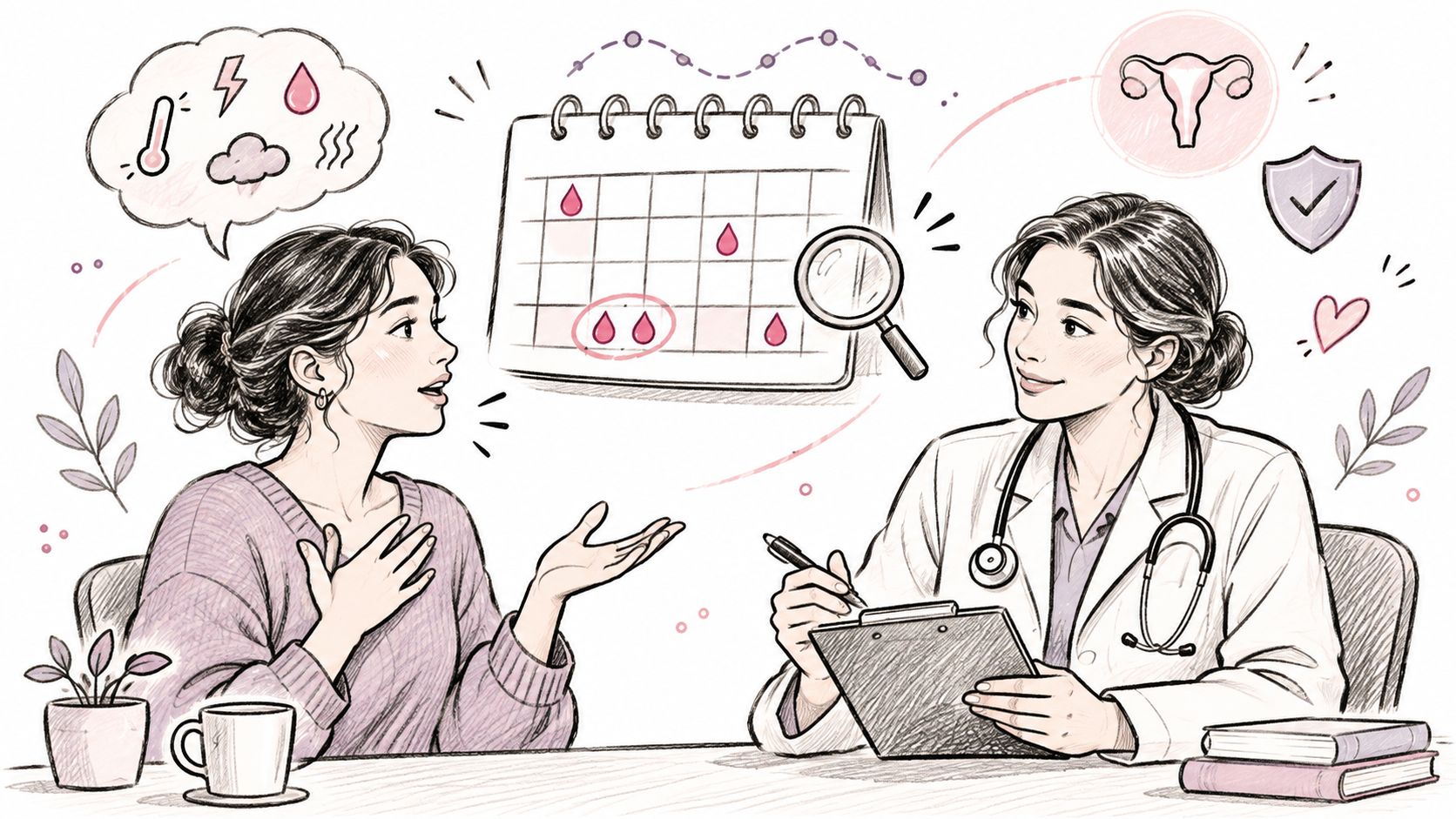
You don't need to wait until your periods stop to discuss symptoms. Start by describing what changed and when, rather than asking only whether a hormone test can confirm menopause.
The World Health Organization's menopause guidance identifies menopause after 12 consecutive months without a menstrual period, when another cause doesn't explain the absence of bleeding, and emphasizes that menstrual history and symptoms often guide diagnosis. Perimenopause is the transition leading up to that point.
Your clinician should explain whether your history fits that transition and whether another condition needs investigation. Fatigue, disturbed sleep, and mood changes shouldn't automatically receive a hormonal explanation.
Ask what testing would change
Bring bleeding dates, a symptom log, and any previous thyroid or blood-count results. Include contraception, medications, supplements, and any possibility of pregnancy.
- Say: Explain that you want to understand whether this is perimenopause and which alternative explanations deserve checking.
- Ask: Which tests would change the diagnosis or treatment, rather than produce another result?
- Clarify: If testing isn't needed, ask what clinical findings support the diagnosis and what would prompt reassessment.
For example, someone with heavy bleeding and exhaustion needs a discussion about blood loss and possible anemia, not just advice about coping with menopause. Someone whose main problem is persistent fatigue may need a broader assessment than hormone testing.
Practical rule: A useful diagnosis explains both what fits menopause and what still needs checking.
Our guide to whether you can test for perimenopause can help you prepare for that distinction. A useful answer should identify your likely stage, explain any investigations, and tell you what to monitor.
2. Which symptoms are worth treating, and what options fit my health profile?
Choose a concrete starting point: perhaps night sweats interrupt your sleep, vaginal discomfort makes sex painful, or anxiety affects your work. You don't have to prove that every symptom is severe before asking for help.
Bring a ranked list of your most disruptive symptoms and describe their consequences. Saying that you repeatedly change damp bedding gives your clinician more useful information than reporting poor sleep.
Shared decision-making means discussing your goals, treatment options, concerns, and the consequences of leaving symptoms untreated. The menopause information-needs review describes this approach and highlights the importance of looking beyond hot flashes to broader health and treatment questions.
Match the treatment to the problem
Ask your clinician to separate the options into hormonal treatment, non-hormonal prescriptions, psychological therapies, and practical changes. These aren't interchangeable, and you don't have to try everything simultaneously.
- Expected benefit: Which symptom should this option improve, and how will we judge whether it's working?
- Trade-offs: What side effects, costs, interactions, or treatment burdens should I expect?
- Alternatives: What can we try if I don't want this treatment or can't use it?
- Stopping: What should I expect if I discontinue it, and should I contact you first?
Say your main concern is night sweats, but you're also worried about medication side effects. A useful answer compares realistic options for that symptom and agrees on a manageable starting approach.
Avoid leaving with an undifferentiated bundle of prescriptions, supplements, and lifestyle instructions. A prioritized plan makes it easier to identify what helps and what causes problems. Your clinician should also explain when to reassess rather than leaving you to decide indefinitely whether the treatment has worked.
3. What are the risks and benefits of hormone therapy for me specifically?
Hormone therapy isn't a single yes-or-no decision. The preparation, route, dose, need for a progestogen, and your health history all belong in the conversation.
Bring details of previous blood clots, cardiovascular disease, breast cancer, migraine, unexplained bleeding, and whether you've had a hysterectomy. Include relevant family history, but ask your clinician to distinguish a family history from a condition you've personally had.
The updated international recommendations on menopausal hormone therapy describe a generally favorable benefit–risk balance for symptomatic women younger than 60 or within 10 years of menopause, when contraindications are absent. They also identify greater clotting and stroke concerns with oral estrogen than with transdermal estradiol in relevant risk groups.

Request a personalized comparison
Ask why the proposed option suits you better than the alternatives. If your clinician recommends a patch rather than a tablet, you should understand the reason, not just the instructions.
For example, a patient with troublesome hot flashes and a clotting history needs an individualized assessment of whether systemic hormones are appropriate at all. A patch isn't an automatic workaround for every contraindication.
Ask for risk in absolute terms, including the baseline risk and how treatment could change it, rather than hearing only that risk increases.
A useful answer should address symptom relief, important risks, uterine protection when relevant, expected bleeding, and review arrangements. It should also separate treatment for whole-body symptoms from local treatment for vaginal symptoms.
Use our explanation of hormone therapy for menopause to prepare your terminology. Don't start, stop, or change prescribed hormones based on a general comparison alone.
4. What non-hormonal options can ease hot flashes and night sweats?
Preferring not to use hormones is a valid starting point for a treatment discussion. So is being advised against them because of your medical history.
Ask for an active alternative plan, not a list of things to avoid. Your clinician should distinguish prescription options from comfort measures and explain what each approach is intended to accomplish.
Bring a diary that records hot flashes, nighttime awakenings, sweating, and their effect on daily life. Include treatments you've already tried, why you stopped them, and any adverse effects.
Compare benefit, burden, and monitoring
Use these prompts to make the discussion specific:
- Prescription choice: Which non-hormonal medication fits my symptoms, other conditions, and current medicines?
- Safety checks: If we're considering fezolinetant, what liver testing and other monitoring does its current prescribing guidance require?
- Practical measures: Are bedroom cooling, clothing changes, and avoiding my observed triggers reasonable additions, or is symptom severity a reason to start medical treatment now?
- Review: What should I record, and when should we decide whether to continue or switch?
For example, someone who can't use hormones after breast cancer treatment should bring their cancer-treatment medication list. The clinician can then assess potential interactions rather than selecting a hot-flash treatment in isolation.
A fan, breathable bedding, and easy-to-remove layers may make an episode more manageable. Feeling cooler isn't the same outcome as reducing the underlying frequency or severity of hot flashes, so track what changes.
Our guide to HRT alternatives can help you organize the options you want to discuss. Don't assume that a supplement is safer because it's nonprescription; bring the product label so your clinician or pharmacist can review its ingredients.
5. How can we address sleep disruption, mood changes, and low energy?
Which night fits you: waking sweaty, lying awake worrying, or sleeping through and still feeling unrefreshed? Say that first. Each pattern leads to a different decision.
A review of gaps in menopause recognition and care emphasizes the need to distinguish perimenopause from conditions such as thyroid disease, anemia, depression, medication effects, and sleep disorders. I treat sleep, mood, and energy as three questions, even when they arrive together.
Bring a short log: bedtime, awakenings, night sweats, daytime sleepiness, mood, and energy. Add snoring, waking gasping, alcohol use, and any medicine that seems to change alertness or sleep.

Ask for separate assessments when needed
A useful answer names the main problem: night-sweat disruption, persistent insomnia, a mood condition, a possible breathing disorder, or overlap. It should also say what happens next.
Someone who wakes soaked needs a plan for the sweats themselves. Someone whose partner reports loud snoring and gasping should ask whether a sleep assessment is appropriate.
Use these prompts:
- Insomnia: "Does cognitive behavioral therapy for insomnia, CBT-I, fit this pattern, and how do I access a program?"
- Mood: "Does anxiety or depression need its own assessment and treatment, rather than waiting for other menopause symptoms to settle?"
- Energy: "Which findings would justify blood tests, a medication review, or a referral?"
If you are considering an herb for fatigue, bring the exact product label and use information on typical doses and safety notes as discussion material, not a prescribing instruction.
Agree on one outcome you can review, such as functioning better at work or waking more refreshed. Seek urgent help for suicidal thoughts or an immediate mental-health crisis rather than waiting for a routine menopause review.
6. What are my cardiovascular and bone health risks, and what should I screen for?
A menopause appointment is a good opportunity to review prevention, even when hot flashes brought you through the door. Symptom relief and long-term risk assessment are related conversations, but they aren't the same decision.
Bring previous blood-pressure readings, cholesterol and glucose results, fracture history, and any bone-density reports. Tell your clinician about smoking, medications, family history of cardiovascular disease or hip fracture, and changes in activity.
Don't ask only whether your results are normal. Ask what they mean together and which findings would change your care.
Leave with a screening and action plan
Your discussion should cover:
- Cardiovascular assessment: Ask whether a validated risk calculation is appropriate and what blood-pressure, cholesterol, or glucose goals apply to you.
- Bone assessment: Ask whether you need a DEXA bone-density scan now or later, and which risk factors determine that timing.
- Movement: Ask how to approach resistance, weight-bearing, and balance exercise safely given your health and fracture history.
- Nutrition and medication: Ask whether your diet meets your needs and whether supplements or prescription treatment are indicated.
Say you have a prior low-trauma fracture but feel well and have no hot flashes. That history still deserves attention; the absence of bothersome menopause symptoms doesn't answer the bone-health question.
Likewise, a patient with high cholesterol needs a prevention discussion based on their overall risk, not an assumption that treating menopause symptoms resolves cardiovascular concerns. Our guide to cardiovascular risk reduction can help you organize those questions.
Before you leave: Know which tests are being ordered, who will explain the results, and what happens if a result needs action.
A useful answer names the next step. It might be monitoring, further assessment, an exercise referral, or treatment, with a clear reason for that choice.
7. How can I manage weight gain and metabolic health during menopause?
Bring more than a scale reading. A brief record of meals, activity, sleep, medication changes, and weight trends gives your clinician a better starting point than a request to lose weight.
Ask what needs improving medically and what support would make change realistic. Waist measurement, blood pressure, glucose, cholesterol, physical function, and strength may all belong in the discussion, depending on your history.
Don't let the appointment become a debate about willpower. Explain practical barriers, including exhaustion, joint discomfort, shift work, food access, or a previous eating disorder.
Build a plan you can repeat
Ask your clinician to identify the priority and connect it to an achievable action.
- Assessment: Do my symptoms or medications suggest another contributor to weight change, and are any metabolic tests indicated?
- Nutrition: Would a registered dietitian help me plan meals that fit my preferences, health needs, and schedule?
- Activity: What resistance training or other movement is safe for me, and would a physical therapist help with pain or limitations?
- Treatment: If I have a weight-related condition, which treatment options are appropriate beyond general lifestyle advice?
For example, someone with prediabetes and severe sleep disruption needs a plan that addresses both metabolic risk and the barriers to following it. Advising more exercise without discussing exhaustion is unlikely to produce a usable plan.
Use the following video as a conversation starter, then ask which recommendations fit your circumstances.
▶ PlayA useful answer should include realistic goals and a review process, not a promised amount of weight loss. If hormones are being discussed, ask which menopause symptoms they would target rather than treating them as a weight-management prescription.
8. Which screenings should I keep up, and what can help vaginal and urinary symptoms?
Dryness, painful sex, urgency, leaks, and recurrent urinary symptoms rarely get raised unless you raise them. Say them plainly, even if they feel too minor to lead the appointment. These concerns deserve their own assessment, separate from your hot flashes or sleep problems.
Bring previous cervical and breast-screening results, relevant family history, any urinary test results, and a list of products you have already tried. Describe when the discomfort happens: at rest, during sex, or when passing urine. That detail shapes what your clinician looks for.

Separate treatment, screening, and bleeding evaluation
Ask whether your symptoms fit genitourinary syndrome of menopause, whether an examination or testing is needed, and how moisturizers, lubricants, local vaginal estrogen, or other options compare for you. Our guide to genitourinary syndrome of menopause explains the terminology.
For example, someone with painful sex and urinary burning should not assume both symptoms share one cause. A useful answer explains what can be treated now and what requires investigation.
- Local treatment: Ask which formulation fits your symptoms and preferences, how to use it correctly, and when to review whether it is working.
- Leaks and urgency: Describe the pattern precisely: what triggers a leak, how often urgency hits, and whether you make it to the toilet in time. Then ask whether you need urine testing, a bladder assessment, or referral for pelvic-floor support. Information on managing leaks after menopause can help you name these concerns before the visit.
- Routine screening: Ask which breast, cervical, and colorectal screenings are due based on your age, history, and previous results.
Keep unexpected bleeding separate from routine screening. The American College of Obstetricians and Gynecologists advises medical evaluation of any vaginal bleeding after menopause, even light spotting, and discussion of unusually heavy bleeding, bleeding between periods, closely spaced cycles, or bleeding after sex during the transition.
Report those changes when they happen rather than waiting for a scheduled screening. Ask what examination or testing is needed and how promptly it should happen.
How the 8 Questions Compare by Focus, Tests or Treatments, and Who Should Ask
| Item | Core Focus | Key Tests or Treatments | Who Should Ask |
|---|---|---|---|
| Is this perimenopause or menopause, and could something else be causing my symptoms? | Confirming menopause stage and checking for other causes | TSH, complete blood count, glucose or lipid tests when appropriate; evaluate irregular bleeding | People with changing periods, fatigue, mood changes, or unexplained symptoms |
| Which symptoms are worth treating, and what options fit my health profile? | Prioritizing disruptive symptoms and choosing individualized treatment | Hormone therapy, non-hormonal medications, lifestyle changes, psychological therapies | Anyone whose menopause symptoms affect daily life |
| What are the risks and benefits of hormone therapy for me specifically? | Weighing hormone therapy benefits against personal risks | Estrogen alone or with progestogen; oral or transdermal options; periodic reviews | People considering hormone therapy, especially with relevant health risks or a uterus |
| What non-hormonal options can ease hot flashes and night sweats? | Managing vasomotor symptoms without hormones | Fezolinetant, low-dose paroxetine, gabapentin, oxybutynin, cooling strategies | People who prefer to avoid hormones or have a reason they may not be suitable |
| How can we address sleep disruption, mood changes, and low energy? | Treating sleep, mood, anxiety, and fatigue | CBT-I, antidepressants, screening for sleep apnea and depression | People experiencing persistent sleep problems, low mood, anxiety, or fatigue |
| What are my cardiovascular and bone health risks, and what should I screen for? | Assessing heart and bone health and preventing future problems | Blood pressure, lipids, glucose or HbA1c, DEXA scan, FRAX assessment | People approaching or past menopause, especially with risk factors |
| How can I manage weight gain and metabolic health during menopause? | Supporting metabolic health, muscle, and sustainable weight management | Waist measurement, blood pressure, blood sugar and cholesterol tests; strength training and nutrition support | People noticing weight or waist changes or who have metabolic risk factors |
| Which screenings should I keep up, and what can help vaginal and urinary symptoms? | Maintaining routine screenings and treating genitourinary symptoms | Cervical, breast, and colorectal screening; vaginal estrogen, moisturizers, lubricants, or ospemifene | People with vaginal or urinary symptoms, or those due for routine screening |
Turn Your Questions Into a Care Plan
Bring your symptom log, bleeding dates, medication list, and a shortlist of the questions that matter most to your next appointment. Lead with the symptom or concern that most affects your life, then explain what you'd like to be able to do differently.
You don't need to resolve every issue during the same visit. You do need to know which concerns require prompt investigation, which treatment decision you're making now, and what will be addressed at a follow-up appointment.
Wanting more information is reasonable. In a Norwegian general-practice survey, 59% of 625 women attending 54 clinics wanted menopause information. Preparing specific questions gives your clinician a clearer picture of the information and support you need.
Ask your clinician to summarize the agreement
Before leaving, check that you understand the plan in practical terms:
- Working diagnosis: What best explains the symptoms, and what remains uncertain?
- Investigations: Which tests or referrals are needed, what could they change, and how will you receive the results?
- Treatment: What are you starting, how should you use it, and which side effects should prompt contact?
- Monitoring: What should you record to judge improvement without tracking every detail of your day?
- Follow-up: When will treatment be reviewed, and who should you contact if problems develop sooner?
- Safety: Which bleeding changes or other symptoms shouldn't wait for the planned review?
Write down the answers in your own words. If the plan feels unrealistic, say why before you leave: perhaps the medication schedule doesn't fit your routine, a referral isn't accessible, or you remain uncomfortable with a proposed treatment.
Between visits, record changes that help answer the clinical question. If you're treating night sweats, note disrupted nights and daytime functioning; if you're investigating bleeding, keep dates and describe the flow. Avoid changing several supplements or treatments independently, because that makes benefits and adverse effects harder to interpret.
Our app, Lila, can help you organize symptoms, meals, sleep, and cycle patterns through daily check-ins, while its coach supports tracking and nutrition habits between visits. Setup takes 2 minutes, but the app isn't a substitute for medical advice, and medical decisions stay with your clinician.
A good menopause care plan is specific enough to follow and flexible enough to revise. You should leave knowing what you're trying, why you're trying it, and how you'll decide together whether it's helping.
Lila brings symptom tracking, photo meal logging, and a chat-based nutrition coach into one perimenopause app. Visit Lila to start organizing the patterns you want to discuss at your next appointment, while keeping diagnosis, hormone therapy, and other medical decisions with your clinician.
Get Lila, your personal coach for perimenopause.
Built for women in their 40s. 24/7 coaching, in your pocket.