
8 Ways to Reduce Water Retention in Perimenopause
Discover 8 ways to reduce water retention during perimenopause, with practical steps on sodium, hydration, movement, and when to see a doctor.
You wake up, swing your legs out of bed, and notice puffy ankles, a tighter waistline, and rings that feel suddenly snug. If that sounds familiar, perimenopause may be part of the story. Shifting estrogen and progesterone can make fluid retention feel unpredictable, which is why the most useful ways to reduce water retention work on different parts of the fluid system, not just one. The list below is ordered by how quickly the changes can act and how much effort they usually demand, so you can start with the easiest levers first and track what changes your bloating, weight, and swelling in one place. If you want a broader menopause overview as well, find relief from menopausal swelling.
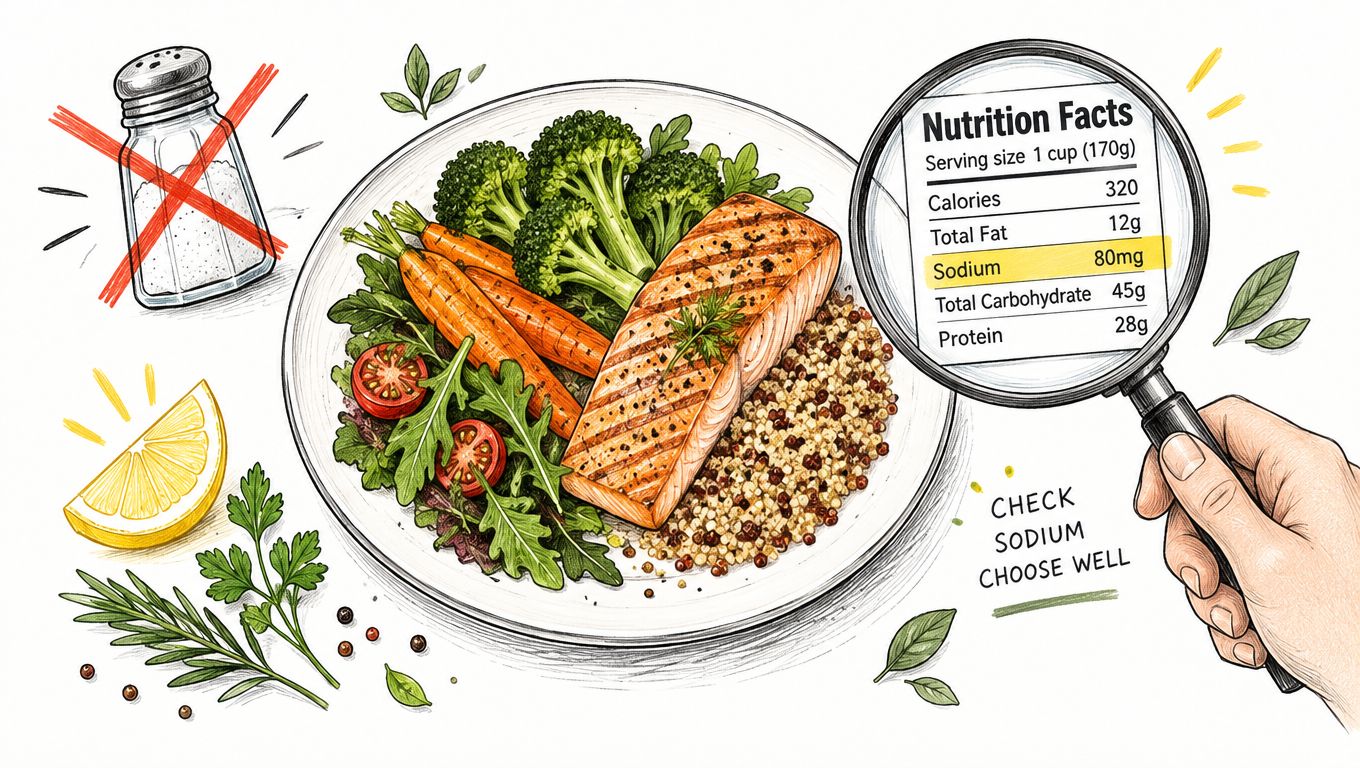
Table of Contents
- 1. Reduce Sodium Intake
- 2. Increase Potassium-Rich Foods
- 3. Optimize Hydration Levels
- 4. Increase Physical Activity and Exercise
- 5. Manage Caffeine and Alcohol Consumption
- 6. Monitor and Address Hormonal Factors
- 7. Use Targeted Supplements
- 8. Elevate Legs and Use Gentle Massage for Lymphatic Drainage
- 8-Point Comparison: Ways to Reduce Water Retention
- Build Your Water Retention Plan This Week
1. Reduce Sodium Intake
A restaurant lunch, packaged soup, and salty snack can leave your rings tight and ankles puffy the next morning. Sodium affects fluid balance quickly, so it is a useful first lever to test. The American Heart Association recommends that most adults stay at or below 2,300 milligrams of sodium per day, with an ideal limit below 1,500 milligrams for most adults, especially those with high blood pressure. Average U.S. intake is more than 3,100 milligrams daily, according to the AHA's sodium limit recommendations.
Start with the largest sources, including packaged foods, restaurant meals, sauces, and processed meats. Read labels, spread sodium across meals, and cook more often so you control the seasoning. Reducing intake by 1,000 milligrams per day can improve blood pressure and heart health, according to the American Heart Association. An analysis cited by the organization also associated every 2,300-milligram reduction with lower systolic and diastolic blood pressure.
Practical rule: log restaurant meals, packaged soup, and salty snacks rather than guessing. The next morning, record waist comfort, ring fit, ankle puffiness, and body weight if you track it.
Use one simple swap each day. Replace a processed meal with a home-cooked option, then season it with herbs, lemon, garlic, or spices. Review the foods that contribute the most sodium instead of trying to remove every trace of salt.
Kidney disease, heart failure, or a prescribed fluid restriction changes the decision. Follow your clinician's sodium target rather than applying general guidance.
Track sodium alongside bloating and swelling for several days. This gives you a practical test of whether the change helps your perimenopause symptoms, rather than assuming every fluctuation comes from diet. For related meal swaps, see foods to avoid during perimenopause.
2. Increase Potassium-Rich Foods
If sodium is the lever that pushes fluid up, potassium is one of the levers that helps the body rebalance it. Potassium helps regulate how fluid moves across cells and supports normal kidney handling of sodium. In practice, that means the plate matters as much as the saltshaker.
This usually doesn't require supplements. Build meals around spinach, kale, avocado, sweet potatoes, bananas, beans, and similar foods, and spread them through the day instead of loading them into one meal. That matters more than chasing a perfect number.
What to do at regular meals
- Add a leafy green base: Put spinach or kale under eggs, salmon, or tofu.
- Use a potassium side: Replace fries or chips with sweet potato or beans.
- Keep a fruit habit: A banana or avocado can help you shift the balance without making meals complicated.
- Check medications first: If you take blood pressure medicine or have kidney disease, ask your clinician before pushing potassium higher.
A useful trade-off here is that potassium-rich foods also tend to improve meal quality overall. A lunch built around salmon, greens, and sweet potato is naturally less likely to be paired with a sodium-heavy side dish than a processed convenience meal. That makes the change easier to sustain than a strict “no salt” rule.
For perimenopause, the true value lies in consistency. Some women notice that bloat is worse on days when they eat more packaged food and less produce, especially during cycle changes. Track those meals alongside symptoms in Lila or another log, then compare a few cycles before deciding whether potassium-rich meals are helping. For more food ideas, see foods for menopause.
3. Optimize Hydration Levels
Dehydration can make water retention look worse, not better. When intake is too low, the body tends to conserve fluid, so steady hydration supports the kidneys' normal work of clearing excess sodium and fluid. That's why “drink less” is usually the wrong advice for ordinary bloating.
The trick is to sip consistently instead of trying to catch up with a huge amount at once. Start the day with water, keep a bottle nearby, and drink around meals and workouts. If you're someone who forgets to drink until late afternoon, phone reminders help more than motivation does.
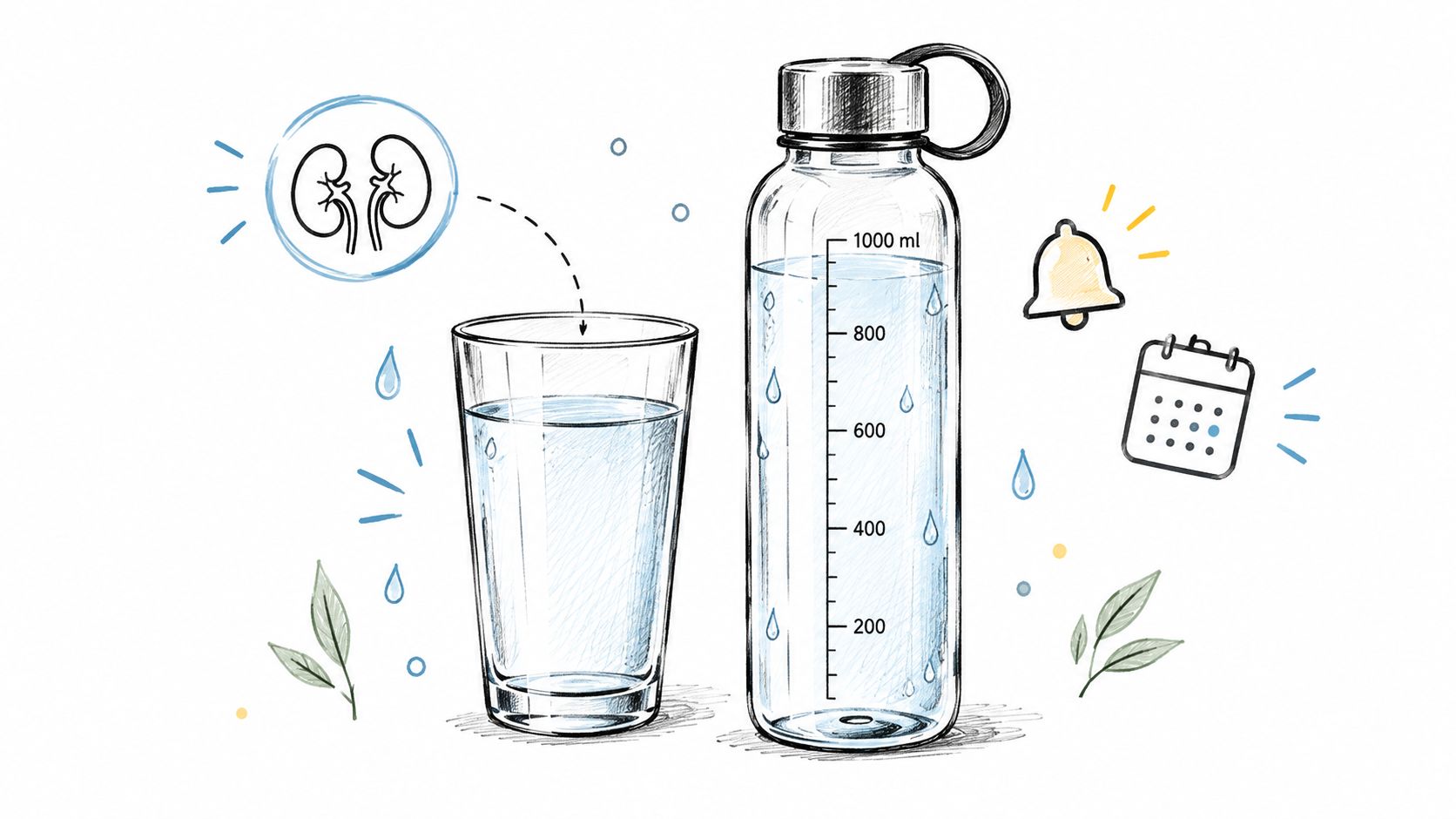
Drink steadily. Don't swing from very little water to a giant catch-up at night.
A practical approach is to pair hydration with the rest of your day. Drink before a walk, during exercise, and after salty meals. If you sweat a lot or feel flat without minerals, some people prefer electrolytes a few times a week, but the basic habit is still plain water first. If you want a mineral option, see electrolytes for hydration support.
Watch for the difference between thirst and bloating. If you drink more and your weight or waistband still feels unstable, the issue may be sodium load, inactivity, hormones, or another cause rather than hydration alone. Use daily check-ins to note how much you drank, how swollen you felt, and whether your energy changed. That makes the pattern visible instead of guessed.
4. Increase Physical Activity and Exercise
Movement helps fluid move. Sitting for long stretches lets fluid pool in the lower body, which is why ankles and feet often feel tighter after desk work, travel, or long shifts. Walking, cycling, swimming, and other moderate activity improve circulation and make it easier for the body to shift excess fluid out of tissues.
Start with what you can repeat, not what sounds impressive. A daily walk after lunch is often more realistic than a hard workout you'll skip. Strength training matters too, because muscle activity supports circulation and gives you another reason to move regularly.
The part people miss
Exercise can make the scale wobble in the short term. New or harder workouts cause muscle repair, and that can temporarily change how you feel in your body. Don't confuse that with failure. The better signal is whether swelling settles faster, clothes fit more comfortably, and your legs feel lighter after a few days of consistent movement.
- Choose repeatable movement: Walking is enough to start.
- Break up sitting: Stand, stretch, or walk for a few minutes during long work blocks.
- Pair workouts with hydration: That helps you avoid feeling flat or overly thirsty.
- Track timing: Some women do better with earlier movement because late workouts disrupt sleep.
If you want structure, browse best exercises for menopause. For runners, these hydration tips for joggers can help keep movement from backfiring through dehydration. Log the workout, then check whether ankle swelling, waist bloating, and next-day weight changes improve or stay the same.
5. Manage Caffeine and Alcohol Consumption
Caffeine and alcohol can both make fluid patterns noisier, but alcohol is usually the bigger problem. Alcohol interferes with normal fluid regulation and often worsens sleep, which can leave you feeling puffier the next day. Caffeine is more individual. A cup in the morning may be fine, but too much can worsen dehydration, jitters, and sleep disruption.
The trade-off is simple. If you love coffee, keep it earlier and smaller rather than pushing it all day. If alcohol is part of your routine, experiment with alcohol-free days and see what happens to bloating, sleep, and hot flashes. Many women are surprised that the scale is less informative than how their rings, face, and ankles feel the next morning.
Watch the combination. A late coffee plus wine at dinner often creates a worse night than either one alone.
Taper caffeine gradually if you're used to more than one or two cups. Withdrawal headaches are real, and they can make you abandon a change that was otherwise helping. For alcohol, the most useful move is often timing, not perfection. Avoiding it close to bedtime gives your body a better chance to settle overnight.
If you want a more detailed menopause angle, see caffeine and hot flashes. Track caffeine, alcohol, sleep quality, mood, and bloating together for a few days. That's usually enough to see whether your water retention is being amplified by stimulants, alcohol, or both.
6. Monitor and Address Hormonal Factors
Perimenopause makes fluid retention harder to predict because hormones fluctuate. Estrogen and progesterone do not move in a neat, steady line, and that makes it harder to know whether swelling is cycle-related or something that needs medical attention. The most useful step here is not guessing. It's tracking.
Start with your cycle dates, then add bloating, ankle swelling, morning weight, medications, and any symptoms like breast tenderness, headaches, or breathlessness. Over a few cycles, you may spot a pattern where fluid retention rises in the latter half of the cycle and eases later. That pattern can fit normal hormone shifts, while persistent or non-cyclical swelling needs a different look.
What helps most in practice
- Track for several cycles: One bad week doesn't explain a pattern.
- Bring data to your clinician: Dates, symptoms, and medication notes make the conversation more useful.
- Ask about hormone evaluation if symptoms are escalating: Your provider can decide whether testing or treatment makes sense.
- Treat sudden or one-sided swelling as medical, not hormonal: That pattern should not be written off.
Some women do feel better when hormone-related symptoms are addressed with prescribed options, but that decision belongs in clinical care, not in a generic wellness plan. The point of tracking is to make the pattern visible enough to discuss. If you're using Lila, the value is that your cycle, symptoms, meals, sleep, and mood sit in the same place, which makes it easier to separate a hormone-linked flare from an unrelated issue.
7. Use Targeted Supplements
Supplements can help some people, but they should be the last of the easy levers, not the first. Magnesium is the most practical place to start for many women because it's involved in normal muscle and hormone function, and some people notice less bloating when their intake improves. B vitamins can support overall metabolic function, and herbal options such as dandelion leaf, hibiscus, and parsley are sometimes used for short-term support.
The trade-off is safety. Supplements interact with medications, and “natural” doesn't mean risk-free. If you have blood pressure treatment, kidney concerns, or any chronic condition, check with your clinician first. It's smarter to test one product at a time than to start three and have no idea which one did anything.
Start small. One supplement, one change, one symptom log.
A practical structure helps here. Take magnesium with food if it upsets your stomach, use B-complex in the morning if it feels energizing, and treat herbal diuretics as short-term tools rather than a daily habit. Quality also matters, so choose third-party tested products when you can. If you want to compare this with your other habits, log the supplement, the dose on the bottle, and your next-day swelling or bloating in the same place you track meals and sleep.
This is also the section where restraint matters most. If your swelling is sudden, painful, generalized, or tied to shortness of breath, don't self-manage it with supplements. That deserves medical evaluation first.
8. Elevate Legs and Use Gentle Massage for Lymphatic Drainage
Leg swelling often settles in the ankles, feet, and calves because gravity wins when you sit or stand too long. Elevating your legs gives fluid a chance to move back toward circulation, and gentle massage can support that process. These are some of the quickest non-diet steps for dependent swelling, especially after a long day.
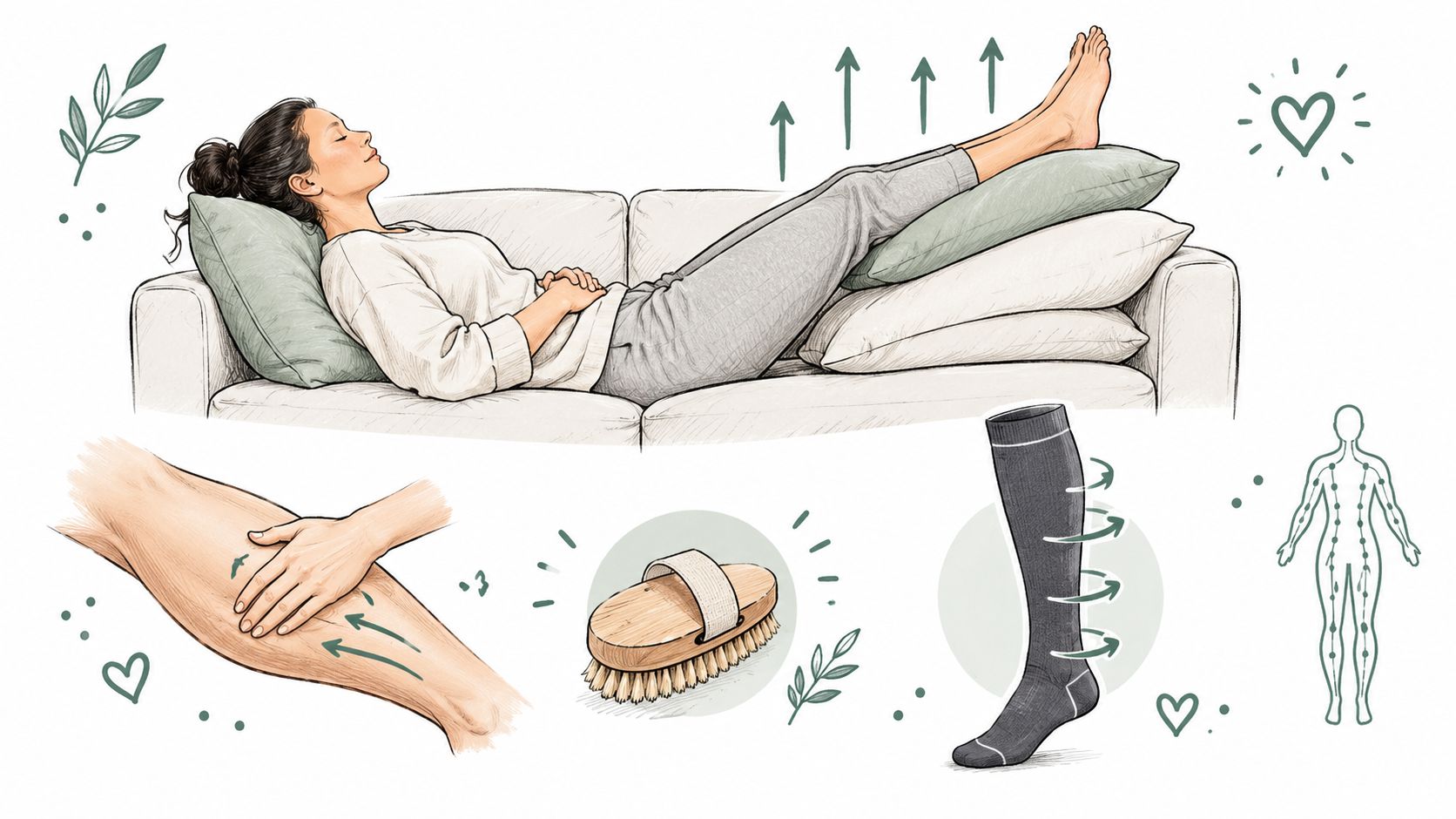
The simplest version is also the best one. Lie down, put your legs on pillows, and keep them above heart level for 10 to 15 minutes. If that feels too short, build the habit into a phone alarm at night. Add deep breathing while you're there, because stress keeps your body tense and less likely to settle.
Make it easy to repeat
- Use evening elevation: It helps limit overnight fluid buildup.
- Keep the pressure gentle: Long, upward strokes are enough.
- Try dry brushing carefully: Use a soft brush toward the heart, not aggressive scrubbing.
- Consider compression if needed: If your swelling is significant, ask a clinician whether compression socks are appropriate.
This is also where safety matters. Compression isn't for everyone, and circulation problems need screening before you use it. Persistent swelling, one-sided swelling, pain, redness, or sudden changes should be assessed rather than treated as a cosmetic issue. For general circulation support habits, see vein health lifestyle habits.
If you want a quick test, note your ankle size or sock marks before and after 10 to 15 minutes of elevation for several evenings. That kind of simple comparison tells you more than a vague sense that “it seems better.”
8-Point Comparison: Ways to Reduce Water Retention
| Strategy | 🔄 Complexity | ⚡ Resources & Speed | ⭐ Effectiveness | 📊 Expected outcomes | 💡 Ideal use cases / tips |
|---|---|---|---|---|---|
| Reduce Sodium Intake | Low–Moderate: requires consistent label reading and habit change | Low resources; effects often within 3–5 days | ⭐⭐⭐⭐, highly effective for fluid retention | 📊 2–3 lb water loss in ~1 week; improved BP and less bloating | 💡 Pair with potassium-rich foods; cook at home; aim <2,300mg (1,500mg optimal) |
| Increase Potassium-Rich Foods | Low: add whole foods; monitor if kidney disease | Low cost; benefits in days–weeks when consistent | ⭐⭐⭐, effective, best combined with sodium reduction | 📊 Reports of ~30% reduction in bloating; supports electrolyte balance | 💡 Aim 3,500–4,700mg/day, spread intake; consult if on potassium-altering meds |
| Optimize Hydration Levels | Low: habit formation required | Minimal cost; effects visible within days | ⭐⭐⭐, systemic benefits beyond retention | 📊 2–4 lb reduction in a week reported; better skin, energy, digestion | 💡 Aim ~half body weight in oz; sip consistently; track intake and symptoms |
| Increase Physical Activity & Exercise | Moderate: time commitment and gradual progression | Variable resources; results typically in 2–3 weeks | ⭐⭐⭐⭐, strong long-term benefits for fluid and metabolic health | 📊 3–5 lb water loss over ~2 weeks; improved mood, sleep, circulation | 💡 150 min/week moderate cardio + 2–3 strength sessions; log workouts and recovery |
| Manage Caffeine & Alcohol Consumption | Moderate: habit change and social considerations | Low cost; sleep and bloating often improve within days | ⭐⭐⭐, effective mainly via improved sleep/hydration | 📊 Up to ~25–30% reduction in bloating with strict limits; fewer hot flashes | 💡 Limit caffeine ≤200mg before noon; taper caffeine to avoid withdrawal; avoid alcohol near bedtime |
| Use Targeted Supplements (Mg, B-vits, diuretic herbs) | Moderate–High: choose quality products and monitor interactions | Cost varies; modest effects over weeks | ⭐⭐, modest, individual responses vary | 📊 15–30% improvement in some trials; small weight changes (1–2 lb) | 💡 Start one supplement at a time; use third‑party tested brands; consult provider |
| Elevate Legs & Gentle Lymphatic Massage | Low: simple, low-skill techniques | Minimal cost; immediate, temporary relief | ⭐⭐, effective for localized swelling, limited systemic effect | 📊 Quick reduction in ankle/foot swelling; ~1–2 lb localized change | 💡 Elevate 10–15 min daily, combine with deep breathing, dry brushing, or compression as needed |
Build Your Water Retention Plan This Week
Start with the levers that act fastest and demand the least from you. Tighten sodium first, add more potassium-rich foods, and drink water steadily through the day. Then bring in daily movement, especially walking and breaks from sitting, because circulation changes often show up quickly in the legs and ankles.
After that, look at caffeine and alcohol carefully. If sleep is off, swelling is often worse the next morning, and those two habits are common culprits. Track all of it together, ideally in one place, so you can tell whether a change in food, movement, or bedtime truly affects bloating, ring fit, and scale swings.
If your pattern looks cycle-linked, keep logging for a few cycles before you conclude it's “just hormones.” If the swelling is persistent, sudden, one-sided, painful, or comes with chest pain or shortness of breath, get medical care promptly. Fluid retention can be routine, but it can also be a sign that needs attention.
Supplements and hormone-based options can help some women, but they work best after you've collected a clear pattern and talked it through with a healthcare provider. If you want a first step for today, write down your sodium-heavy meal, your water intake, and your swelling level before bed, then compare it with how you feel tomorrow morning.
Lila helps you track symptoms, meals, sleep, energy, and cycles in one place, which makes it easier to spot what's driving water retention during perimenopause. If you want a clearer way to test changes instead of guessing, visit Lila and use the daily check-in to turn your bloating and swelling patterns into a plan you can follow.
Get Lila, your personal coach for perimenopause.
Built for women in their 40s. 24/7 coaching, in your pocket.