Perimenopause Night Sweat Relief: A Practical Plan
Reduce perimenopause night sweat frequency and severity with actionable steps, triggers to track, and clear guidance on when to seek medical care.
You wake at 3 a.m. with damp hair, a soaked neckline, and one foot already outside the covers. The room isn't necessarily hot, yet your sleepwear feels unusable and your mind is racing through the usual suspects: stress, dinner, the thermostat, or something wrong with your body.
A perimenopause night sweat deserves more attention than a quick change of pajamas, but it doesn't deserve panic. The useful question isn't just, “Why am I sweating?” It's, “What pattern is my body showing me, and what should I do next?”
Table of Contents
- The 3 a.m. Wake-Up Call You're Not Imagining
- When Perimenopause Night Sweats Actually Begin
- What You Can Change Tonight
- Tracking the Pattern So You Can Fix It
- When Night Sweats Are Not Just Hormones
- Building Your Personalized Relief Plan
- Frequently Asked Questions About Perimenopause Night Sweats
The 3 a.m. Wake-Up Call You're Not Imagining
Night sweats are a common vasomotor symptom, the same broad category that includes hot flashes. During the menopause transition, the body's temperature-control system can become more reactive. A small internal shift may trigger heat, sweating, and a sudden awakening, even when the bedroom feels comfortable.
One isolated sweaty night doesn't tell you much. A recurring sequence does. If episodes show up after wine, a late meal, a stressful day, or a particular point in your cycle, those details can turn an apparently random problem into a manageable pattern.
Practical rule: Don't judge the symptom by how embarrassing it feels at 3 a.m. Judge it by its frequency, intensity, timing, and effect on your daytime life.
The sleep disruption matters. You may fall back asleep quickly one night and lie awake for hours the next. You may also notice irritability, poor concentration, lower energy, or dread around bedtime. Those consequences are real, even when someone else tells you that sweating is “just part of getting older.” Guidance on perimenopause sleep problems can help you look at the broader sleep picture instead of treating each wake-up as a separate failure.
Start with simple comfort measures, not an elaborate shopping list. Keep spare sleepwear within reach, use breathable layers, and place water beside the bed. A caffeine-free ritual, such as shop chamomile tea bags, may also help you create a calmer wind-down routine, although tea won't address red-flag symptoms or replace clinical care.
Treat the night as information
Write down what happened before you fully wake up. Note the approximate time, whether your skin or clothing was damp, whether you needed to change the bedding, and whether you felt a racing heart, fever, or another unusual symptom.
This isn't about becoming obsessed with every fluctuation. It's about replacing vague frustration with useful evidence. Once you can describe the pattern clearly, you can choose between a bedroom adjustment, a trigger experiment, and a conversation with a clinician.
When Perimenopause Night Sweats Actually Begin
Many women assume night sweats start only after periods stop. That assumption is wrong. In the longitudinal Study of Women's Health Across the Nation, researchers followed 3,302 women across multiple U.S. sites from February 1996 through April 2013. Approximately 20% reported hot flashes or night sweats 5 to 10 years before their final menstrual period, according to the SWAN research.
Night-sweat prevalence began increasing roughly four years before the final menstrual period, reached about 30% immediately before it, and rose to approximately 40% immediately afterward. That pattern matters if your periods still look regular. A predictable cycle doesn't rule out early perimenopause, and blaming every episode on a warm room can delay a more useful assessment.
The same study found that hot-flash prevalence rose from roughly 20% several years before the final menstrual period to about 48% in the year before it and approximately 60% in the year after it. These figures place night sweats within a wider physiological transition rather than treating them as an isolated sleep complaint.
Your timeline may not match anyone else's
SWAN identified four distinct vasomotor-symptom patterns:
- Early onset with later decline: 18.4% of participants.
- Late onset with later decline: 29.0%.
- Early onset with persistently high frequency: 25.6%.
- Persistently low frequency: 27.0%.
Across the study population, as many as 80% experienced vasomotor symptoms at some point during the menopause transition. The full pattern analysis appears in the SWAN symptom-duration research.
A regular period, an irregular period, or a prior procedure can all make timing harder to interpret. The practical answer is not to diagnose yourself from a single symptom. Track the symptom alongside cycle timing, sleep, food, alcohol, stress, and associated sensations. For a broader timeline, use this stages of perimenopause guide as a framework, not as a rigid schedule.
What You Can Change Tonight
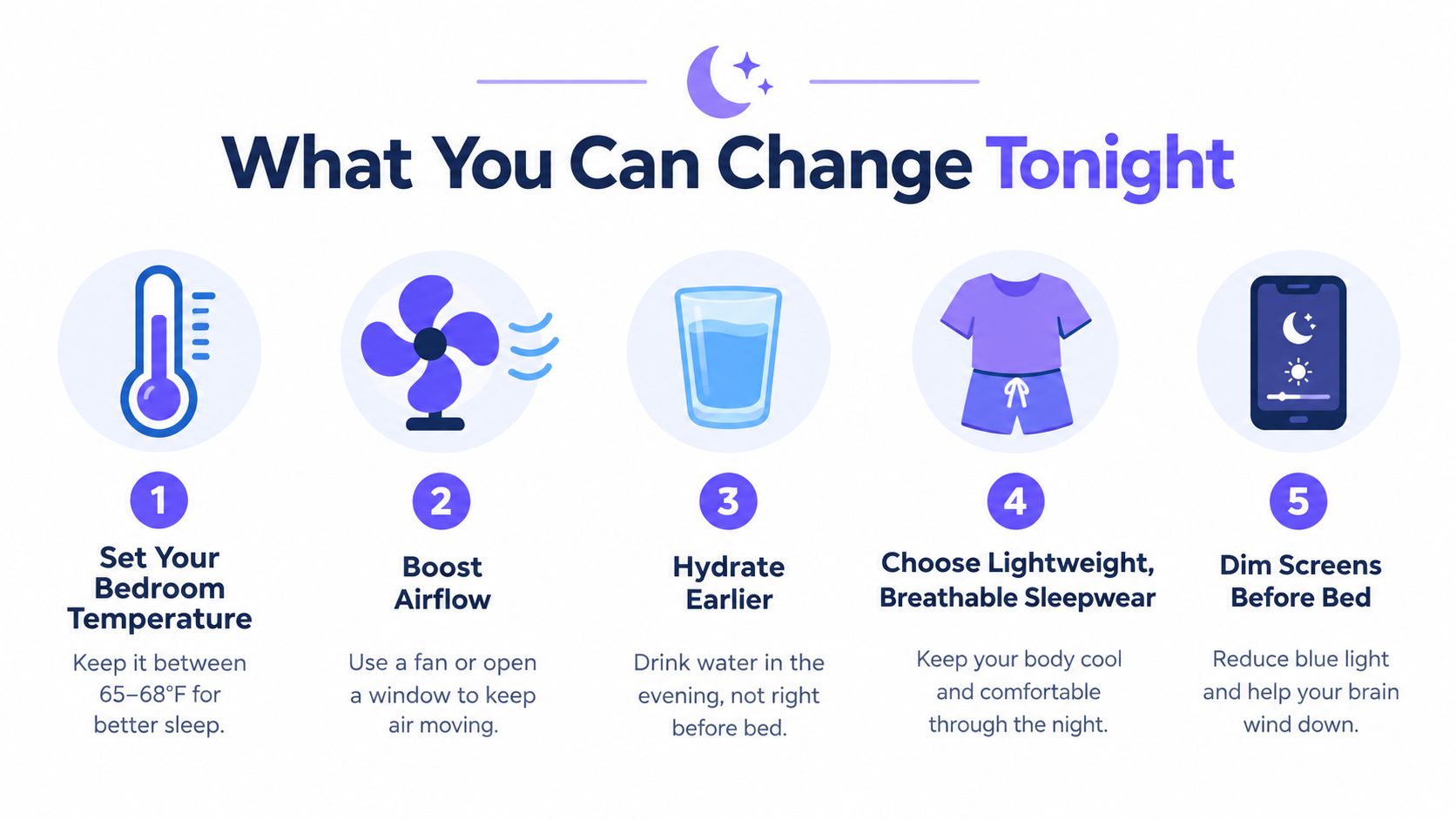
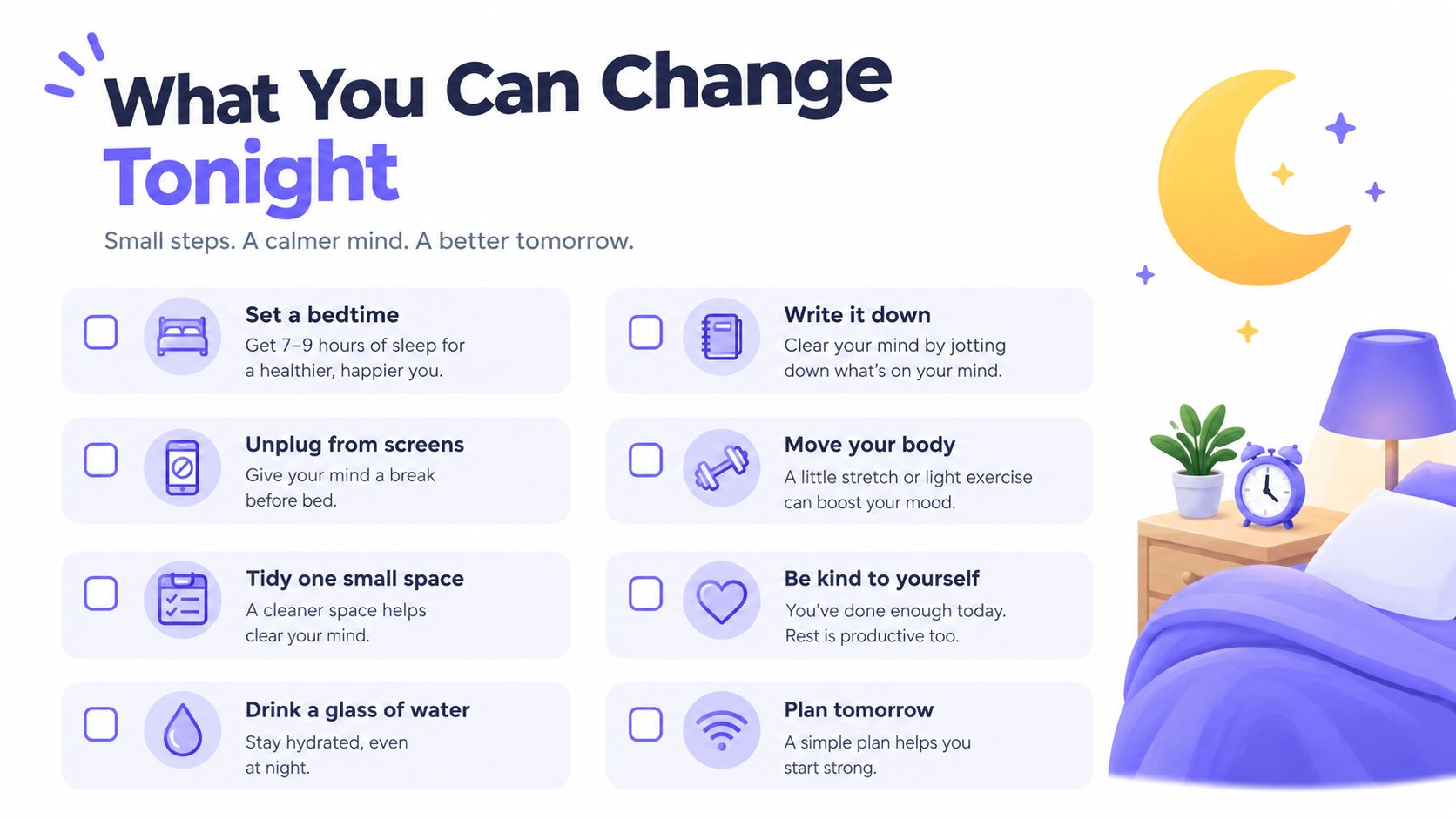
You don't need to overhaul your life before bed. Start with the environment, then remove the obvious triggers, then protect the sleep you still have.
Cool the room without freezing yourself
Set the bedroom to 65 to 68°F if that range feels comfortable for you. Use a fan to move air across the room, and choose lightweight bedding that you can remove without fully waking. Breathable sleepwear, moisture-wicking fabric, and layered blankets work better than one heavy comforter because you can adjust them quickly.
A cool pillowcase or chill pad can help during the wake-up itself. Keep a small glass of cool water on the nightstand, but move most hydration earlier in the evening if bathroom trips already interrupt your sleep. Practical guidance on how to sleep cooler and stay asleep can help you evaluate bedding and airflow choices without turning your bedroom into a refrigeration unit.
Remove common evening amplifiers
Test one change at a time when possible. Otherwise, you won't know what helped.
- Alcohol: Avoid it within three hours of bedtime while you're learning your pattern.
- Spicy food: Move late, hot meals earlier and observe whether the sweating changes.
- Caffeine: Stop after early afternoon if caffeine makes you alert or physically activated.
- Nicotine: Reduce exposure and discuss cessation support if you use tobacco.
- Screens: Dim your phone and other bright screens during the wind-down period.
A ten-minute routine is enough to begin. Try a warm, not hot, shower, slow breathing, gentle stretching, or reading in low light. Room-darkening shades can prevent light from turning a brief awakening into a full start to the day. Keep a notebook beside the bed and record the episode in a few words instead of opening your phone.
One surprisingly useful experiment is sleeping with one foot outside the covers. It gives your body a quick way to release heat without exposing your entire body to a cold room. If these steps don't touch moderate or severe symptoms, review practical options for how to reduce hot flashes at night and bring your notes to a clinician.
Tracking the Pattern So You Can Fix It
Random changes create random conclusions. You sleep with a fan one night, skip dinner the next, and drink chamomile tea after that. When the sweating changes, you still don't know why.
Use a simple two-week tracking protocol. Record the information immediately after waking, or in the morning if writing at night keeps you awake.
Log the same core details
| What to record | What it tells you |
|---|---|
| Date and approximate wake-up time | Whether episodes cluster at a particular time |
| Severity from 1 to 5 | Whether the problem is mild dampness or a full disruption |
| Clothing or bedding change | How much the episode affects sleep |
| Food and drinks in the previous three hours | Possible links with alcohol, spicy food, or late meals |
| Bedroom temperature and airflow | Whether the environment changes the result |
| Cycle day or bleeding changes | Whether episodes cluster around menstrual changes |
| Daytime stress, missed meals, or unusual exertion | Possible context for difficult nights |
| Fever, palpitations, cough, diarrhea, or weight change | Details that may require clinical review |
Don't wait for a perfect record. Even incomplete entries are better than “I think it happens often.” A perimenopause symptom tracker can make this easier if you prefer structured prompts to a paper notebook.
Read the pattern, not one bad night
After about ten or twelve entries, look for repetition. Do episodes follow alcohol, late meals, a particular cycle phase, a stressful day, or a warmer room? Do they happen despite a cool bedroom? Does the severity stay mild, or are you repeatedly changing clothes and bedding?
Separate triggers from signals. A late spicy meal may be a trigger. Fever, unexplained weight change, or strong palpitations are signals to discuss with a healthcare professional. Tracking doesn't prove a cause, and it shouldn't turn you into your own diagnostician. It gives you a precise starting point for a better appointment.
“I woke up sweaty” is a symptom report. “For two weeks, episodes occurred near midnight after alcohol, with no fever and no bedding change” is clinical information.
When Night Sweats Are Not Just Hormones
The most dangerous perimenopause advice is the advice that labels every night sweat hormonal. Hormonal changes are a plausible explanation, especially when the episode resembles a hot flash and follows a familiar pattern. They aren't an automatic explanation.
Drenching sweats with fever, unexplained weight loss, swollen lymph nodes, or a persistent cough deserve a faster clinical conversation. New medication or substance exposure also matters. Sweats paired with diarrhea, episodic headaches, or blood-pressure spikes need specific attention rather than another cooling product.
Other possible contributors include hyperthyroidism, mood disorders, gastroesophageal reflux, obesity, infection, medication effects, and malignancy. Early perimenopause creates a particular trap because vasomotor symptoms can begin before cycle changes become obvious. The answer isn't to assume the worst. It's to avoid assuming the simplest explanation without checking the pattern.
Hormonal versus something else at a glance
| Pattern | More likely hormonal | Worth a clinician visit |
|---|---|---|
| Timing | Episodes resemble heat waves and follow a recurring pattern | New, rapidly changing, or unexplained episodes |
| Intensity | Mild or moderate sweating that settles with cooling | Drenching sweat that soaks clothing or bedding |
| Associated symptoms | Flushing or a brief heat sensation without illness | Fever, unexplained weight loss, swollen lymph nodes, or persistent cough |
| Medication context | No recent medication or substance change | Symptoms begin after a new medication or dose change |
| Digestive or cardiovascular symptoms | None beyond the heat episode | Diarrhea, episodic headache, palpitations, or blood-pressure spikes |
| Duration | Mild, intermittent symptoms with a clear pattern | Persistent or severe symptoms that disrupt sleep and daytime function |
For a typical presentation in a woman aged 45 or older, menopause transition is usually a clinical diagnosis, and routine follicle-stimulating hormone testing is generally unnecessary, according to this clinical review of night sweats. A clinician will usually begin with a structured history and physical examination. If the cause remains unclear, an initial evaluation may include a complete blood count, tuberculosis testing, thyroid-stimulating hormone, HIV testing, C-reactive protein, and chest radiography.
Mild, intermittent sweats without red flags can reasonably be tracked for two to four weeks, then reassessed. Persistent, severe, feverish, or weight-loss-associated sweating calls for an earlier review.
Building Your Personalized Relief Plan
A useful plan has three levels. The first level protects tonight's sleep. The second identifies repeatable patterns. The third brings a clinician into the conversation when symptoms are moderate, severe, persistent, or medically unusual.
Start with one environmental change and one behavior change. For example, cool the room and stop alcohol near bedtime. Track the result instead of adding six more interventions. If the episode improves, keep the changes that fit your life. If it doesn't, move to the next layer rather than blaming yourself.
Match the plan to the burden
If sweating is occasional and you recover quickly, environmental adjustments may be enough. If you wake repeatedly, change clothes, dread bedtime, or struggle at work the next day, you need more than generic sleep tips. Document the impact in plain language: missed tasks, difficulty concentrating, morning exhaustion, or reduced ability to exercise and care for your family.
Clinician-guided options can include hormone therapy or nonhormonal treatment, depending on your health history, goals, risks, and preferences. Hormone therapy isn't automatically required, and it shouldn't be dismissed just because a general article lists lifestyle measures. Nonhormonal options may also require trial and adjustment, particularly when cost, access, side effects, or eligibility limit choices.
Lila combines daily check-ins with tracking for symptoms, mood, sleep, energy, meals, and cycles, and provides a chat-based coach for questions outside appointment hours. It can support pattern recognition and action planning, but it can't diagnose, interpret red flags as a medical professional, or replace a conversation about treatment. Use it as one organizational option alongside a notebook, spreadsheet, or clinician-approved plan.
Bring your two-week record to the appointment. Ask what pattern the clinician sees, what causes need ruling out, which treatments fit your medical history, and when you should follow up. If you're considering hormone therapy, learn the basics in this guide to what hormone therapy is for menopause, then discuss your individual situation with a qualified professional.
Frequently Asked Questions About Perimenopause Night Sweats
How long can perimenopause night sweats last?
For women with frequent vasomotor symptoms, SWAN found a median total duration of 7.4 years, with symptoms lasting a median of 4.5 years after the final menstrual period. When frequent symptoms began before or during early perimenopause, the total course exceeded 11.8 years, with a median of 9.4 years after the final menstrual period. See the SWAN duration analysis.
What if hormone therapy isn't an option or I don't want it?
Use the action ladder: cool the environment, remove personal triggers, track results, and ask about clinician-guided nonhormonal options.
When should I seek help?
Book a review when symptoms disrupt sleep or daytime function. Seek faster assessment for drenching sweats, fever, unexplained weight loss, swollen nodes, persistent cough, or unusual associated symptoms.
Lila helps you log night sweats alongside sleep, mood, meals, energy, and cycle changes, then turns those records into practical next steps and questions for your clinician. Visit Lila to begin a more organized, data-informed approach to your perimenopause symptoms.
Get Lila, your personal coach for perimenopause.
Built for women in their 40s. 24/7 coaching, in your pocket.