
Progesterone Cream for Postmenopausal Women: A Guide
Is progesterone cream for postmenopausal symptoms right for you? Our guide explores the research on benefits, risks, and proper use to help you decide.
 Michelle
You’re lying awake at 2 a.m., skin suddenly hot, sheets kicked off, then back on. The next day you search “progesterone cream for postmenopausal” and find two very different worlds. One says it’s a gentle answer for hot flashes, sleep, mood, skin, and weight. The other says it barely works at all.
That split is frustrating because both sides sound confident.
Most women looking into progesterone cream aren’t chasing a trend. They’re trying to feel better without guessing. They want to know whether a cream rubbed on the skin can help, whether it’s safer than pills, and whether it’s worth the money and effort.
The situation becomes complex. The research doesn’t tell a simple story. Some findings are encouraging in narrow areas. Others are disappointing for the symptoms women most want relief from. The best way to approach this topic is with a calm filter: what the cream is, what the evidence supports, what it doesn’t, and how to tell if it’s helping your own body.
Navigating the Buzz Around Progesterone Cream
A common scenario goes like this. You read a forum post from a woman who says progesterone cream changed everything. Then you click to another page warning that creams are overhyped and poorly absorbed. Then a social post claims it can smooth skin, stop hot flashes, and “balance hormones” naturally.
That kind of mixed messaging makes it hard to know what’s solid and what’s marketing.
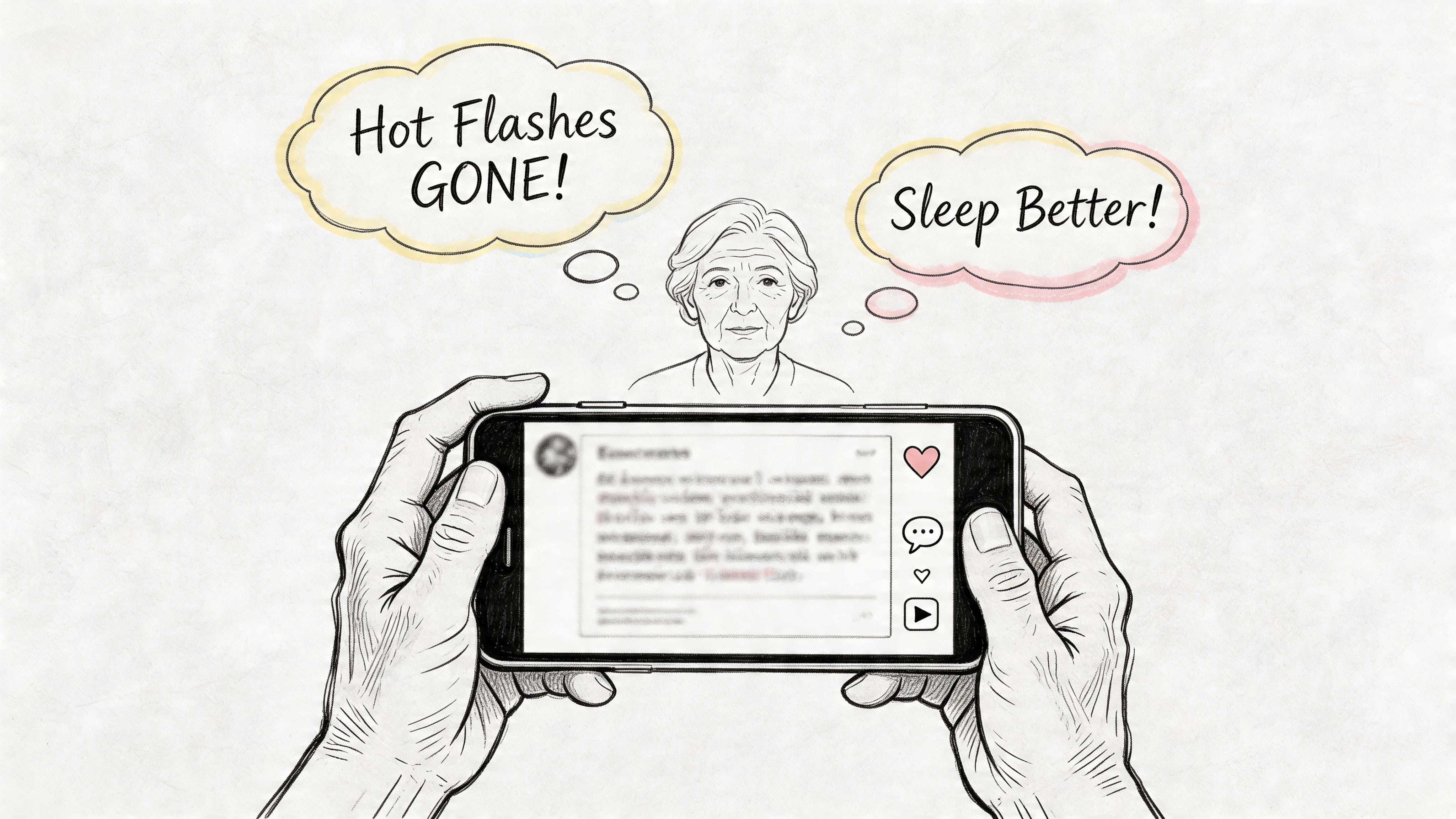
Part of the confusion comes from the fact that progesterone is a real hormone with important roles in the body, but progesterone cream is a delivery method with uneven evidence behind it. Those are not the same thing. A hormone can be useful in one form and less reliable in another.
Another reason for the noise is that “natural,” “bioidentical,” “compounded,” and “over the counter” often get blended together online as if they mean the same thing. They don’t. And if you’ve already been trying to sort through options like hormone therapy for menopause, that blur can make decisions even harder.
The most helpful question isn’t “Is progesterone cream good or bad?” It’s “What does it reliably do, for whom, and compared with what?”
That’s the lens worth using. Some women do feel better on it. Some don’t. The science behind those different experiences matters more than a glowing testimonial or a dismissive headline.
Understanding Your Body's Hormonal Shift After Menopause
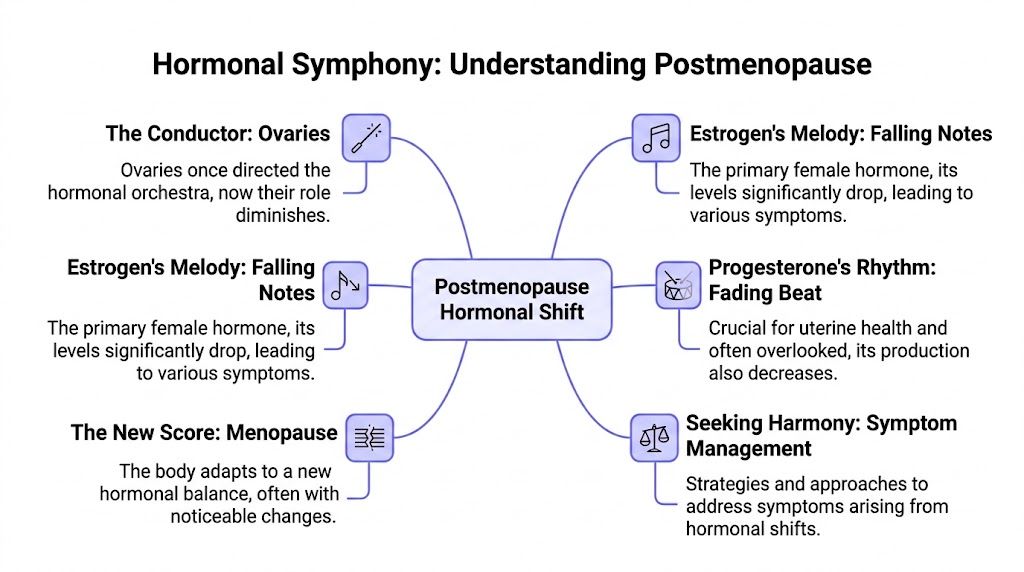
Think of your reproductive hormones as a small orchestra. For years, estrogen and progesterone played together in a repeating rhythm directed by your ovaries. Estrogen often carried the melody. Progesterone added structure and balance.
After menopause, that orchestra changes dramatically.
The hormonal symphony gets quieter
Before menopause, progesterone rises after ovulation during the second half of the menstrual cycle. It helps prepare the uterus for a possible pregnancy and acts as part of the body’s larger hormonal rhythm. Estrogen and progesterone don’t solely “compete.” They work in sequence.
Once ovulation stops, progesterone production drops sharply. Estrogen also falls, but women often hear more about estrogen because it’s linked so directly to hot flashes, vaginal dryness, and bone health. Progesterone gets less attention, even though its decline is part of the overall shift.
This helps explain why adding progesterone back can sound logical. If one section of the orchestra faded out, restoring it seems like a reasonable idea.
Symptoms don’t come from one hormone alone
Postmenopausal symptoms rarely come from one neat cause. Hot flashes involve brain temperature regulation. Sleep disruption can connect to hot flashes, anxiety, mood changes, or plain aging. Skin changes reflect lower hormone exposure over time, plus sun, genetics, and lifestyle.
That’s one reason women can feel confused when someone says a single cream should fix everything.
If anxiety has become part of this stage for you, this guide to understanding menopause and anxiety symptoms may help put those emotional changes in context. Menopause affects more than periods. It can reshape how your body feels, how your brain reacts, and how well you rest.
Why hormone levels can feel abstract
Many women hear terms like estradiol, progesterone, FSH, and LH and feel lost fast. That’s normal. Hormone language can sound more precise than it really is in daily life. A lab result is one clue, not your whole story.
If you want a simple baseline for one key hormone, this explainer on normal estradiol levels can help you understand where estradiol fits into the bigger picture.
A useful way to think about postmenopause is this:
Your ovaries retire from their old monthly rhythm. They no longer produce hormones in the same cyclical way.
Progesterone’s beat largely fades. Without ovulation, your body doesn’t make the same regular progesterone rise.
Estrogen’s melody also softens. Lower estrogen contributes to many classic menopause symptoms.
Your body adapts to a new score. Some women adjust smoothly. Others feel major changes in sleep, temperature control, mood, skin, and sexual comfort.
Menopause isn’t a hormonal “failure.” It’s a normal transition. The challenge is that normal doesn’t always feel comfortable.
That’s why treatments need to be judged by what they improve, not by how appealing the theory sounds.
What Exactly Is Progesterone Cream and How Does It Work
Progesterone cream sounds simple on the surface. You rub a hormone cream onto your skin and expect your body to absorb it. For many women, that seems more intuitive than swallowing a pill.
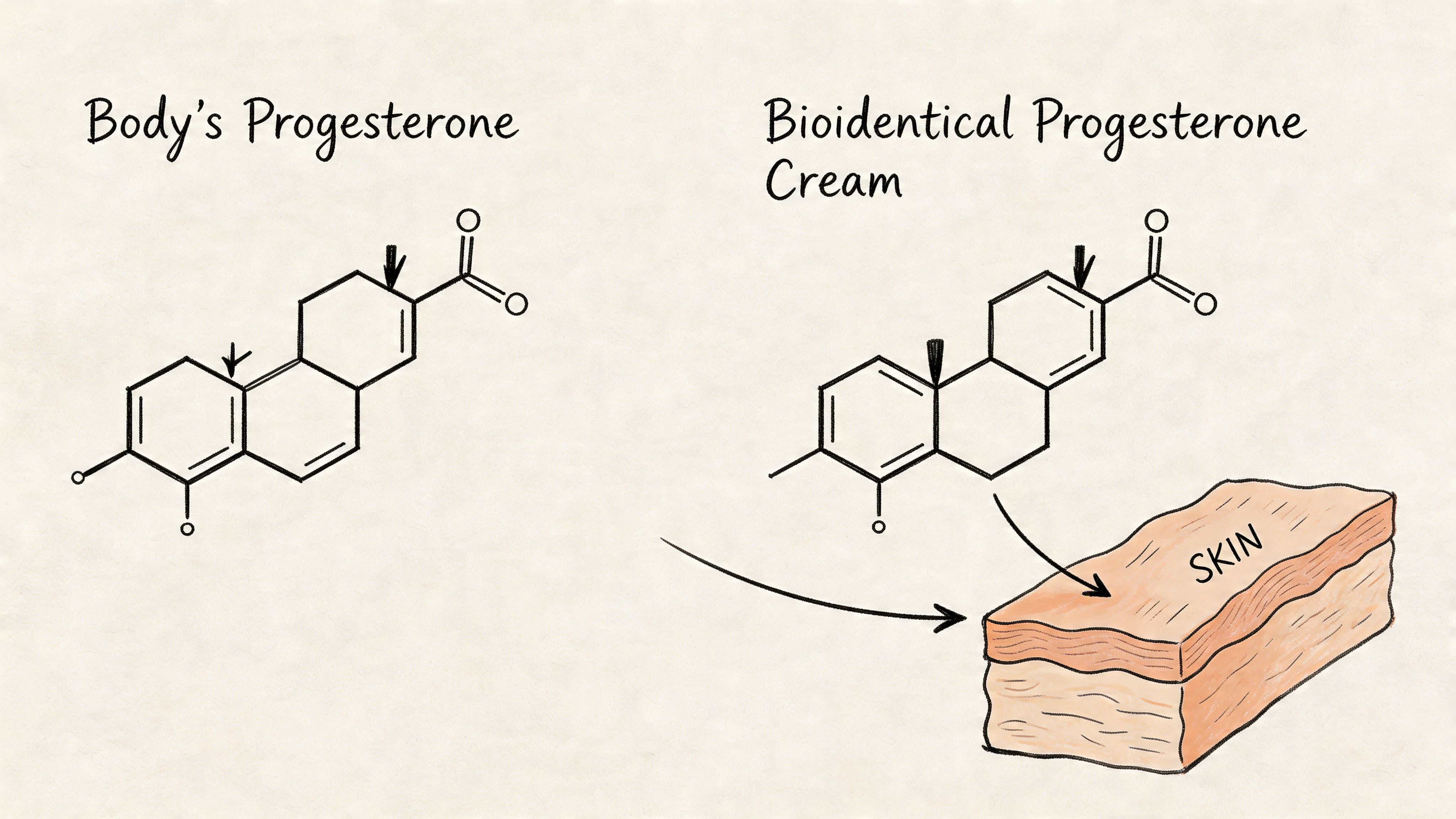
Progesterone cream is a topical product made to deliver progesterone through the skin. In menopause discussions, this usually means bioidentical progesterone, which has the same molecular structure as the progesterone your body naturally made before menopause.
The basic idea behind transdermal delivery
A transdermal cream works like a medication that uses the skin as an entry point. The goal is not to moisturize the surface. The goal is to move enough progesterone through the skin barrier and into the body to create a real effect.
That route is different from an oral capsule. A pill goes through the digestive system and then through liver processing before it circulates more widely. A cream tries to avoid that first pass through the liver.
On paper, that sounds appealing. Application is easy. The product may feel gentler than a pill. And many women assume that a hormone placed on the skin will move into the bloodstream in a steady, dependable way.
Why absorption is the hard part
Your skin is built to keep things out. It is less like a sponge and more like a brick wall with tiny gaps. Some substances can get through better than others, but that does not mean absorption will be strong or predictable.
Progesterone is lipophilic, which means it mixes more easily with fat than with water. That property helps it enter the outer layers of skin. It does not guarantee that enough progesterone will reach the bloodstream, or that blood levels will rise consistently from one woman to another.
That gap between theory and real-world performance is where much of the confusion begins.
A review in the Medical Journal of Australia described a recurring problem with transdermal progesterone creams. The authors found that studies repeatedly showed only minor increases in plasma progesterone, along with little meaningful clinical effect on symptoms such as hot flashes, mood changes, bone metabolism, or lipid measures. They also noted that skin absorption varied and that progesterone pharmacokinetics were difficult to predict.
Why one cream may behave differently from another
Even products that look similar on the label may not act the same way in the body. Several variables affect absorption:
The cream base. The ingredients carrying progesterone can influence how much gets through the skin.
The dose in the product. A label tells you how much progesterone is in the cream, not how much your body absorbs.
The application site. Skin thickness and oil content vary across the body.
Your individual skin barrier. Age, hydration, and skin condition can all change absorption.
This helps explain why online reviews can feel so contradictory. One woman may feel better using a cream, while another notices nothing. Both reports can be honest. The delivery method itself is inconsistent.
Here’s a short visual explainer if you want a quick overview of how topical progesterone is commonly described:
▶ PlayBioidentical does not answer the whole question
“Bioidentical” describes the molecule. It does not prove the product works well for a specific symptom.
That distinction matters. A cream can contain progesterone that matches your body’s natural hormone exactly and still fail to deliver a reliable, symptom-relieving dose. In other words, the ingredient may be familiar, but the delivery system may be uneven.
A hormone can be real, bioidentical, and still not work consistently in cream form.
For postmenopausal women, the practical question is not just “What is in this cream?” It is “Does this form help the symptom I care about, in a measurable way?” That is the standard worth using before you spend months hoping a promising theory will translate into real relief.
The Mixed Evidence on Progesterone Cream's Benefits and Risks
A common scenario goes like this. One woman says progesterone cream changed her nights within a week. Another says it did nothing at all. Both stories can be real, and that is exactly why this topic creates so much confusion.
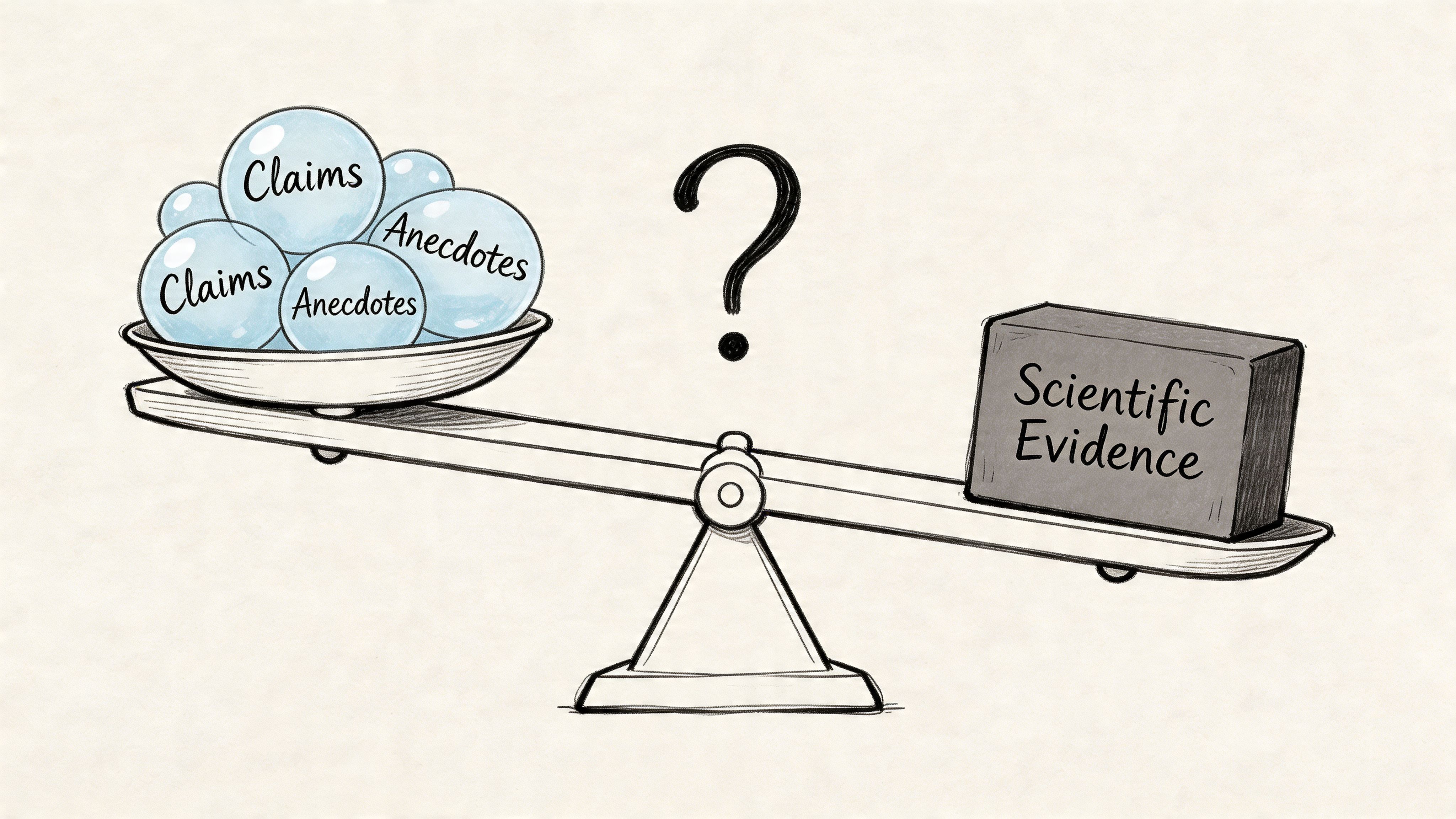
The research is mixed in the same way real life is mixed. A few studies suggest possible benefits in specific settings. Broader reviews do not support sweeping claims that progesterone cream reliably treats the main symptoms many postmenopausal women are trying to solve.
Hot flashes and night sweats
The online noise often commences at this stage.
One randomized trial did report encouraging results for vasomotor symptoms in some postmenopausal women using transdermal progesterone cream. That finding is one reason the product still gets attention. But a systematic review indexed on PubMed reached a more cautious conclusion overall. The review found that controlled trial evidence did not consistently support progesterone cream for menopause-related hot flashes and night sweats, and it also raised questions about inconsistent absorption and study quality.
That difference matters. A single positive study can be like one sunny day in a month of mixed weather. It may be real, but it does not tell you what to expect most days.
Another trial summarized in that same review found no clear relief of hot flashes or improvement in related measures such as mood symptoms or bone and lipid markers. So the fairest summary is simple: progesterone cream may help some women, but the evidence does not show a dependable effect for vasomotor symptoms across studies.
If symptom relief is your main goal, that puts progesterone cream in a different category from standard treatments with a clearer evidence base. If you want context on one of those options, this guide to the benefits of the estradiol patch for menopause symptoms can help frame the comparison.
Skin and visible aging
Skin is the one area where the research looks more promising, although the claim is narrower than many advertisements suggest.
A PubMed-indexed clinical study found that a progesterone cream improved several measures of skin firmness and elasticity in peri- and postmenopausal women over a short treatment period, with minimal cutaneous side effects. Blood hormone levels did not appear to change in that study.
That does not mean the cream “balances hormones” throughout the body. It suggests something more modest and more plausible. In certain formulations, progesterone cream may act a bit like a targeted skin product rather than a reliable whole-body menopause treatment.
Bone health and broader systemic effects
Regarding this, marketing often stretches beyond the evidence.
Some product claims imply that progesterone cream supports bones, metabolism, or long-term postmenopausal health in a meaningful way. The controlled studies reviewed in the PubMed summary did not show significant improvement in bone mineral density, and the broader review it summarizes also described little clinical impact on bone metabolism or lipids.
For women trying to choose wisely, that distinction is practical. A cream might still be worth discussing if you are focused on skin changes or you want to test whether it helps a personal symptom pattern. It should not be assumed to provide broad protection for bones or other systemic menopause concerns.
Side effects and safety questions
Topical use can sound gentle. Gentle is not the same as predictable.
Across randomized trials discussed in the review linked earlier, mild side effects such as headaches and vaginal bleeding were reported. A compounding pharmacy article describing progesterone cream use also mentions transient vaginal spotting in some women. That is not high-level evidence, so it should be read cautiously, but it does support a basic point. Creams can still cause side effects, even when they are marketed as natural or low risk.
The larger concern is dose reliability. Topical progesterone is a little like watering a garden with a hose that does not always deliver the same pressure. You may get enough. You may get very little. The person next door using the same setup may get a completely different result.
Several factors feed that uncertainty:
Formulation differences. The cream base can change how much progesterone gets through the skin.
Absorption differences. Skin thickness, hydration, and application site can affect delivery.
Unclear systemic exposure. A product can contain progesterone without producing a reliable whole-body effect.
Difficult symptom interpretation. If relief is inconsistent, it becomes harder to tell whether the cream is helping, whether symptoms are naturally fluctuating, or whether another treatment is needed.
Why clinicians stay cautious
A careful reading of the evidence leads to a restrained conclusion. Progesterone cream has some signal for skin benefits and some anecdotal support for symptom relief in certain women. It has not shown consistent, reproducible effectiveness for the core postmenopausal symptoms most women ask about, especially hot flashes and night sweats.
That is why a practical approach matters more than hype. Instead of asking whether progesterone cream is universally good or bad, the better question is narrower. Which symptom are you targeting, what outcome would count as improvement, and can you track that change clearly enough to know whether the cream is helping you at all?
That mindset cuts through a lot of online confusion.
How Progesterone Cream Compares to Other Menopause Therapies
When women compare options, they usually care about a few practical questions. Will it help hot flashes? Does it protect the uterus if estrogen is being used? How is it taken? Is it mainly for skin, sleep, or broader symptom relief?
Progesterone cream sits in a very different evidence category from standard menopause hormone therapy.
Where progesterone cream fits
The key distinction is between the hormone itself and the delivery method. Oral micronized progesterone and standard estrogen-based therapies have a clearer research base for common menopause treatment goals. Progesterone cream does not have the same level of support for reliable systemic symptom relief.
If you’re weighing transdermal estrogen options too, this overview of the benefits of the estradiol patch can help place progesterone cream in the wider treatment context.
Comparison of Menopause Hormone Therapies
Therapy Type | Primary Use Case | Evidence for Hot Flashes | Endometrial Protection | Delivery Method |
|---|---|---|---|---|
Progesterone cream | Sometimes explored for symptom relief or skin-focused goals | Mixed and inconsistent. Controlled evidence does not consistently support it for vasomotor symptoms | Uncertain as a dependable strategy when compared with established hormone therapy approaches | Topical cream applied to skin |
Oral micronized progesterone | Commonly used as part of menopause hormone therapy, especially when progesterone is needed systemically | Better established than cream in clinical use | Used clinically for endometrial protection in appropriate hormone therapy settings | Oral capsule |
Estrogen plus progesterone therapy | Standard option for women who need symptom relief and also need uterine protection | Well established in clinical practice for vasomotor symptom relief | Yes, when prescribed appropriately | Oral, patch, or other prescribed forms depending on regimen |
Estrogen-only therapy | Used in selected women, typically when progesterone is not needed | Well established in clinical practice for vasomotor symptom relief | Not appropriate for women who need progesterone for uterine protection | Oral, patch, or other prescribed forms |
A simple decision lens
If your main goal is hot flash relief, progesterone cream is not the strongest evidence-based option.
If your main goal is skin texture or elasticity, there is at least some targeted support for a possible benefit in selected formulations.
If your main concern is using estrogen safely while protecting the uterine lining, that’s a clinician-guided conversation, not something to improvise with an over-the-counter cream.
A Practical Guide to Considering Progesterone Cream
You read one article that says progesterone cream is a gentle answer for everything from sleep to skin. Then you read another that says it barely does anything. That kind of whiplash is common, and it is exactly why a careful, structured trial matters more than a hopeful guess.
A better question is not, “Does progesterone cream work?” It is, “What symptom am I testing it for, and how will I know whether it is helping me?”
Start with a clinician, not a cart
Begin with an actual symptom review, not a product search.
After menopause, several problems can look hormonal without being caused by low progesterone alone. Hot flashes, poor sleep, low mood, vaginal symptoms, and fatigue can overlap with thyroid problems, medication effects, sleep apnea, depression, or postmenopausal bleeding that needs prompt evaluation. Cream should not become a detour around that basic medical check.
Go into the visit with details you can use together:
Your top symptom: hot flashes, waking at night, skin dryness, mood shifts, or another concern
Timing: when it began and whether it has changed
Pattern: every day, only at night, after alcohol, during stress, or in clusters
Health context: whether you still have a uterus, use estrogen, or have had any bleeding or spotting
One clear target beats five vague goals. If you are trying to improve everything at once, it becomes much harder to tell what the cream is doing.
Know what kind of product you are testing
“Progesterone cream” sounds like one thing, but it is more like a category label. Over the counter creams, compounded products, and prescription progesterone are not interchangeable. They can differ in dose, base, consistency, and how reliably the body absorbs them.
Absorption is one of the biggest points of confusion online. Some formulations appear to get progesterone through the skin better than others, especially alcohol-based creams. Flo’s review explains that point, and also explains the bigger gap: better absorption has not been tied clearly or consistently to symptom relief in real life in its discussion of progesterone cream absorption and symptom relief.
That distinction matters. A cream can enter the bloodstream to some degree and still fall short where women want help, such as dependable hot flash relief or endometrial protection.
Set up your own small experiment
This part is simple, but it changes everything. Treat the trial like keeping a weather log rather than relying on memory weeks later. Menopause symptoms naturally rise and fall. Memory tends to give extra weight to a few very bad nights or a few unusually good ones.
Before starting, write down your baseline for two to four weeks. Then keep tracking after you begin. Record the same items each day:
Hot flashes or night sweats
Note how often they happen, how intense they feel, and whether they wake you.Sleep
Track time to fall asleep, number of awakenings, and how rested you feel in the morning.Mood
Keep it simple. Better, same, or worse is enough.Skin changes
If skin is the reason you are trying it, look for gradual shifts in dryness, texture, or firmness over several weeks, not overnight changes.Bleeding or spotting
Any vaginal bleeding after menopause should be discussed with a clinician promptly.
A notebook works. A notes app works too. The method matters less than consistency.
Decide in advance what counts as success
Without a stop rule, a trial can drift for months because the idea feels promising.
Pick one outcome that would justify continuing. For example, you might decide that the cream is only worth it if your nighttime waking clearly improves, or if your skin dryness becomes noticeably better over a set period. If your main symptom does not change in a meaningful way, that is useful information, not failure.
If you cannot tell whether it is helping, you do not yet have a good reason to keep using it.
Keep the goal narrow and realistic
Progesterone cream makes the most sense when it is tested for a specific symptom with mixed but honest expectations. The research is not strong enough to treat it like a catch-all postmenopause fix. The signal is more limited than the marketing often suggests.
A narrow goal keeps the process grounded. It also protects you from confusing hope with effect.
Your Path Forward with Menopause Symptom Management
Progesterone cream for postmenopausal women lives in a gray zone. It isn’t pure nonsense, and it isn’t the miracle some corners of the internet make it out to be.
The strongest support is limited. Some research suggests possible skin benefits in selected formulations. Evidence for reliable hot flash relief is mixed, and broader claims about bone or metabolic protection aren’t supported by the controlled data discussed here.
That doesn’t mean your symptoms aren’t real or that your preferences don’t matter. It means the smartest approach is personal and evidence-aware. Work with a clinician. Define the specific symptom you want to improve. Track what happens. Be willing to stop what isn’t clearly helping.
Women often feel pushed to choose between skepticism and hope. You don’t have to. You can be open-minded and demanding about evidence at the same time.
Frequently Asked Questions About Progesterone Cream
Is progesterone cream the same as wild yam cream
No. These products are often confused online. A cream may mention wild yam in marketing, but that isn’t the same as a product containing actual progesterone as an active hormone. The important question is what ingredient is really in the formula and whether the product is intended as a hormone treatment or a cosmetic product.
Can I buy progesterone cream over the counter
In some places, yes, but availability doesn’t equal strong evidence or consistent dosing. Over-the-counter products may differ widely in formulation and absorption. That’s one reason many women assume they’re “using progesterone” when in practice they may not be getting a predictable effect.
Does progesterone cream help with sleep
Some women report sleep changes, but the cream itself doesn’t have strong controlled evidence as a reliable sleep treatment for postmenopausal women. If poor sleep is your main issue, it’s better to look at the broader picture, including hot flashes, anxiety, alcohol, medications, and sleep habits.
Is spotting normal on progesterone cream
Spotting has been reported in studies, but any vaginal bleeding after menopause should be discussed with a clinician. Don’t assume a cream explains it away safely.
How long should I try it before deciding
Long enough to compare against a baseline, but not so long that you drift without a plan. A symptom diary helps you make that call more accurately. If your main symptom is not clearly improving, that matters.
Can progesterone cream replace standard hormone therapy
It shouldn’t be assumed to. Standard menopause hormone therapy has a different evidence base and different clinical uses. Progesterone cream may sound similar, but that doesn’t make it an equal substitute.
If you want a simpler way to track hot flashes, sleep, mood, and daily symptom patterns while figuring out what’s helping, Lila can help you organize the data in one place. That kind of clear tracking can make conversations with your clinician more useful and help you separate hope from real progress.
Get Lila, your personal coach for perimenopause.
Built for women in their 40s. 24/7 coaching, in your pocket.


