
Managing perimenopause naturally: Practical steps for relief
Practical, evidence-based steps for managing perimenopause naturally with diet, exercise, and stress strategies to ease symptoms and regain control.
 Michelle
Before you can even begin to manage perimenopause naturally, you first have to know what you’re up against. And for most of us, it’s not what we were led to believe. The first, most important step is simply acknowledging the real, often subtle, shifts happening in your body—from that deep-seated fatigue and brain fog to the anxiety that seems to come out of nowhere.
Understanding the Real Symptoms of Perimenopause
When most people hear “perimenopause,” their mind immediately pictures hot flashes and a few missed periods. But in my experience, the journey often begins much more quietly, with a confusing mix of symptoms that are all too easy to blame on stress, a busy life, or just getting older. The reality is that this transition affects your whole body, and it can start years before your periods stop for good.
So many women I talk to in their 40s feel lost, exhausted, and unlike themselves, but they never connect the dots to perimenopause. They might be wrestling with a strange, heavy fatigue that no amount of sleep can fix, or a frustrating "brain fog" that makes even simple tasks feel like climbing a mountain. Those sudden waves of anxiety before a meeting or the persistent bloating after meals? That can become the new, unwelcome normal.
The Expectation Versus Reality Gap
There's a massive gap between the textbook symptoms we've all heard about and what women are actually going through day to day. This disconnect can leave you feeling incredibly isolated, especially if the classic symptoms aren't your primary complaint.
To put this into perspective, a major global study of over 17,000 women really highlighted the mismatch between expectation and reality. The numbers speak for themselves.
Perimenopause Symptoms Expected vs Reality
The table below shows what women thought perimenopause would feel like versus what those aged 35+ actually reported as their most frequent symptoms.
Symptom | Percentage of Women Expecting It | Percentage of Women Actually Experiencing It |
|---|---|---|
Fatigue | Not listed as a top expectation | 83% |
Physical & Mental Exhaustion | Not listed as a top expectation | 83% |
Irritability | Not listed as a top expectation | 80% |
Digestive Issues/Bloating | Not listed as a top expectation | 76% |
Hot Flashes | 71% | Often less frequent than fatigue |
What this data shows is that while hot flashes get all the press, the silent, daily struggles with exhaustion and mood shifts are often the real challenge.
This infographic paints a pretty clear picture of that very gap.
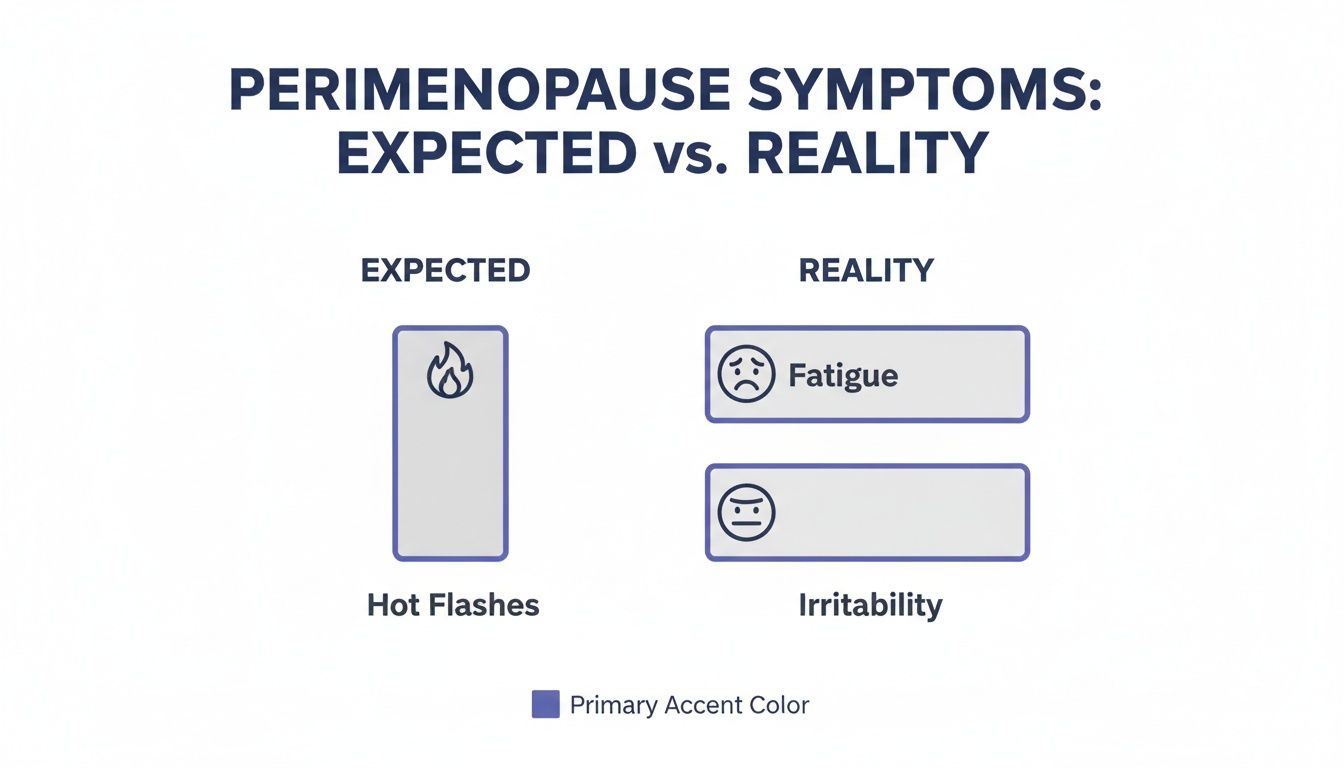
It's clear that the internal experiences—the fatigue, the irritability—are far more common than the more visible, "famous" symptoms.
Common but Overlooked Perimenopause Symptoms
Recognizing the full spectrum of what’s happening is your first step toward feeling better. You aren't imagining things, and you are definitely not alone. Beyond the well-known signs, many of us also experience:
Sudden Anxiety or Panic: A racing heart or a sense of dread that washes over you for no clear reason.
Profound Fatigue: An exhaustion that feels bone-deep and doesn’t improve, even after a full night’s rest.
Brain Fog and Memory Lapses: That frustrating feeling of not being able to find the right word or remember why you walked into a room.
Digestive Issues: New and unpredictable bloating, gas, or changes in your digestion.
Joint and Muscle Aches: Waking up stiff and sore, feeling like you ran a marathon when all you did was sleep.
The most empowering moment in this journey is realizing your symptoms are real, valid, and connected. It's the point where you stop asking "What's wrong with me?" and start asking "What can I do for my body right now?"
Just putting a name to what’s happening is a powerful act. Once you can identify your body's signals, you can start taking targeted, natural steps to feel more like yourself again. For a deeper dive, check out our complete guide to the 34 symptoms of perimenopause.
To broaden your understanding of holistic health, you can also explore resources focused on empowering women's health and wellness. Getting to know your body is the foundation for navigating this new chapter with confidence.
Fueling Your Body for Hormonal Balance
When you're navigating perimenopause, what you eat becomes one of your most powerful allies. It's time to stop thinking about food as just calories and start seeing it as direct information for your hormones. The right choices can genuinely soothe your symptoms and bring back a sense of stability. On the flip side, the wrong ones can pour gasoline on the fire of mood swings, hot flashes, and bloating.
This isn't about a rigid, joyless diet. Far from it. The goal is to consciously add specific, nutrient-rich foods that give your body exactly what it needs to handle this hormonal shift. When you focus on what to include, you naturally start to crowd out the less helpful stuff without ever feeling deprived.
Power Foods for Perimenopause Relief
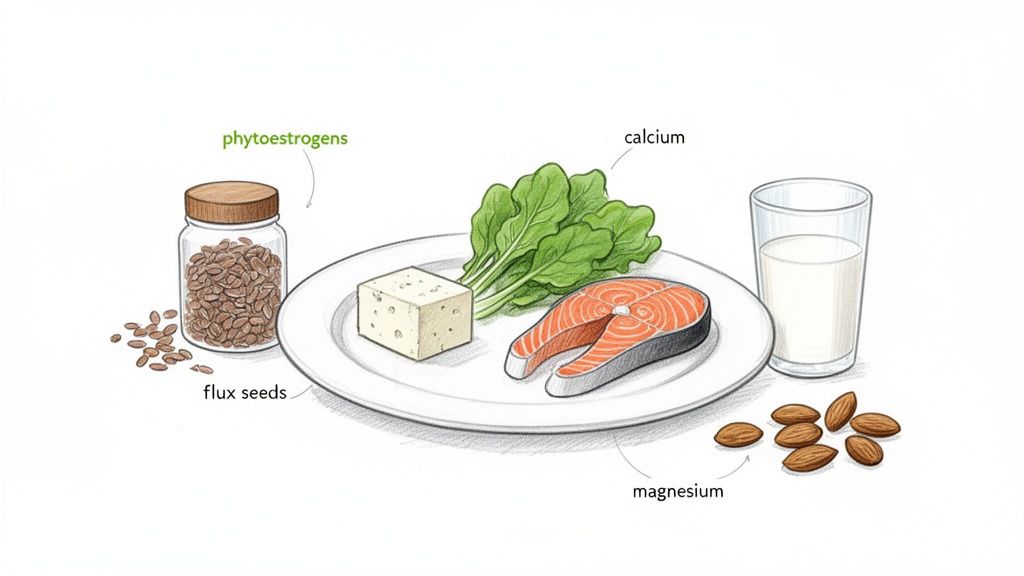
Certain foods are packed with compounds that can help your body better manage the ups and downs of estrogen. Weaving them into your everyday meals can make a real, noticeable difference in how you feel, helping with everything from hot flashes to protecting your bone health for the long run.
Here are a few of the key players you'll want on your plate:
Phytoestrogens: Think of these as gentle, plant-based compounds that can mimic some of the effects of estrogen in your body. You'll find them in foods like flaxseeds, chickpeas, and organic soy (like edamame or tofu). They can be a game-changer for taming hot flashes. A simple trick is to add a tablespoon of ground flaxseed to your morning smoothie or yogurt.
Calcium and Vitamin D: As estrogen levels dip, our bone density can take a hit. Protecting your bones now is non-negotiable. You can get plenty of calcium from dairy, fortified plant milks, leafy greens like kale, and even sardines. For Vitamin D, which your body needs to actually absorb that calcium, look to fatty fish like salmon and safe sun exposure.
Magnesium: This mineral is a true perimenopause superstar. It’s involved in over 300 different processes in the body, and it’s especially brilliant for encouraging relaxation, easing anxiety, and setting you up for better sleep. Load up on dark chocolate, avocados, nuts, seeds, and leafy greens to get your fill.
What you eat is one of the most direct and impactful ways to take control of your perimenopause experience. Every meal is an opportunity to either fuel the fire of your symptoms or to calm the storm and support your body's resilience.
Small, consistent changes are what truly move the needle. You can dive deeper with our guide to the best foods for perimenopause relief.
Understanding Your Personal Triggers
While adding the good stuff is step one, figuring out what makes you feel worse is just as crucial. The most common culprits during perimenopause tend to be sugar, highly processed foods, caffeine, and alcohol. These can ignite inflammation, send your blood sugar on a rollercoaster, and seriously amplify mood swings and hot flashes.
For example, that sugary afternoon snack might give you a temporary lift, but the crash that follows can feel ten times more brutal when your hormones are already out of whack. And that evening glass of wine that seems so relaxing? It's a notorious trigger for night sweats.
This is where paying attention becomes your superpower. A symptom that seems to come out of nowhere might actually be tied to something you ate hours earlier. By keeping a simple log of your meals and symptoms—an app like Lila is perfect for this—you can start connecting the dots and pinpoint your personal dietary triggers.
Remember, what works for your friend might not work for you. A landmark 2025 Flo-Mayo Clinic study highlighted just how differently perimenopause can show up around the world. In Nigeria, South Africa, and India, digestive issues were a primary complaint. Meanwhile, in Germany and Spain, mood swings and anxiety were far more dominant. This really drives home why a personalized approach is so vital. You can read more about these global perimenopause findings and see just how unique each journey can be.
A Sample Day of Hormone-Balancing Meals
So, what does this actually look like on a plate? It's simpler and more delicious than you might think.
Here's a quick look at a day of eating for happier hormones:
Breakfast: A smoothie made with spinach (magnesium!), unsweetened almond milk (calcium), a scoop of protein powder to keep you full, and a tablespoon of ground flaxseed (phytoestrogens).
Lunch: A big, satisfying salad with grilled chicken or chickpeas for protein, plenty of mixed greens, half an avocado (magnesium), and a simple lemon-tahini dressing.
Snack: A handful of almonds and a crisp apple.
Dinner: Baked salmon (rich in Vitamin D and Omega-3s) served with roasted broccoli and a side of quinoa.
This way of eating is all about whole foods that keep your blood sugar stable, cool inflammation, and deliver the micronutrients your body is crying out for. It’s a sustainable, satisfying way to fuel yourself through this transition—not a short-term diet.
Rethinking Movement for a Changing Body
If you’ve noticed that the workouts you’ve done for years just aren't cutting it anymore, you’re not imagining things. As our hormones fluctuate during perimenopause, our bodies respond to exercise differently. This is the perfect time to shift your perspective—think less about burning calories and more about building a strong, resilient body that can handle whatever this transition throws at you.
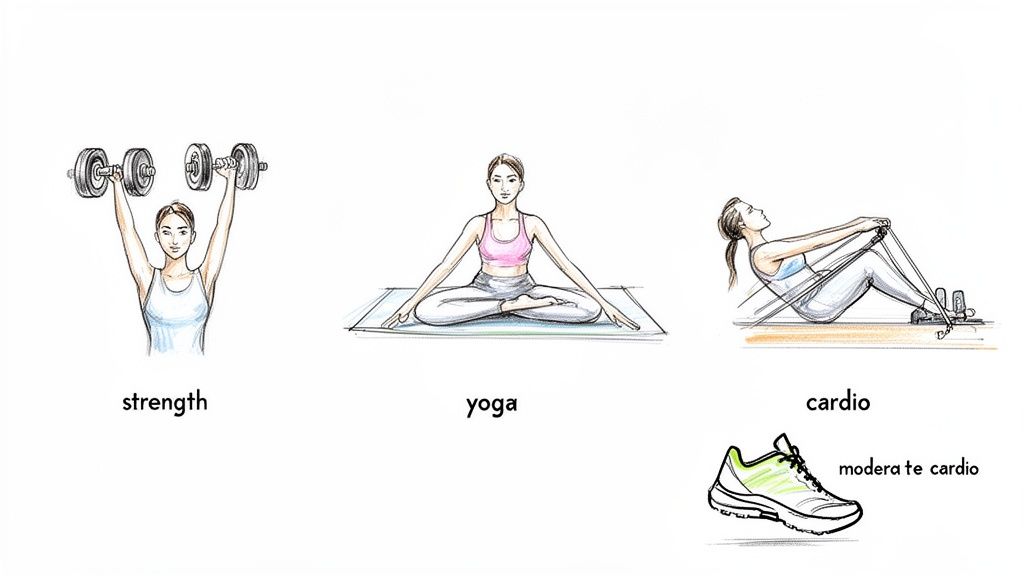
Strategic movement is one of your most powerful allies for navigating perimenopause naturally. It's about sending the right signals to your body to preserve muscle, boost your metabolism, and stabilize your mood.
Why Strength Training Becomes Your Best Friend
As estrogen levels drop, we start to lose muscle mass. It’s a natural process, but it’s also the one that slows down our metabolism and often leads to that stubborn weight gain around the middle. The best way to fight back? Strength training.
Lifting weights—or even just your own body weight—is a powerful message to your body. It says, "We need to be strong!" This creates a fantastic ripple effect:
Fires up your metabolism: More muscle means your body burns more energy, even when you’re relaxing on the couch.
Balances blood sugar: Strength work improves how your body uses insulin, which can help crush cravings and prevent your body from storing fat.
Builds bone density: Just like muscles, your bones get stronger under load. This is your best defense against osteoporosis later on.
You don’t have to start training for a powerlifting competition. Aiming for two or three focused sessions a week is the sweet spot. Consistency is what truly matters here.
How to Get Started With Strength Training
The best workout is one you’ll actually stick with, and you can get amazing results without even leaving your house.
Start with your bodyweight: Before you even think about picking up a dumbbell, master the basics. Squats, lunges, and planks are foundational. And don't be afraid to modify—doing push-ups on your knees is a fantastic way to build strength.
Add some light weights: Once you feel confident in your form, bringing in a pair of dumbbells or a kettlebell can up the ante. Simple moves like goblet squats, bent-over rows, and shoulder presses are incredibly effective.
Above all, listen to your body: Some days you'll feel full of energy; other days, you won't. That’s completely normal. Adjust your workout to match your energy levels. The goal is steady progress, not punishing perfection.
So many of us were taught that endless cardio was the key to weight management. But during perimenopause, your time is much better spent on two or three strength sessions a week. It directly combats the metabolic slowdown that’s happening under the surface.
Rounding Out Your Routine
While strength training is your anchor, a truly effective plan includes other forms of movement to support your heart, mind, and spirit. Think of it as creating a balanced movement portfolio.
Keep Your Heart Happy With Moderate Cardio Protecting your heart is more important than ever. The goal is 150 minutes of moderate-intensity cardio each week. This isn’t about grueling, high-impact sessions that leave you depleted. It’s about getting your heart rate up consistently.
A brisk 30-minute walk five days a week is a perfect example. You could also try cycling, swimming, or even a fun dance class.
Soothe Your Nervous System With Restorative Movement When you’re dealing with stress, anxiety, or poor sleep, an intense workout can sometimes make things worse by jacking up your cortisol levels. This is where gentle, restorative practices come in.
Yoga: A fantastic tool for lowering stress and improving flexibility. Some studies even suggest it can help reduce the frequency and intensity of hot flashes.
Pilates: Excellent for building deep core strength. A strong core improves your posture and can help with the nagging backaches that often pop up during this time.
Ultimately, the key is to find joy in moving your body. If you dread it, you won’t do it. Reframe it from "exercise" to "movement." Maybe that looks like a weekend hike with friends or an afternoon spent in the garden. As long as you’re building strength and moving consistently, you are taking powerful, positive steps on your perimenopause journey.
4. Reclaim Your Sleep and Calm Your Stress
If there's one thing that defines the perimenopause experience, it’s the frustrating cycle of a terrible night's sleep followed by a day running on pure stress. The two are completely linked. Poor sleep sends stress through the roof, and high stress ensures you won't get any rest tonight either. This isn't just bad luck; it's a direct result of our shifting hormones, but you can absolutely break this cycle.
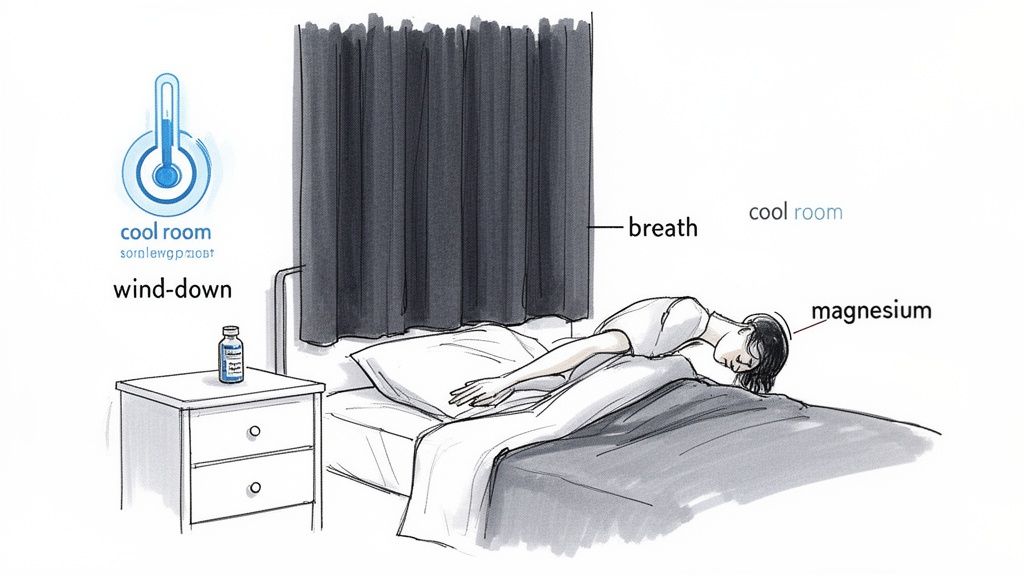
As our calming, sleep-friendly hormones like estrogen and progesterone take a dip, our stress hormone, cortisol, often decides to throw a party. It's why so many of us find ourselves staring at the ceiling at 3 a.m., mind racing. Getting a handle on sleep and stress isn't a nice-to-have; it's a fundamental part of feeling like yourself again during perimenopause.
Create a Sleep-Ready Sanctuary
Getting back to good sleep doesn't start when your head hits the pillow. It begins hours earlier by creating a routine that tells your body and brain it's time to power down. Just hoping for the best won't work when your hormones are actively working against you.
Your first move is to turn your bedroom into a true sanctuary for rest.
Go Cool: Your body needs to lower its core temperature to fall asleep. Keep your bedroom cool, and stick to breathable fabrics like cotton or linen for your PJs and sheets.
Go Dark: Even a tiny bit of light from a phone charger or a streetlamp can mess with melatonin production, the hormone that governs sleep. Blackout curtains are a game-changer, and a little electrical tape over glowing lights works wonders.
Go Quiet: If traffic or noisy neighbors are an issue, a white noise machine or even simple earplugs can create a consistent, peaceful backdrop for sleep.
Because sleep problems are so common in this phase of life, finding simple ways to improve sleep quality is crucial for your overall health. One of the most powerful tools in your arsenal is a dedicated wind-down routine to fight off insomnia and night sweats.
Think of your wind-down routine as a conversation with your nervous system. You are gently telling it, 'The day is over. It is safe to rest now.' This simple, consistent practice is one of the most effective ways to combat the 3 a.m. wake-up call.
Creating this buffer between your busy day and bedtime can make all the difference. We dive even deeper into this in our guide on how to beat menopause night sweats and regain restful sleep.
A structured wind-down routine can be incredibly effective. By performing the same calming activities in the same order every night, you create powerful cues that signal to your brain that sleep is imminent. Here’s a simple template you can adapt.
Your Evening Wind-Down Routine for Better Sleep
Time | Activity | Benefit |
|---|---|---|
8:30 PM | Dim the lights & turn off screens | Reduces blue light exposure, which can suppress melatonin production. |
8:45 PM | Take a warm bath or shower | The subsequent drop in body temperature after you get out helps trigger sleepiness. |
9:15 PM | Light stretching or read a book | Relaxes muscles and quiets the mind without the stimulation of a screen. |
9:45 PM | Sip herbal tea (chamomile, valerian) | These herbs have natural sedative properties that promote calm and relaxation. |
10:00 PM | Head to bed in a cool, dark room | Provides the optimal environment for your body to initiate and maintain sleep. |
Consistency is everything. Sticking to this schedule, even on weekends, reinforces your body's internal clock and makes falling asleep feel much more natural over time.
Manage Your Stress Hormones
High cortisol doesn't just ruin your sleep. It's a major player in that perimenopausal anxiety, brain fog, and the stubborn fat that seems to accumulate around your middle. That’s why managing stress during the day is just as vital as what you do at night. You don’t need to book a week-long yoga retreat; small, consistent actions have a huge impact.
One of the easiest tools is already with you: your breath. When you feel that familiar wave of anxiety or overwhelm, try a "physiological sigh." Just take a double inhale through your nose, then let out a long, slow exhale through your mouth. It’s a science-backed trick to hit the reset button on your nervous system, and it works instantly.
Another powerful strategy is bringing in some help from adaptogenic herbs. These are unique plants that help your body become more resilient to both physical and mental stress.
Ashwagandha: Famous for its ability to lower cortisol, dial down anxiety, and support better sleep.
Rhodiola: An excellent choice for fighting that deep fatigue and improving mental focus when you feel completely burned out.
Finally, try a simple mindfulness practice in the morning. Before you even reach for your phone, just sit quietly for three to five minutes. You can focus on your breath or just notice the physical sensations in your body. It’s a small act, but it sets a much calmer tone for the day, making you less reactive to whatever life throws at you.
Connecting the Dots: Using Tracking to Personalize Your Plan
So, you've got a great toolkit of strategies for your diet, exercise, sleep, and stress. But the most common question I hear is, "How do I know what will actually work for me?" This is where we move past general advice and start creating a plan that’s truly yours. The only way to do that is to stop guessing and start listening to your body's signals.
Think of it like becoming a detective for your own health. By making a habit of noting your symptoms alongside your daily routines, you’ll start to uncover the unique patterns that define your perimenopause journey. The clues you gather are absolutely priceless.
Turning Clues Into Real-World Wins
The concept is simple: you track what you do and how you feel, and then you look for the connections. This isn't about being perfect or judging yourself. It’s all about getting curious. Is that second coffee really the reason you hit a wall at 3 p.m.? Does a 10-minute walk in the morning actually lift your mood for the rest of the day?
When you can see these cause-and-effect relationships right in front of you, the path to feeling better becomes so much clearer. It allows you to make small, specific changes that deliver big results because they're based on direct feedback from your own body.
Let me give you a real-world example:
Sarah was really struggling with intense hot flashes, which were worst in the evenings. She began logging her symptoms, meals, and daily activities in an app like Lila. After just a couple of weeks, a pattern jumped out at her. The nights she enjoyed a glass of red wine with dinner were consistently followed by more frequent, intense hot flashes and terrible sleep.
Armed with this personal data, she decided to run a little experiment. She swapped her wine for a calming herbal tea for one week. The results? Her hot flashes didn't disappear, but they were noticeably less severe. She even slept through the night twice—a massive victory. This didn't mean giving up wine forever, but now she knew it was a trigger, which gave her the power to choose.
This is the power of personalizing your approach. It’s not about following a rigid set of rules. It’s about understanding your body’s unique responses so you can make informed choices that genuinely support your well-being.
What to Track for the Best Insights
To get the clearest picture, you don’t need to log every tiny detail of your life. Just focusing on a few key areas consistently will reveal the most important patterns.
I recommend starting with these essentials:
Your Symptoms: Note the intensity and timing of things like hot flashes, brain fog, bloating, and mood swings.
Your Sleep: How many hours did you get? Was it restful? Did you wake up during the night?
Your Energy Levels: A simple 1-to-5 rating of your energy throughout the day can be incredibly revealing.
Your Meals: Just a quick snapshot of what you ate can help you spot dietary triggers for fatigue or bloating.
Your Movement: Did you go for a walk, lift weights, or do some yoga? Make a quick note of how you felt afterward.
This process is more important than you might think, especially given the persistent knowledge gaps around perimenopause. A recent global survey highlighted that while 71% of women expect hot flashes, the daily reality for many is dominated by fatigue (83%) and irritability (80%). The same data shows that women who track their symptoms daily report a 50% improvement in symptom recognition, which helps them make effective changes. You can discover more insights from this Mayo Clinic study and see the power of personal data for yourself.
Using an App to Make it Easy
You can absolutely use a paper journal, but a dedicated app can make tracking much simpler and more powerful. An app like Lila is designed specifically for this. It does more than just hold your notes; it analyzes the information to give you personalized insights and a clear path forward.
The right app can help you:
Spot Trends Effortlessly: Visual charts and graphs connect the dots between your habits and symptoms, so you don't have to build your own spreadsheet.
Get Personalized Guidance: Instead of generic tips, you receive suggestions based on what's happening in your own body.
Build Consistency: A quick daily check-in takes just a few minutes, creating the momentum you need to see real progress.
By using technology this way, you’re not just collecting information—you’re creating a feedback loop that puts you in control. This informed approach is the key to managing perimenopause naturally, giving you the confidence to make decisions that help you feel like yourself again.
Frequently Asked Questions
▶ PlayAs you start making changes to manage perimenopause naturally, it's completely normal for questions to pop up. You might be wondering what's realistic to expect, how to tackle stubborn issues like weight gain, or when it's time to call in more support. Let's walk through some of the most common questions I hear.
The whole point is to feel confident and informed as you move forward. Every woman's experience is her own, but think of these answers as a reliable guidepost while you figure out what works for your body.
How Quickly Can I See Results From These Natural Methods?
This is the big one, isn't it? The honest answer is: it varies. Every body is different, but you can generally expect to feel some positive shifts within a few weeks, while other, deeper changes will take more time.
For example, getting serious about your sleep routine can pay off with better energy in just a few days. The same goes for diet—cutting back on sugar and boosting your fiber can often ease bloating and digestive issues within the first week.
For the more significant work of rebalancing hormones to reduce hot flashes or steady your moods, it’s more realistic to think in terms of months, not days. Consistency is your secret weapon here.
The best way to see what's actually working is to track your symptoms. This is how you connect the dots, see your personal progress, and figure out which habits are truly making the biggest difference for you.
When Should I See A Doctor?
Embracing natural management is incredibly empowering, but it’s meant to work with your healthcare provider, not replace them. Knowing when to make that appointment is key.
You should absolutely schedule a visit with your doctor if:
Your symptoms are severe and getting in the way of your daily life, work, or relationships.
You notice any unusual bleeding patterns, like bleeding that's extremely heavy, lasts much longer than usual, or happens after sex.
You're struggling with feelings of depression, anxiety, or panic that feel overwhelming.
A doctor can run tests to make sure nothing else is causing your symptoms. They're also your best resource for understanding the full range of options available, including Hormone Replacement Therapy (HRT), so you can make a truly informed decision.
Can I Really Manage Weight Gain Without Extreme Dieting?
Yes, you absolutely can. In fact, extreme dieting is one of the worst things you can do during perimenopause. That stubborn weight, especially around the middle, is directly tied to hormonal shifts that slow your metabolism and ramp up cortisol. Slashing calories just adds more stress to the system, making the problem worse.
A smarter, more sustainable approach works with your body.
Prioritize Protein: Getting enough protein with every meal is a game-changer. It keeps you feeling full and satisfied, which helps shut down cravings.
Build Muscle: Strength training is non-negotiable. Building more muscle directly boosts your resting metabolism, meaning your body burns more calories even when you're not working out.
Manage Stress and Sleep: High cortisol and poor sleep are a perfect recipe for belly fat. Prioritizing rest and stress reduction helps rebalance the very hormones that tell your body to store fat.
This combination of strength, nutrition, and lifestyle is the most effective path to a healthy body composition—one that doesn't involve the miserable cycle of restriction and deprivation.
Ready to stop guessing and start seeing what works for your body? Lila is an AI-powered app that helps you connect the dots between your habits and symptoms. Get a personalized action plan and start feeling like yourself again. Take control of your perimenopause journey today.
Get Lila, your personal coach for perimenopause.
Built for women in their 40s. 24/7 coaching, in your pocket.


