8 Perimenopause Night Sweats Remedies for 2026
Find effective perimenopause night sweats remedies, from lifestyle changes to medical options. Learn to track triggers and manage symptoms for better sleep.
 Michelle
It’s 3 a.m. You wake abruptly, your chest feels hot, your pajamas are damp, and now you’re wide awake. By morning, you’re tired, irritable, and wondering whether this is just your new normal. For many women in their 40s and early 50s, this is exactly how perimenopause shows up.
Night sweats are part of the vasomotor symptom cluster that includes hot flashes. Up to 80% of women in perimenopause or menopause experience these symptoms, according to Sleep Foundation’s summary of the evidence. Common doesn’t mean harmless. Night sweats can chip away at sleep, concentration, patience, and quality of life.
The good news is that there are real perimenopause night sweats remedies. Some work directly on the underlying hormone shifts. Some reduce how disruptive the episodes feel. Some help you identify triggers so you stop guessing and start making useful changes.
That last part matters more than is often appreciated. The women who get traction usually aren’t the ones trying ten random fixes at once. They’re the ones testing one change at a time, watching what happens to sleep, sweating, mood, meals, cycle changes, and stress. A tracking tool such as Lila can help organize that process so you can see patterns instead of relying on memory from a rough night.
Start with the remedies that match your symptoms, health history, and preferences. If your night sweats are intense, frequent, or paired with major sleep disruption, don’t wait months to get help.
1. Hormone Replacement Therapy
Hormone therapy is often the treatment that changes the night fastest. If night sweats are being driven by shifting estrogen levels, treatment that replaces or stabilizes hormones can reduce the episodes more than any other medical option.
Hormone therapy is not one product or one plan. Some women need estrogen alone. Others need estrogen plus progesterone because they still have a uterus. The form matters too: pills are familiar, patches avoid the daily rise and fall that some women notice with oral dosing, gels can be easier for women who do not want another pill, and oral micronized progesterone may be especially useful when poor sleep is part of the picture.
What the evidence supports
HRT remains the most effective evidence-based treatment for vasomotor symptoms in appropriate candidates, as noted earlier. In practice, that means women with frequent night sweats often get more meaningful relief from hormone therapy than from sleep hacks or supplement experiments alone.
Progesterone also deserves attention in perimenopause. Research summarized earlier suggests oral micronized progesterone can improve perceived night sweats, sleep quality, and how much symptoms interfere with daily life. That does not mean it is the right fit for every woman, but it is a reasonable option to discuss if your symptoms are showing up at night more than during the day.
Practical rule: If you are changing clothes at night, waking repeatedly, or dreading bedtime because of sweating, book the medical visit sooner.
What real-life use looks like
The best regimen is the one that matches your symptom pattern, medical history, and tolerance for side effects. A woman with irregular bleeding, breast tenderness, and sleep disruption may need a different starting point than someone whose main problem is intense overnight heat. Good prescribing is individualized, then adjusted.
A few practical points help:
Start with the lowest dose that relieves symptoms: More is not always better, and side effects often show up before added benefit.
Give treatment enough time: A fair trial usually means several weeks, not a few rough nights.
Track response in a structured way: Log sweating episodes, wake times, bleeding changes, mood, and sleep quality in Lila so you can see whether the treatment is helping or whether another factor is still driving symptoms.
Review the plan regularly: Perimenopause changes over time, so the dose or formulation may need to change too.
The trade-offs are real. HRT is not appropriate for every woman, especially with certain cancer, clotting, stroke, or liver histories. Some women also prefer to avoid hormones even when they are medically eligible. But automatic fear is not good medicine either. If you are a candidate, hormone therapy deserves a balanced discussion based on your risks, your symptoms, and what the nights are currently costing you.
2. Cognitive Behavioral Therapy for Menopause
Not every useful remedy is a pill or patch. CBT helps many women because night sweats are partly a body symptom and partly a distress cycle. You wake overheated, then anxious, then alert, then frustrated that you’ll be exhausted tomorrow. That sequence can keep you awake long after the sweating passes.
CBT for menopause doesn’t pretend the symptom is “all in your head.” It helps reduce the mental and behavioral spiral around it. That usually means fewer long wakeups, less dread at bedtime, and more control when a sweaty wake-up does happen.
Where CBT helps most
I think of CBT as especially useful for women who say things like, “The sweating starts, and then I’m fully wired,” or “I’m panicking about not sleeping before I even get into bed.” That’s where structured tools can make a real difference.
Common targets include:
Sleep-related worry: The belief that one bad night means tomorrow is ruined.
Hypervigilance: Constantly scanning your body for the next hot surge.
Escalation habits: Checking the clock, doom-scrolling, or mentally catastrophizing at 3 a.m.
Stress spillover: Daytime stress that lowers your tolerance for nighttime symptoms.
How to use it in practice
A menopause-trained therapist can help, but digital CBT programs can also be useful if access is limited. The key is consistency. A few breathing exercises done once won’t change much. A steady routine often does.
Try this combination for two weeks:
Thought journal: Write down what you tell yourself when you wake up sweating.
Body downshift: Use paced breathing or progressive muscle relaxation instead of checking the time.
Stimulus control: If you’re fully awake, get out of bed briefly, cool down, and return when sleepy.
Mood tracking: Use Lila to note high-stress days and compare them with worse nights.
Night sweats wake the body. Anxiety keeps it awake.
The limitation is that CBT won’t correct hormone shifts on its own. If your night sweats are severe, I see CBT as an excellent add-on, not a replacement for medical treatment.
3. Non-Hormonal Prescription Medications
Some women need a medical treatment but either can’t use hormones or don’t want to. Non-hormonal prescription options are available in such instances.
The older group includes SSRIs and SNRIs, which can help with vasomotor symptoms in some patients. They’re also a reasonable choice when night sweats overlap with low mood, anxiety, or irritability. In practice, that overlap is common.
Current options worth discussing
Examples your prescriber may discuss include venlafaxine, desvenlafaxine, paroxetine, gabapentin, clonidine, or newer non-hormonal therapies. Choice depends on the symptom pattern, other medications, blood pressure, mood history, and whether sleep disruption is the main complaint.
A newer class is also changing the conversation. NK3 receptor inhibitors are driving faster growth within the non-hormonal treatment segment, with that segment projected to expand at a 7.25% CAGR through 2031, according to Mordor Intelligence’s menopausal hot flashes market analysis. The same analysis notes that fezolinetant received FDA approval in 2023 and later expanded to Health Canada and the U.K.’s MHRA in 2024.
Trade-offs that matter
This category is useful, but it isn’t one-size-fits-all. SSRIs and SNRIs can help some women substantially, while others stop because of nausea, appetite changes, sexual side effects, or feeling emotionally flat. Gabapentin may help nighttime symptoms but can leave some women groggy the next morning.
What I want women to know is this: a medication failing doesn’t mean you failed. It usually means the fit was wrong.
Use a simple testing approach:
Start low if your prescriber agrees: Many side effects are dose-related.
Be consistent: Taking it on and off makes it hard to judge.
Track specifics: Don’t just log “better” or “worse.” Note sweat intensity, number of wakeups, and next-day fatigue in Lila.
Review the whole picture: Sometimes a modest reduction in sweating is still worth it if sleep becomes more stable.
For women who can’t use HRT, these medications can be very valuable. For women who can use hormones but prefer not to, they’re often the next most practical medical option.
4. Lifestyle Modifications and Sleep Environment
This is the remedy almost everyone needs, even if they also use medication. A cool room won’t stop a hormone-triggered sweat episode, but it can make the episode shorter, less intense, and easier to recover from.
Women often underrate the physical setup of sleep. Then they spend months trying supplements while sleeping under heat-trapping bedding in a warm room after a hot shower and a glass of wine.
A bedroom that works with your physiology is part of treatment. If you need ideas for mattresses and bedding for cool nights, start there and keep your choices practical rather than expensive for the sake of it.
Set up the room for recovery
You don’t need a perfect sleep lab. You need a room that lets your body cool quickly.
Helpful changes include:
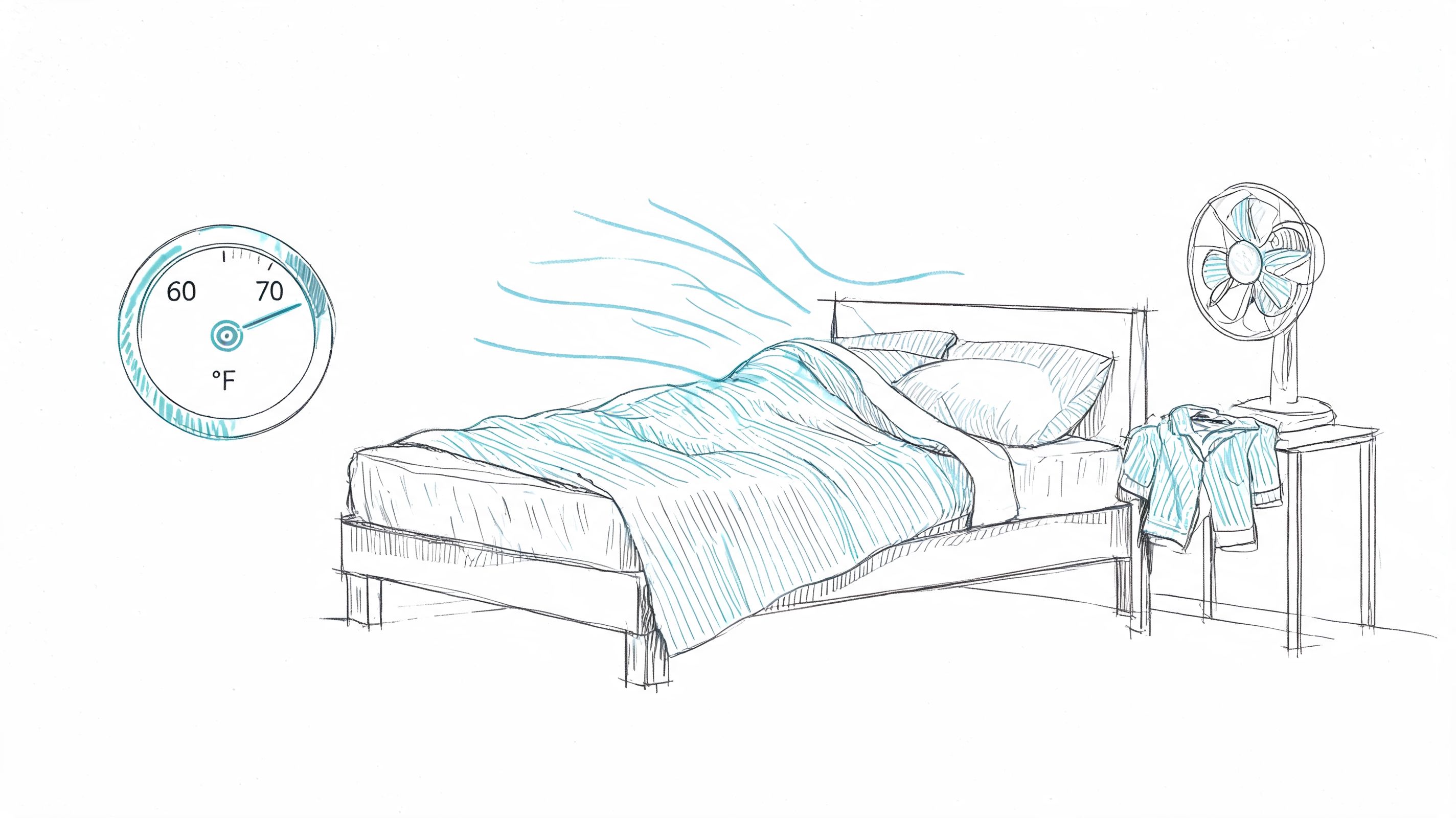
Lower the room temperature: Many women feel better in a cooler bedroom than the rest of the house.
Choose breathable fabrics: Moisture-wicking pajamas and lighter bedding are often more useful than piling on layers.
Stage a fast reset: Keep a spare top, dry towel, and water nearby.
Use moving air: A bedside fan helps many women return to sleep faster.
Here’s a short visual walkthrough that covers practical cooling ideas:
▶ PlayImprove the pre-sleep routine
A cool environment works better if your habits support it. Don’t do the things that push body temperature and alertness up right before bed.
Temple Health notes that vigorous exercise before bed raises body temperature and releases adrenaline, which can interfere with nighttime cooling and worsen symptoms. Their advice on ways to stop night sweats and sleepless nights fits what many women notice in real life too.
Keep the reset simple: cool room, breathable sleepwear, quick change option, no drama.
Tracking helps. In Lila, log room temperature changes, fan use, shower timing, and whether you slept through or woke soaked. Small setup changes often look minor until you see the pattern over a week.
5. Dietary Adjustments and Trigger Avoidance
Food isn’t the root cause of perimenopause night sweats, but it often changes how hard they hit. The problem is that generic trigger lists can become overwhelming fast. Women start cutting everything and still don’t know what matters for them.
A better approach is detective work. Look for your repeat offenders, especially at dinner and in the few hours before bed.
The triggers I see most often
Common patterns include spicy meals late at night, alcohol with dinner, hot drinks close to bedtime, and larger meals that leave you warm and restless. Caffeine can matter too, especially if your body has become more sensitive in perimenopause.
What helps is specificity. “Wine makes me sweat” is less useful than “Two glasses at dinner reliably trigger a 2 a.m. wake-up.” The second version tells you exactly what to test.
Try narrowing it down like this:
Change one variable at a time: Don’t cut caffeine, alcohol, and spice all in the same week.
Watch meal timing: Heavy late dinners are often harder than the food itself.
Note dose and timing: One coffee at breakfast is different from one at 4 p.m.
Track the lag: Many triggers show up several hours later, not immediately.
A food option some women want to try
If you want a non-hormonal, food-based option, evening primrose oil has some trial support, but it’s not a food and it doesn’t work for everyone. In a randomized study summarized in this PMC article on evening primrose oil and menopausal hot flashes, 27.5% of the intervention group reported no sweating after treatment, while about 40% of the placebo group still experienced high sweating.
That doesn’t make EPO a first-line answer. It does make it a reasonable discussion point for women who want to try a non-hormonal option with realistic expectations.
If a remedy helps a little but makes your life complicated, it may not be the right remedy for you.
Use Lila to log meals, alcohol, supplements, and symptom timing together. Once women can see the dinner-to-night-sweat pattern, the next decision gets much easier.
6. Regular Exercise and Physical Activity
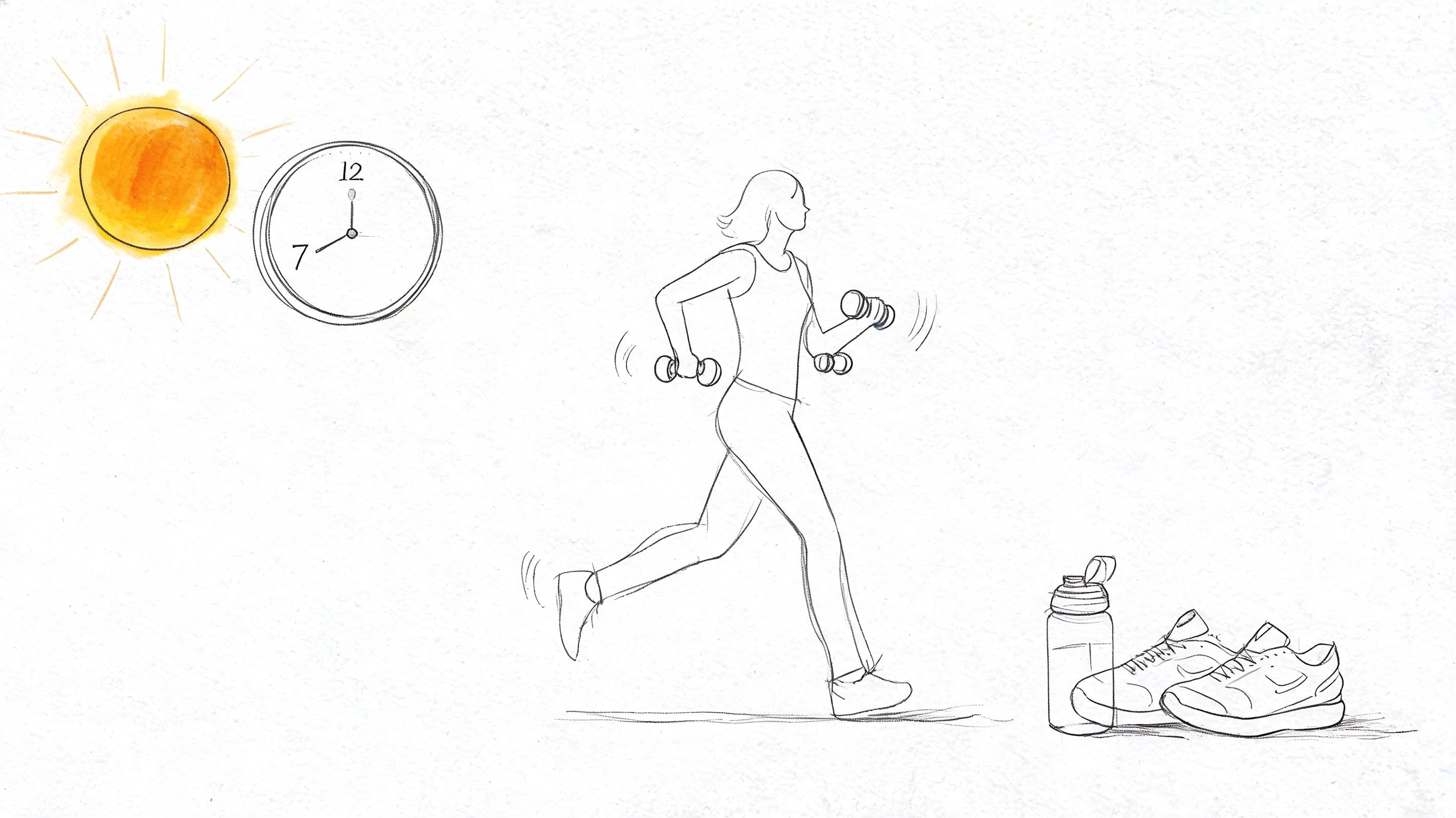
Exercise is one of the most useful background strategies in perimenopause, but timing matters more than many women realize. I’m strongly in favor of regular movement for sleep, mood, and metabolic health. I’m not in favor of pretending every workout time affects night sweats the same way.
For some women, a hard evening workout is the hidden reason they feel “wired and hot” at bedtime. They’re doing something healthy, but at the wrong time for their symptom pattern.
Timing can change the result
An underserved point in the night sweats conversation is exercise timing. Temple Health notes that vigorous exercise before bed can raise body temperature and adrenaline, which can make nighttime cooling harder, as discussed earlier in their guidance.
That’s why I usually suggest morning or early afternoon exercise first if night sweats are active. Walking, cycling, swimming, resistance work, and short interval sessions can all be great. The timing is often the part that needs adjustment.
What to try instead of late intense sessions
If your current routine includes evening boot camp, hot yoga, or a hard Peloton ride close to bed, don’t assume exercise itself is the problem. Test a timing shift before giving up.
A practical pattern looks like this:
Put hard sessions earlier: Morning and early afternoon are often easier on sleep.
Keep evenings restorative: Stretching, mobility, or an easy walk tends to be better tolerated.
Cool down fully: Don’t finish a workout and climb straight into bed.
Track response by workout type: In Lila, compare strength days, cardio days, and rest days with your overnight symptoms.
A common real-life example is the woman who loves 7 p.m. HIIT but keeps waking drenched at 1 a.m. She switches the same session to morning and notices fewer wakeups within days. That kind of pattern is exactly why symptom tracking matters. It turns “exercise helps” into advice you can put into practice.
7. Stress Management and Relaxation Techniques
Stress doesn’t cause perimenopause, but it absolutely changes how your body experiences it. On high-stress days, women often describe night sweats as more sudden, more intense, or harder to recover from afterward.
That makes sense clinically. A revved-up nervous system is a poor partner for stable sleep. If your body is carrying tension into the night, you’re more likely to wake fully and stay awake.
Lower the nighttime reactivity
The best stress tools are the ones you’ll repeat. Fancy routines don’t win. Repetition does.
Useful options include:
Paced breathing: Slow exhale-focused breathing when you first get into bed or after a wake-up.
Progressive muscle relaxation: Release tension from jaw, shoulders, chest, and legs in sequence.
Body scan meditation: Good for women who wake mentally activated.
Journaling before bed: Helpful when the mind starts listing tomorrow’s problems at midnight.
One of the simplest routines I recommend is five to ten minutes of breathing plus a short written brain dump before bed. It sounds basic because it is. Basic and repeatable beats elaborate and abandoned.
Keep the heat response from becoming a panic response
When a night sweat wakes you, the immediate goal isn’t to force sleep. It’s to keep the episode from escalating into frustration and panic.
Try this sequence: sit up, breathe slowly, cool your skin, change if needed, and avoid checking the time. The clock often turns discomfort into urgency.
Some women also benefit from using the stress and mood check-ins inside Lila. If your worst nights reliably follow conflict, overwork, travel, or poor recovery, that’s useful information. It tells you your plan needs nervous-system support, not just cooling sheets.
8. Herbal and Supplement Approaches
Herbal remedies are often the first thing women try after a few rough weeks of night sweats. I understand why. They feel accessible, they do not require a prescription, and the marketing is persuasive. The problem is that product quality varies, evidence is mixed, and “natural” does not mean low-risk.
The right question is not whether a supplement is natural. The right questions are simpler. Is there decent evidence behind it? Is the dose clear? Could it interact with your medications, liver health, blood pressure treatment, or hormone-sensitive conditions? And if you start it, will you be able to tell whether it helped?
A practical way to test a supplement
In clinic, the biggest mistake I see is women starting three things at once. A menopause blend, magnesium, and an herbal tincture all go in together, then a slightly better night gets credited to all of them. That makes it almost impossible to judge benefit or side effects.
A cleaner approach works better:
Choose one product at a time. That gives you a fair read on benefit and tolerability.
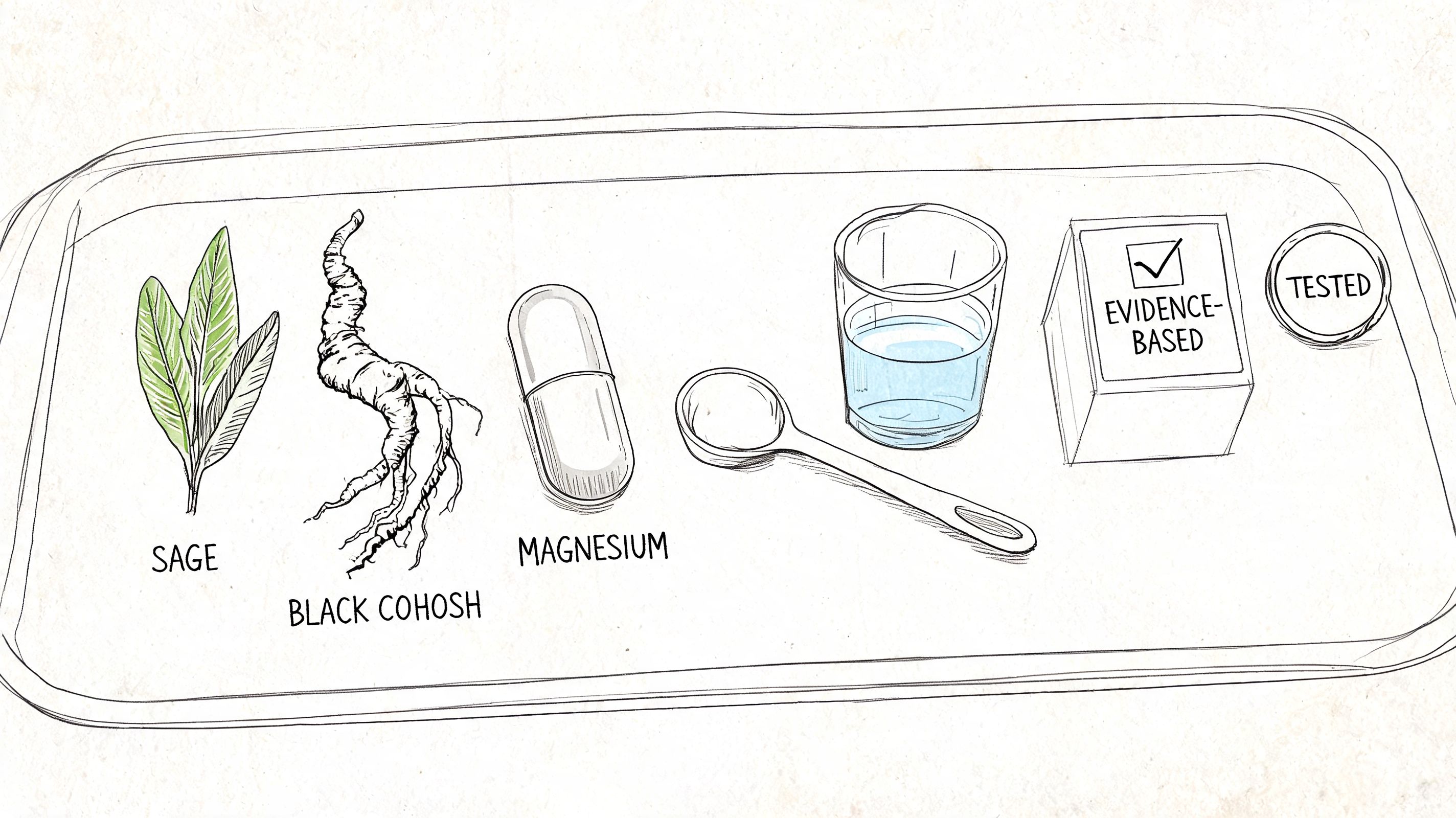
Use a reputable brand. Third-party testing and clear ingredient labeling matter.
Set a trial period before you start. A few scattered nights are not enough to judge a response.
Track the basics in Lila. Log the brand, dose, timing, night sweats, sleep disruption, and any side effects.
That last step matters more than many women expect. Supplements tend to produce subtle changes, not dramatic overnight relief. Tracking helps separate a true pattern from wishful thinking, and it often reveals trigger overlap. For example, a product may seem helpful until your log shows the true change came from fewer evening drinks, a cooler bedroom, or lower stress that week.
What women commonly ask about
Black cohosh, sage, magnesium, and combination menopause formulas come up often. Some women report benefit, especially with milder symptoms. Others notice no change at all, or they stop because of stomach upset, headaches, sedation, or the cost of staying on a product that is not clearly helping.
Those trade-offs matter. A supplement can be reasonable for mild to moderate symptoms, for women who want to start conservatively, or as an adjunct to other strategies. It is usually a poor fit as a stand-alone plan if you are waking soaked, changing clothes or sheets, and dragging through the next day.
Keep expectations grounded
The supplement market is large, and that visibility can make these options look more proven than they are. Earlier in the article, I noted how much of the menopause market is driven by nonprescription products. Market size reflects demand. It does not prove consistent symptom relief.
If you decide to try a supplement, treat it like any other intervention. Pick one. Use a defined trial. Track it carefully. Stop if side effects outweigh benefit. And if your night sweats are frequent, intense, or getting worse, do not let months slip by on weak results when more effective care is available.
8-Point Comparison: Perimenopause Night Sweat Remedies
Treatment | 🔄 Implementation Complexity | ⚡ Resource Requirements | ⭐ Expected Effectiveness | 📊 Ideal Use Cases | 💡 Key Advantages / Tips |
|---|---|---|---|---|---|
Hormone Replacement Therapy (HRT) | Prescription-based; medical evaluation, dose titration & monitoring | Moderate–high: clinician visits, labs, medication/patch costs | ⭐⭐⭐⭐⭐, ~75–90% reduction; effects in 2–8 weeks | Moderate–severe night sweats; women without HRT contraindications; bone/mood benefit needed | Most effective option; use lowest effective dose and regular follow-up |
Cognitive Behavioral Therapy (CBT) for Menopause | Structured therapy (6–12 sessions); skill building over weeks | Moderate: therapist time or virtual program fees | ⭐⭐⭐, ~30–40% reduction; benefits in 4–8 weeks | Non-hormonal preference; anxiety-driven symptoms; long-term coping | No meds; practice daily, track mood, combine with sleep hygiene |
Non-Hormonal Prescription Medications (SSRIs/SNRIs) | Prescription with titration and monitoring; taper required on stop | Moderate: medication cost, follow-up visits, monitoring | ⭐⭐⭐⭐, ~50–60% reduction; onset 1–4 weeks | Women who cannot use HRT or need mood/anxiety benefit | Start low and titrate; monitor side effects and taper gradually |
Lifestyle Modifications: Sleep Hygiene & Environment | Low clinical complexity but requires consistent behavior change | Low–moderate: bedding/cooling devices may incur cost; time to implement | ⭐⭐⭐, ~30–50% reduction in disturbance; 2–3 weeks for benefits | Foundational strategy for all; best for mild–moderate symptoms or adjunctive use | Maintain 60–67°F, moisture-wicking bedding, consistent wind‑down routine |
Dietary Adjustments & Trigger Avoidance | Requires tracking and elimination testing; personalized trials | Low: time for meal logs; optional RD consult | ⭐⭐, ~25–40% reduction; patterns emerge in 2–4 weeks | Women with identifiable food/alcohol/caffeine triggers; metabolic goals | Track meals vs symptoms, avoid triggers 3–4 hrs before bed; change one item at a time |
Regular Exercise & Physical Activity | Routine commitment: 150+ min/week aerobic + resistance training | Low: time commitment; access to safe activity spaces | ⭐⭐⭐, ~25–40% reduction; improvements in 4–8 weeks | Women seeking broad health improvements and symptom relief | Schedule morning/afternoon workouts, include resistance 2×/week, stay consistent |
Stress Management & Relaxation Techniques | Daily practice (5–20 min); learnable techniques, low barrier | Low: apps or classes optional; time for practice | ⭐⭐⭐, ~20–35% reduction; benefits in 2–4 weeks | Symptoms amplified by stress/anxiety; improving sleep continuity | Start small (5–10 min/day), use guided apps, combine with CBT or breathing |
Herbal & Supplement Approaches (Evidence-Based) | Product selection and trial periods (4–8 weeks); monitor interactions | Low–moderate: supplement costs; choose reputable brands | ⭐⭐, ~20–35% reduction (variable by product and quality) | Preference for natural options or adjunct to other treatments | Use standardized, third-party-tested extracts; start one supplement at a time and consult provider |
From Tracking to Thriving Your Path Forward
You wake at 2:17 a.m., shirt damp, sheets warm, mind already racing about how tomorrow will feel on broken sleep. By morning, it is easy to blame stress, last night’s glass of wine, the room temperature, or your hormones in general. The problem is not a lack of effort. It is trying to solve a repeating symptom without a clear record of what is driving it.
Perimenopause night sweats usually respond best to a plan you can test and adjust. Some women need medical treatment because symptoms are intense, frequent, or clearly affecting sleep and daily function. Others improve with a combination of smaller changes, such as adjusting the sleep environment, shifting workout timing, reducing evening triggers, and using skills that make nighttime wakeups less disruptive. In practice, the best results often come from matching the remedy to the pattern, then checking whether it is helping.
If symptoms are severe or persistent, speak with a clinician early. As noted earlier, menopause symptoms are common, and suffering through them without support is unnecessary.
I also want to be clear about what tends to waste time. Starting several supplements at once. Changing five habits in the same week. Assuming one bad night proves a trigger. Following someone else’s routine without considering your own cycle changes, stress load, medication use, or sleep habits.
A better approach is simpler and more disciplined:
Start with symptom burden: If night sweats are frequent, drenching, or affecting daytime function, discuss evidence-based treatment options sooner.
Change one variable at a time: That gives you a fair test.
Track related factors together: Night sweats, sleep quality, mood, meals, alcohol, exercise timing, stress, and cycle shifts should sit in the same log.
Keep the changes that earn their place: If a strategy adds effort but does not reduce symptoms, stop using it.
Review the pattern regularly: Perimenopause shifts over time, so your plan should change with it.
A centralized tracker makes that process more reliable. Lila is one option that lets women log symptoms alongside sleep, mood, meals, energy, and cycles, so patterns are easier to spot and remedies are easier to judge. That matters because memory is selective, especially after a poor night of sleep.
Comfort still counts. Better bedroom airflow and cooling can reduce the misery of a hot night, particularly in warmer climates. If you want ideas for ventilation and window airflow, the Trickle Vent Installation Costa Blanca blog covers practical home setup options.
The goal is not perfect symptom control. The goal is fewer wakeups, faster recovery when symptoms hit, and more confidence about what helps your body. Once you can see your own patterns, you can make decisions with more precision and less guesswork.
If you want a more organized way to test perimenopause night sweats remedies, Lila can help you track symptoms, sleep, meals, mood, and cycles in one place so you can spot triggers and see which changes are helping.
Get Lila, your personal coach for perimenopause.
Built for women in their 40s. 24/7 coaching, in your pocket.