How to Improve Metabolism After 40: A Practical Guide
Learn how to improve metabolism after 40 with a practical plan for diet, exercise, and hormonal changes during perimenopause. Actionable steps to feel better.
 Michelle
You’re eating pretty well. You’re not sitting on the couch all day. You might even be doing workouts that used to work in your 30s. And yet your body feels different now.
The scale creeps up. Your waist changes first. Energy dips hit harder. You feel hungry at odd times, puffy by evening, and less responsive to the habits that once felt reliable. That experience is common in the 40s, especially when perimenopause starts to shift the hormonal backdrop behind appetite, blood sugar, sleep, and body composition.
That doesn’t mean your body is broken. It means the old formula may no longer match the biology you’re working with now.
A better approach to how to improve metabolism after 40 starts with two truths. First, the changes are real. Second, they are workable. When you understand what’s driving the slowdown, you can stop blaming yourself and start using strategies that fit this phase of life.
The Frustrating Truth About Your Metabolism After 40
A lot of women hit this stage the same way. They notice their jeans fit differently even though their routine hasn’t changed much. They try to “clean up” their eating, cut snacks, add a few cardio sessions, and still feel like their body is pushing back.
It often appears gradually at first. A little more belly fat. More cravings late in the day. Less energy for workouts. Then the frustration builds because the advice they hear is still painfully simplistic. Eat less. Move more. Be more disciplined.
That message misses what many women are dealing with. Midlife metabolism changes aren’t just about birthdays. They’re tied to muscle loss, hormone shifts, stress load, sleep disruption, and the very real changes of perimenopause. If you’ve wondered why fat loss feels harder now, this breakdown of why it gets harder to lose weight after 40 captures that bigger picture well.
You are not failing at weight management. You are working with a body that now needs a different kind of support.
I see the biggest turnaround when women stop chasing the habits that worked at 28 and start building a plan for the body they have now. That usually means more muscle-focused training, more strategic meals, better recovery, and closer attention to patterns like bloating, sleep disruption, hunger spikes, and cycle-related changes.
The good news is that metabolism after 40 is not a fixed downhill slide. It’s responsive. It responds to how you eat, how you train, how well you recover, and whether your plan matches your hormonal reality.
Why Your Body's Calorie-Burning Engine Slows Down
The simplest way to think about metabolism is this. Your body burns energy all day just to keep you alive and functioning. That baseline burn depends a lot on how much metabolically active tissue you carry, especially muscle, and on the hormonal signals that affect how fuel gets used or stored.
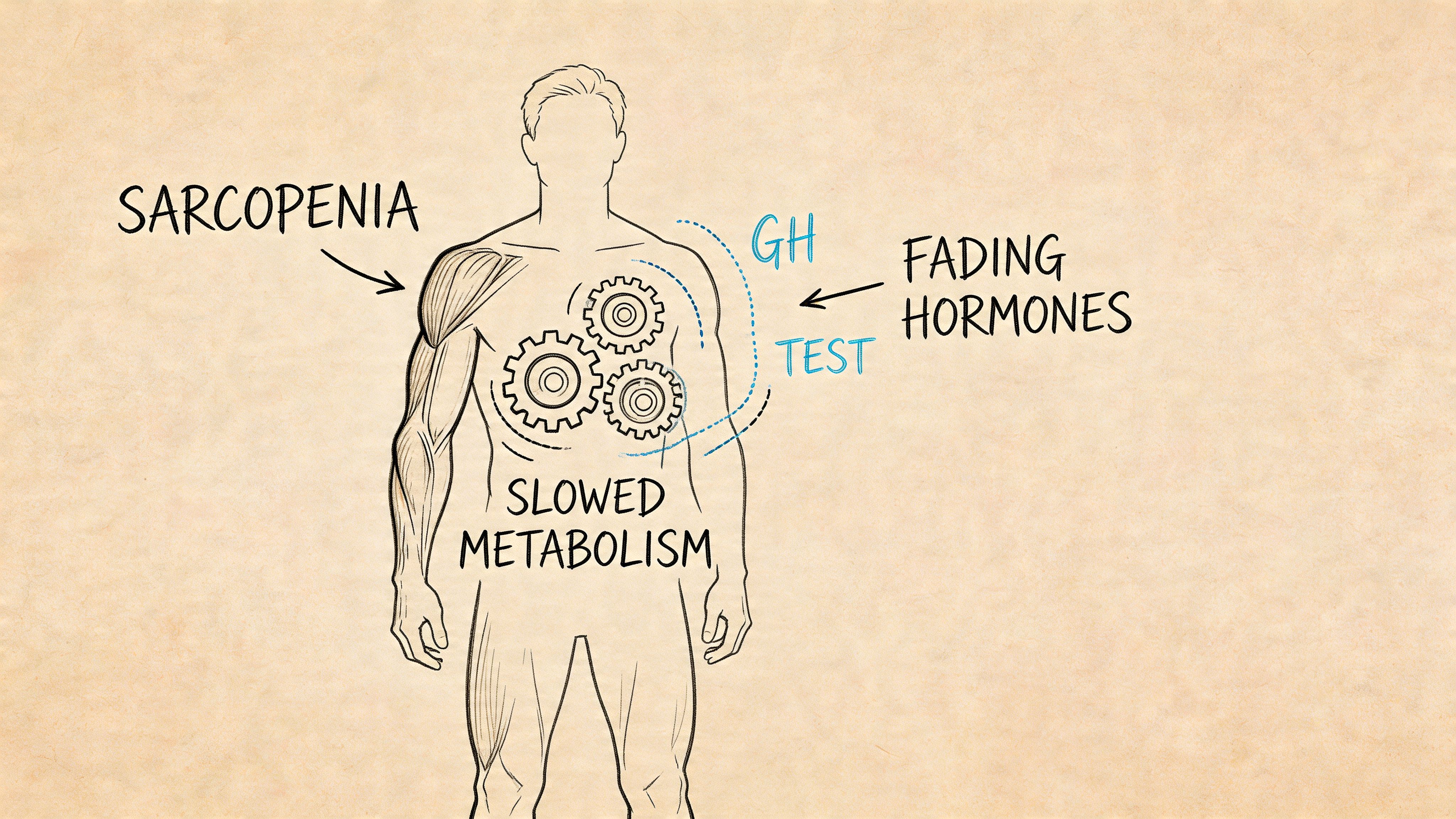
After 40, two major forces start to matter more. Sarcopenia, which is age-related muscle loss, and perimenopausal hormone shifts, especially declining estrogen.
Muscle loss lowers your resting burn
Muscle is expensive tissue for the body to maintain. That’s a good thing for metabolism. The more lean muscle you keep, the more energy your body uses even when you’re not exercising.
According to WebMD’s review of metabolism changes after 40, metabolism naturally slows by approximately 5% per decade after age 40, largely because of age-related muscle loss and hormonal shifts. In practical terms, a woman with a resting metabolic rate of 1,500 calories at age 40 could drop to about 1,425 by age 50 without intervention, and this change contributes to an average weight gain of 0.3 to 0.5 kg per year during midlife.
That helps explain why “I’m eating the same as always” often comes with weight gain. If your body is burning less at rest than it used to, the old intake may no longer match your current needs.
Estrogen changes more than your cycle
Perimenopause adds another layer. As estrogen declines, the body often becomes less metabolically flexible. Many women notice they store fat more easily around the middle, feel hungrier, and get stronger blood sugar swings after meals.
Estrogen affects how your body handles insulin, appetite, and fat distribution. When estrogen starts fluctuating and dropping, insulin resistance can increase, which means your body may have a harder time managing glucose efficiently. That can lead to more energy crashes, more cravings, and a stronger tendency to store fat centrally.
A lot of women interpret this as “my willpower disappeared.” What’s really happening is that the body’s internal signals have changed.
Practical rule: If fat gain is showing up mostly around your waist, cravings are worse, and sleep is more broken than it used to be, think hormones and muscle loss before you assume you just need stricter dieting.
Why cardio-only plans often backfire
When metabolism feels slow, many women default to more cardio and less food. That can create a short burst of progress, but it often doesn’t solve the root problem if muscle mass is slipping and recovery is poor.
A cardio-heavy plan burns energy during the workout. A muscle-building plan changes how much energy your body uses all the time. That distinction matters more after 40.
Here’s the trade-off in simple terms:
Approach | What it helps | Where it falls short |
|---|---|---|
Eating less | Can reduce total intake in the short term | Often increases hunger and can be hard to sustain |
More cardio | Supports heart health and calorie burn during activity | Doesn’t directly protect muscle if resistance work is missing |
Strength training plus nutrition | Helps preserve or build muscle and supports resting metabolism | Requires consistency and progression, not just effort |
The goal isn’t to fight your body harder. It’s to build a plan that matches the physiology of this decade.
Refueling Your Metabolism With Strategic Nutrition
If you want to know how to improve metabolism after 40, nutrition has to do more than cut calories. It has to support muscle, keep appetite steadier, and reduce the blood sugar swings that make midlife eating feel chaotic.
Generic “eat less” advice often proves ineffective. Under-eating may leave you tired, snacky, and more likely to lose muscle if protein is low. A better strategy is to make your meals do specific jobs.
Put protein at the center of your plate
Protein is the nutritional priority I push hardest in midlife. It helps preserve lean mass, supports fullness, and takes more energy to digest than lower-protein eating patterns.
According to Paloma Health’s review on firing up a slow metabolism in midlife, a higher-protein diet with protein at around 25% of daily calories can significantly increase thermogenesis. Women over 40 are advised to aim for 1.2 to 1.6 g of protein per kg of body weight daily, with about 20 to 30 g per meal.
That target changes the way meals need to look. A light breakfast with toast and fruit may be fine for convenience, but it usually won’t do much for muscle retention or appetite control. A breakfast with eggs and Greek yogurt, or tofu and edamame, works much harder for you.
Here’s a practical way to consider it:
Breakfast should anchor the day: If you start with a low-protein breakfast, hunger often snowballs later.
Lunch should prevent the afternoon crash: Include a clear protein source instead of relying on crackers, salad greens, or coffee to carry you through.
Dinner should finish the job: Don’t leave all your protein for the evening, but make sure dinner still contributes a meaningful amount.
If you want help estimating intake, a macro calculator for weight loss can give you a useful starting framework. It’s not a rulebook, but it can make protein targets feel less abstract.
Sample Protein Servings to Hit Your Goals
Food Source | Serving Size | Approx. Protein (g) |
|---|---|---|
Greek yogurt | 1 serving | 20-30 |
Eggs | A meal-sized portion | 20-30 |
Fish | A meal-sized portion | 20-30 |
Legumes | A meal-sized portion | 20-30 |
The exact amount in a serving varies by product and portion, so use labels and meal logging when you need precision.
Fiber matters more than most women realize
Protein gets more attention, but fiber is one of the quiet workhorses of metabolic health in perimenopause. It helps with fullness, supports steadier blood sugar, and can make it easier to avoid the “starving at 4 p.m.” pattern.
A practical daily target is 25 g of fiber, especially from foods like berries, grains, legumes, seeds, and vegetables. This doesn’t need to become a perfect food checklist. It just means your meals should contain plants with structure, not only light produce that looks healthy but doesn’t keep you full.
Women dealing with perimenopausal bloating often make the mistake of eating less overall and replacing meals with snack foods labeled as healthy. That tends to worsen the cycle. A better move is to build meals with protein, fiber, and enough substance to keep you satisfied.
For more meal ideas designed for this phase of life, these foods for menopause are a useful place to start.
The best metabolism-supportive meal is not the smallest one. It’s the one that keeps you full, supports muscle, and prevents the rebound eating that happens when lunch was basically a side salad.
Hydration affects calorie burn and appetite
Hydration sounds basic because it is basic. It also matters.
The same Paloma Health review notes that drinking water can boost metabolism by up to 30% for about 1 hour after consumption. That’s not a reason to obsess over water as a magic fix. It is a reminder that dehydration can make energy and appetite cues feel worse.
Most women do better when they tie hydration to routine rather than motivation. Try this:
Drink water early with breakfast instead of waiting until you feel thirsty.
Pair water with meals and snacks so intake happens automatically.
Keep a visible bottle nearby during work, school pickup, or commuting.
Meal timing should support stability, not perfection
There isn’t one ideal eating schedule for every woman after 40. What matters most is that your meals are regular enough to support energy, protein intake, and appetite control.
For many women, the most effective pattern is simple:
Don’t skip the first real meal of the day if that leads to a later binge.
Distribute protein across meals instead of trying to cram it all in at dinner.
Build meals, not random grazing when hormones are already making hunger feel less predictable.
What doesn’t work well for a lot of perimenopausal women is chaotic eating. Coffee for breakfast, tiny lunch, then eating everything in sight after dinner is a common setup for poor recovery and inconsistent intake.
Nutrition after 40 works best when it feels steady, not extreme. Your meals should reduce stress on your body, not create more of it.
Building Your Metabolic Engine With Smart Exercise
If nutrition lays the foundation, exercise builds the engine. And for metabolism after 40, strength training is the main event.
A lot of women still approach exercise as punishment for eating or as a way to burn off calories. That mindset usually leads to lots of cardio, sore knees, and not much improvement in body composition. The better question is this: what kind of training helps your body become more metabolically active all week, not just during the workout?
The answer is resistance training.
Why lifting changes the game
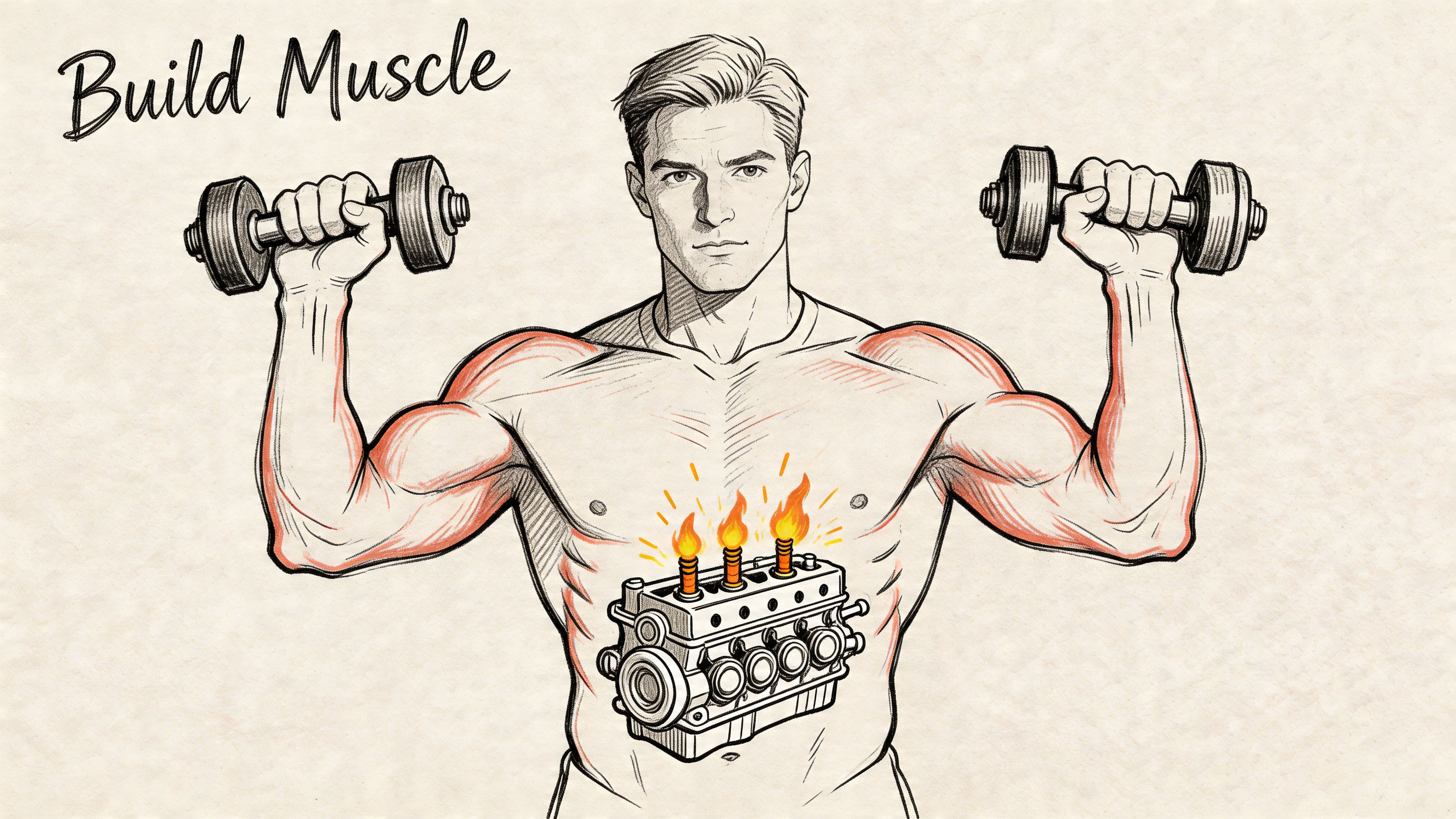
According to NutriGardens’ summary of metabolism support after 40, strength training 2 to 4 times per week is the most effective way to build metabolically active muscle. The same source notes that each pound of muscle burns about 6 calories per day at rest, compared with about 2 for fat, and women over 40 can increase resting metabolic rate by 2 to 5% within 12 weeks of consistent training.
That’s why strength work beats endless low-intensity calorie chasing. It helps you hold onto the tissue that keeps resting metabolism higher.
If you’re not sure where to begin, programs that offer fully customized workouts can be useful because they match training to your equipment, schedule, and experience level. That matters. The best plan is the one you can repeat.
A beginner-friendly weekly template
You do not need a punishing six-day split. Most women do well with a simple weekly structure built around consistency.
Option one
Two or three strength sessions
A few days of walking or cycling
One or two easier recovery days
Option two
Full-body lifting on nonconsecutive days
Short cardio sessions on separate days
Daily movement through errands, walking, stairs, and household activity
The key is that strength sessions should feel purposeful, not random.
What to do in those strength sessions
The most useful exercises after 40 are compound movements. These train multiple muscle groups at once and give you more return for your effort.
Good options include:
Squats or sit-to-stands
Deadlift patterns
Rows
Chest presses or push-ups
Overhead presses
Loaded carries
A practical session doesn’t need to be fancy. It needs to challenge you enough that your body has a reason to adapt.
Try building your sessions around this pattern:
Movement pattern | Example choices |
|---|---|
Lower body push | Squat, goblet squat, sit-to-stand |
Hip hinge | Deadlift, Romanian deadlift |
Upper body push | Dumbbell press, incline push-up |
Upper body pull | Row, assisted pull movement |
Core or carry | Farmer carry, anti-rotation hold |
If you want visual guidance on movement ideas that work well in this life stage, these menopause-friendly exercises are a solid reference.
Start lighter than your ego wants, then progress more slowly than your impatience wants. That’s how women stay consistent enough to actually change metabolism.
Here’s a practical demo to make the setup more concrete:
▶ PlayCardio still matters, just not as the whole plan
Cardio supports heart health, endurance, and mood. It also complements strength work well. The mistake is using it as your only strategy.
Brisk walking, cycling, and moderate aerobic work are especially useful because they’re easier to recover from than hard daily bootcamp sessions. Some women also benefit from occasional intervals, but only if sleep and recovery are reasonably stable. If intense sessions leave you wrecked, ravenous, or unable to train again, they’re not helping.
A balanced week usually works better than a heroic one.
Don’t ignore NEAT
Formal workouts are only part of the picture. Daily movement outside the gym matters a lot. Walking during calls, taking stairs, carrying groceries, standing up more often, and doing household tasks all support your total activity.
A practical target is 7,000 to 10,000 daily steps through general movement and walking. This kind of non-exercise activity can add meaningful daily energy expenditure without beating up your joints or nervous system.
For a lot of women, this is the missing piece. They work out hard for an hour, then sit the rest of the day. A more metabolically supportive routine often includes both structured strength work and a body that stays in motion.
The Hidden Saboteurs Sleep Stress and Hormones
Some women do many things right on paper and still feel stuck. They’re eating enough protein. They’ve started lifting. They’re trying to walk more. But their body still feels inflamed, hungry, puffy, and exhausted.
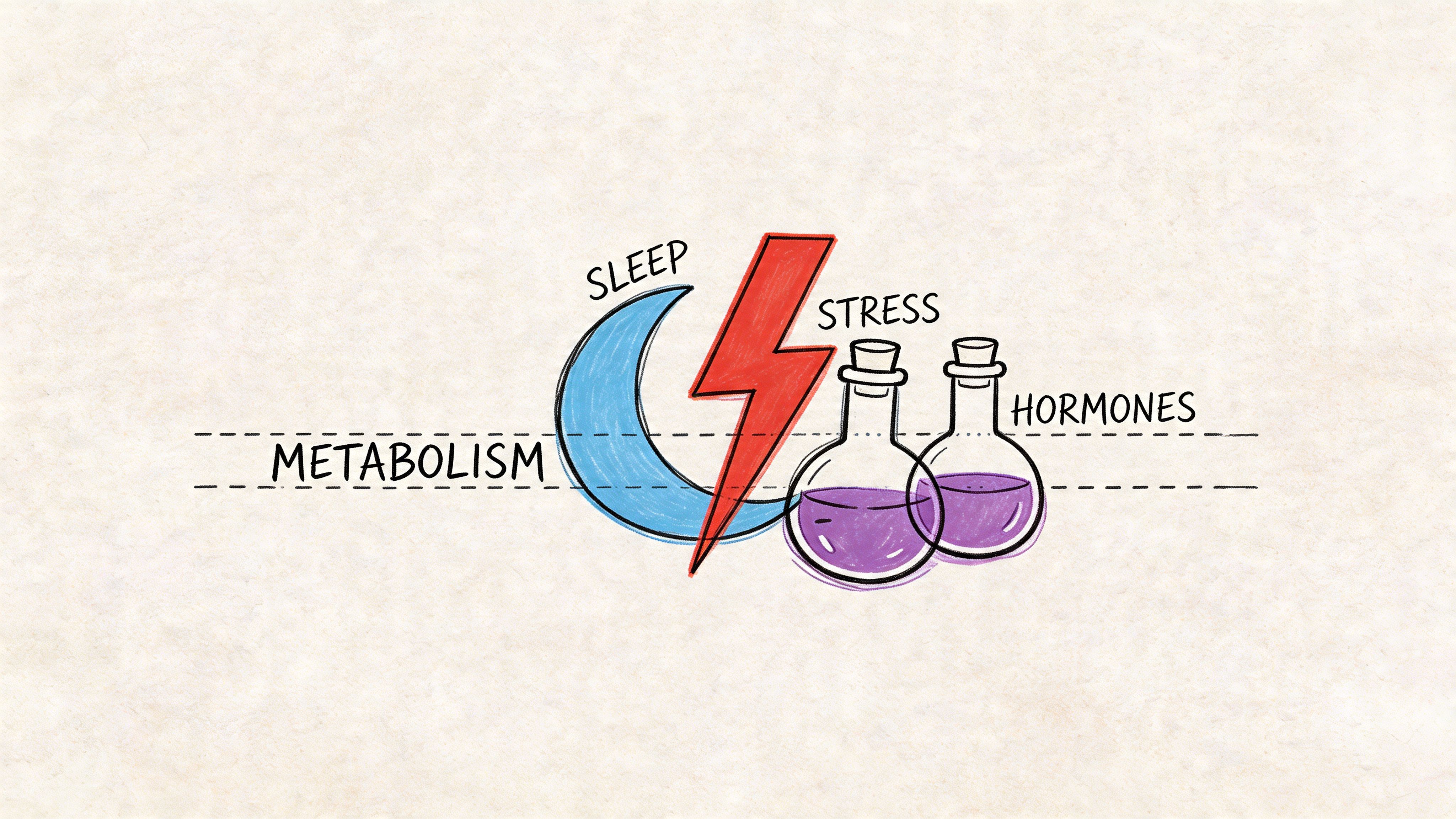
That’s usually where sleep, stress, and hormone disruption enter the conversation.
Perimenopause changes the context of every habit
Perimenopause doesn’t just change your period. It changes the environment your metabolism operates in. According to Navacenter’s discussion of metabolism after 40, declining estrogen can reduce metabolic rate by 5 to 10% and increase insulin resistance. The same source notes that targeted strategies such as increasing daily fiber to 25 g improved post-meal metabolism by 15% over 12 weeks in cohort research.
That matters because the same skipped sleep, high stress, or blood sugar swings that felt manageable before may hit much harder now.
Poor sleep raises the cost of everything
When sleep gets disrupted, almost every healthy habit becomes more difficult to execute. Hunger cues get louder. Cravings feel more urgent. Workouts feel harder. Recovery slows down.
Perimenopause often brings night waking, hot flashes, lighter sleep, or that frustrating pattern where you fall asleep but wake at 3 a.m. wide awake. If that’s happening, metabolism support has to include sleep support. You can’t out-train chronic exhaustion.
A useful evening routine is simple and repeatable:
Keep bedtime and wake time consistent even if the day was messy
Dim stimulation at night by reducing bright screens and work tasks close to bed
Eat dinner with enough protein and fiber so you’re not scavenging the kitchen late
Create a wind-down cue like stretching, reading, or a warm shower
Stress changes eating behavior fast
Chronic stress tends to push women into one of two patterns. Some stop eating regularly all day, then overeat at night. Others keep snacking because they feel wired, tired, and never fully satisfied.
Neither pattern is a character flaw. Both are common stress responses.
That’s why stress management for metabolism isn’t about becoming perfectly calm. It’s about reducing the physiological load enough that your body stops interpreting daily life as one long emergency.
Try building stress relief into ordinary life instead of waiting for a free hour you may never get:
Take a short walk after meals to downshift and reset.
Use brief breathing or mindfulness practices when cravings feel driven by overwhelm rather than hunger.
Protect recovery days instead of filling every gap in your calendar.
If your plan makes you more tired, more obsessive, and less resilient, it isn’t a metabolism plan. It’s another stressor.
When to ask for clinical support
Sometimes lifestyle work helps a lot, but symptoms still feel outsized. If you’re dealing with major sleep disruption, severe cycle changes, intense hot flashes, or dramatic shifts in mood and weight, it may be time to talk with a clinician.
That doesn’t mean your habits don’t matter. It means your habits work best when they’re paired with proper evaluation of what your hormones are doing. Support might include more personalized nutrition, symptom review, or discussion of hormonal treatment options depending on your health history and symptoms.
Your 4-Week Metabolism Makeover Plan
Most women don’t need more information. They need a plan they can follow on a busy week when work is full, sleep is mixed, and motivation is inconsistent.
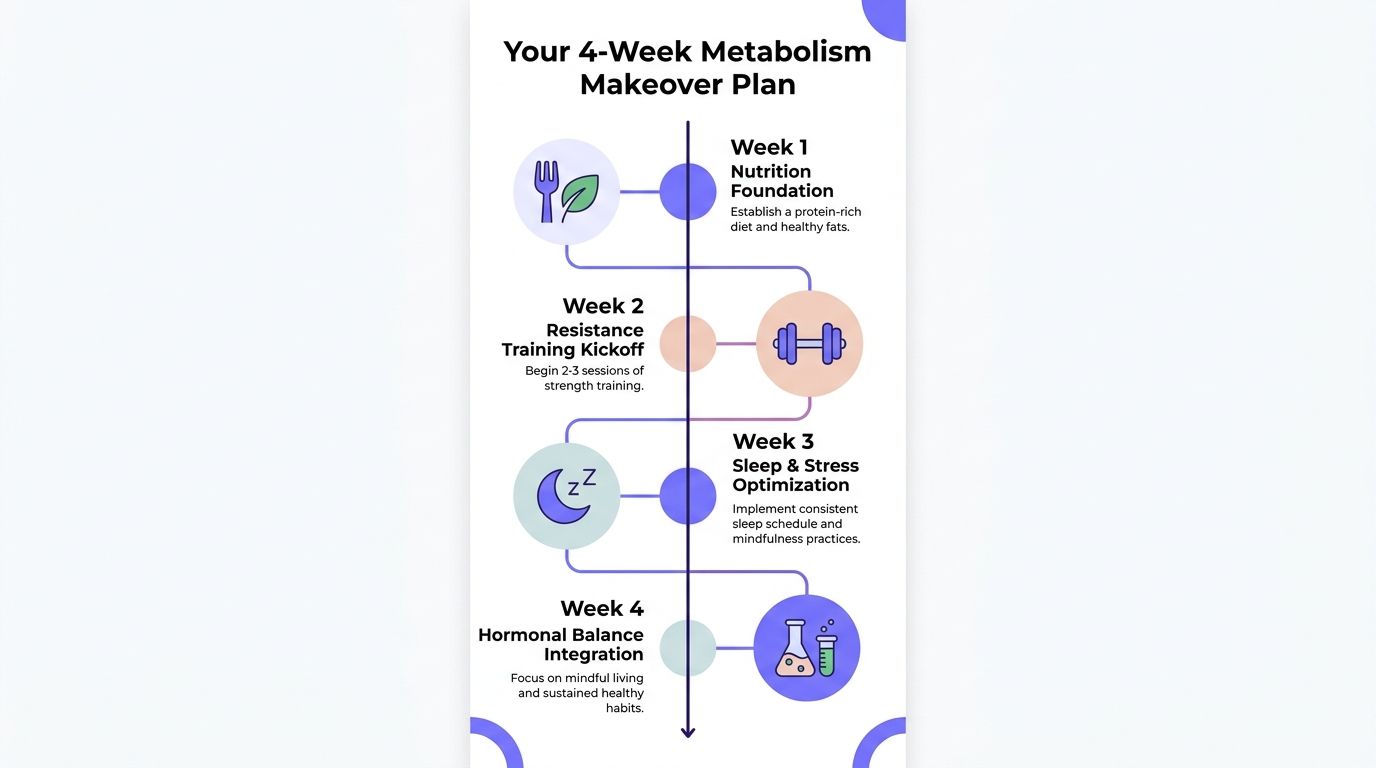
This one builds in layers. Each week adds a new focus so you’re not trying to overhaul your life in a single Monday burst.
Week 1 Build the nutrition base
For the first week, focus on regular meals and better structure. Don’t try to “eat perfectly.” Aim to make each meal more supportive.
Your targets:
Include protein at each meal
Start moving toward 25 g of fiber daily
Drink water consistently through the day
Notice when hunger, cravings, or bloating show up
This is also the right week to start logging patterns. Not calories obsessively. Patterns. Write down meals, energy, cravings, sleep quality, and any symptoms that show up around your cycle or at certain times of day.
If you want another perspective on habit-building, this practical plan to speed up metabolism after 40 offers ideas that pair well with a structured reset.
Week 2 Start resistance training
Now add 2 to 3 strength sessions across the week. Keep them short and focused. Full-body sessions usually work best.
A simple checklist for each workout:
Choose compound movements
Use weights that feel challenging with good form
Leave enough recovery between sessions
Track what you did so you can progress gradually
Also keep daily movement going. Walk more when you can. Stand up between tasks. Add motion to routines that are normally sedentary.
Week 3 Fix the recovery leaks
By the third week, many women realize the biggest obstacle wasn’t effort. It was recovery.
This week, tighten the habits that support sleep and stress regulation:
Set a consistent bedtime
Create a short wind-down ritual
Reduce high-intensity training if it’s leaving you drained
Use one calming practice each day
This could be stretching, journaling, a quiet walk, guided breathing, or closing the laptop earlier. The point is regularity, not complexity.
Week 4 Personalize based on feedback
The plan becomes yours.
Look back at what you tracked and ask:
Which meals kept me full longest
Which workouts boosted energy and which wiped me out
Did bloating, cravings, or sleep change on certain days
Am I seeing progress in energy, mood, strength, or waist fit, even if the scale is slow
This is the piece many women skip. They judge success only by body weight. That’s too narrow. Better markers include:
Steadier appetite
Better workout performance
Improved sleep quality
Less afternoon crashing
Reduced bloating
Clothes fitting differently
Track the data your body is actually giving you. Weight is one signal. It is not the only signal.
A good metabolism plan after 40 should feel more stable over time. You may not feel dramatic change overnight, but you should start seeing patterns that tell you what your body responds to. That’s how progress becomes sustainable instead of all-or-nothing.
Frequently Asked Questions About Metabolism After 40
Can I improve metabolism if I’m vegetarian or vegan
Yes. The main job is still the same. Protect muscle, eat enough protein, and build meals that are filling. Use protein-rich foods such as legumes, soy foods, yogurt if you include dairy, and other plant-based staples that help you reach consistent intake across the day.
What if I hate the gym
Then don’t build your plan around the gym. Resistance bands, dumbbells at home, bodyweight progressions, and walking are all valid tools. The principle matters more than the location. You need progressive resistance and regular movement, not a specific building.
How long does it take to notice changes
Many women notice early changes first in energy, appetite stability, bloating, and strength. Visible body composition changes usually take longer and depend on consistency. The fastest way to feel discouraged is to expect the scale to capture every positive shift immediately.
Are supplements the answer
Usually not on their own. Food quality, protein intake, training, sleep, and stress management do much more heavy lifting. Supplements may have a role in some cases, but they should support a plan, not replace one. If symptoms are intense or confusing, talk with a clinician before spending money on products that promise a metabolism miracle.
Is walking enough
Walking is excellent and often underused. It supports daily activity, recovery, mood, and consistency. But if your goal is to improve metabolism after 40, walking works best when it’s paired with some form of resistance training that helps preserve or build muscle.
If you want more support putting this into practice, Lila can help you track the patterns that matter in perimenopause, including sleep, energy, mood, symptoms, meals, and cycle changes. Instead of guessing why your body feels different this week, you can see your trends clearly and follow a personalized plan that fits what your body is telling you.
Get Lila, your personal coach for perimenopause.
Built for women in their 40s. 24/7 coaching, in your pocket.