How to Lose Belly Fat After 50: Proven Strategies
Learn how to lose belly fat after 50. Our science-backed guide covers nutrition, exercise, and hormones for sustainable results after menopause.
 Michelle
You clean up your eating. You try to walk more. You even cut back on the snacks that used to be your weakness. And yet your waistband feels tighter, your stomach looks softer, and the old strategies that once worked barely move the needle.
If that sounds familiar, you're not imagining it. After 50, many women notice that weight settles in the midsection more easily and comes off much more slowly. That shift can feel personal, but it isn't a character flaw and it isn't a willpower problem. Your body is responding to real hormonal and metabolic changes that come with perimenopause and menopause.
I hear this frustration constantly from women who feel like they're doing “everything right” and still not seeing results. They aren't lazy. They aren't failing. They're using a plan built for a different stage of life.
Learning how to lose belly fat after 50 starts with understanding that this phase requires a more connected approach. Food choices matter, but so do muscle, sleep quality, stress load, and symptom patterns that can affect appetite, energy, and fat storage. When you address those pieces together, progress becomes far more realistic and far less punishing.
Introduction You're Not Imagining It Your Body Is Changing
A woman in her fifties often tells me some version of the same story. She hasn't changed much. She still eats fairly well, still tries to stay active, still keeps up with work and family. But her belly has changed, her sleep is worse, and her energy is lower than it used to be.
That combination matters.
Perimenopause and menopause change where fat is stored, how well you recover, how hungry you feel, and how hard it is to maintain muscle. So if you've been blaming yourself for a body that suddenly seems less cooperative, you can stop. Your body is changing, and it needs a different kind of support now.
The good news is that stubborn midlife belly fat does respond when you stop chasing random diet rules and start working with your biology. A better strategy isn't “eat less and exercise more.” It's choosing the right nutrition pattern, preserving muscle, improving sleep, and lowering the stress signals that push your body toward abdominal fat storage.
You don't need a harsher plan. You need a smarter one that matches what your hormones and metabolism are doing now.
Why Belly Fat Becomes So Stubborn After 50
You can be eating roughly the same way you did a decade ago and still watch your waistline change. That pattern is common in perimenopause and menopause, and it has real biological drivers.
Estrogen shifts fat toward the midsection
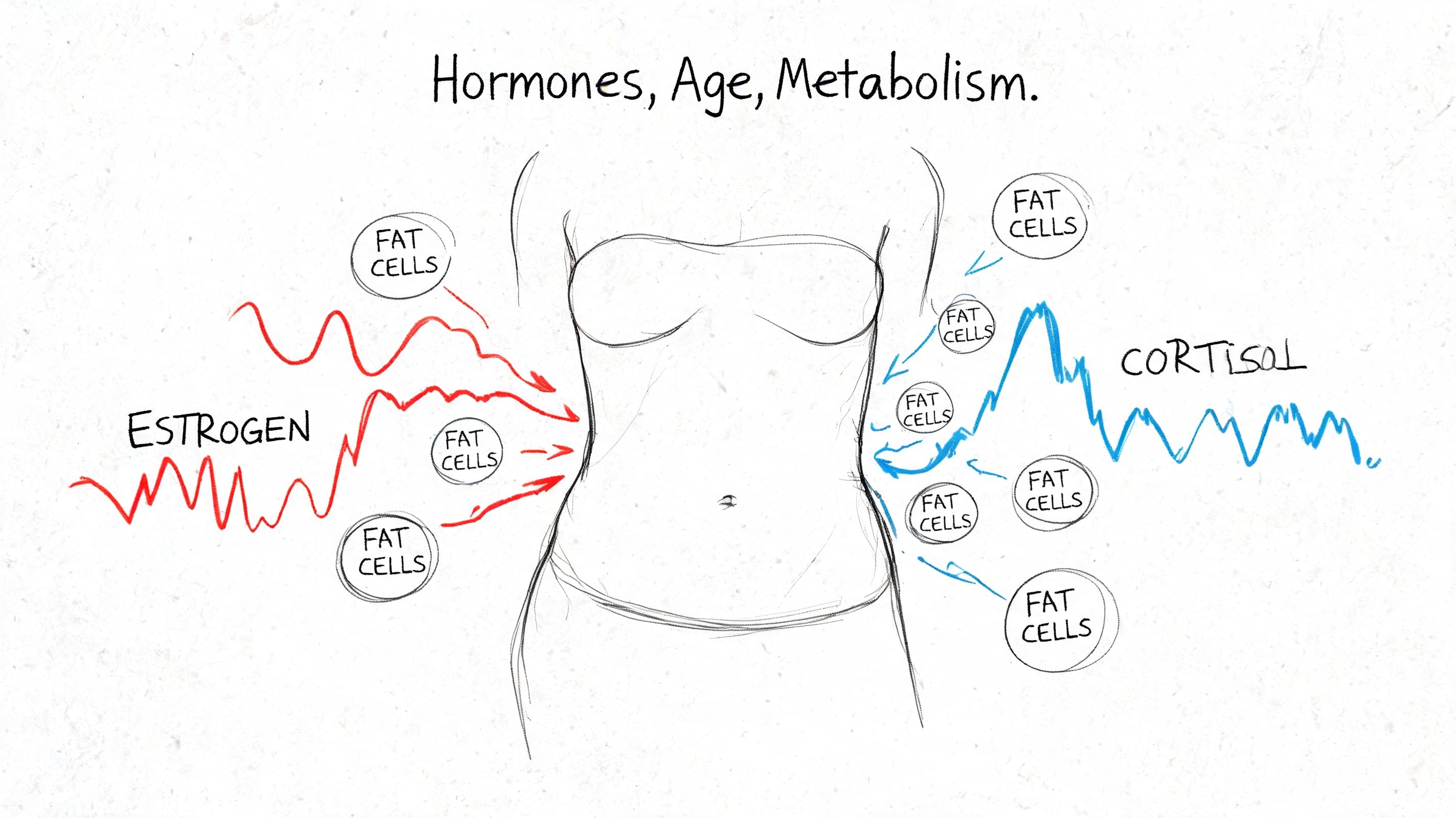
As estrogen declines, fat distribution often changes. Many women who used to carry more weight in the hips and thighs start storing more around the abdomen instead.
That matters for more than clothing size. Belly fat includes subcutaneous fat, which sits under the skin, and visceral fat, which surrounds internal organs and is more strongly linked with metabolic and cardiovascular risk. After menopause, women tend to accumulate more of this central fat pattern, which is one reason waist measurement becomes a more useful health marker in midlife.
Blood sugar swings get less forgiving
A lot of women notice that foods they used to tolerate well now leave them hungry, sleepy, or reaching for something sweet a couple of hours later. That usually reflects changes in insulin sensitivity, muscle mass, activity, sleep, and stress all happening at once.
A breakfast built around toast, cereal, or juice may be enough to start the day, but it often does not hold steady energy for long at this stage. Meals with more protein, fiber, and minimally processed carbs usually work better because they reduce the sharp rise and fall that can drive cravings and make abdominal fat loss harder.
If you want a more detailed framework, this menopause diet plan for balancing blood sugar and supporting fat loss lays out how to build meals that match midlife metabolism.
Gut health can play a supporting role too. Some women find that digestion, regularity, appetite, and food tolerance improve when they address the microbiome as part of the larger picture. If that is on your radar, you can discover effective menopause weight loss probiotics, but they work best as an add-on to a solid nutrition and lifestyle plan, not as the plan itself.
Sleep and stress push the same problem in the wrong direction
Here is the piece that often gets missed. A woman can clean up her diet, add workouts, and still struggle if sleep is fragmented night after night.
Hot flashes, night waking, early waking, and stress can all raise cortisol at the wrong times. Higher cortisol tends to increase appetite, worsen blood sugar control, and encourage more abdominal fat storage. It also makes recovery harder, which means your workouts may feel tougher while giving you less payoff.
The Richmond Center facility article on stubborn belly fat after 50 describes the same pattern clearly. Poor sleep and menopause symptoms can feed each other, making belly fat harder to lose because the body stays in a more stressed, less recovered state.
Practical rule: If your sleep is broken and your evening cravings are high, treat sleep as part of your fat-loss plan, not a side note.
Your body responds better to a connected system now
This is why generic advice falls flat after 50. The issue is rarely one habit in isolation. Estrogen changes fat storage. Poor sleep raises stress hormones. Stress hormones worsen cravings. Lower muscle mass reduces how much glucose you can handle well. Each piece affects the others.
In practice, I see three common mistakes:
Cutting calories too hard: This often increases fatigue, hunger, and muscle loss.
Adding more cardio without strength work: This can burn energy without giving your metabolism the muscle support it needs.
Ignoring sleep and stress: That leaves two major drivers of belly fat untouched.
A better approach is to treat midlife belly fat as a systems problem. Nutrition, strength training, walking, sleep quality, stress load, and symptom tracking all belong in the same plan. That is also where tools like Lila can help. When you can track patterns across symptoms, meals, movement, sleep, and weight changes, it gets much easier to spot what is helping and what is just adding effort.
The Right Nutrition Strategy for Your Midlife Metabolism
A woman can eat the same way she did at 40, keep up her walks, and still watch her waistline change. That is usually not a discipline problem. Midlife metabolism responds differently to meals because lower estrogen, rising insulin resistance, stress load, and muscle loss all affect how the body stores and uses energy.
The nutrition strategy that works best here does four jobs at once. It controls hunger, supports muscle, steadies blood sugar, and gives you a structure you can repeat on a tired Tuesday, not just on your most motivated day.
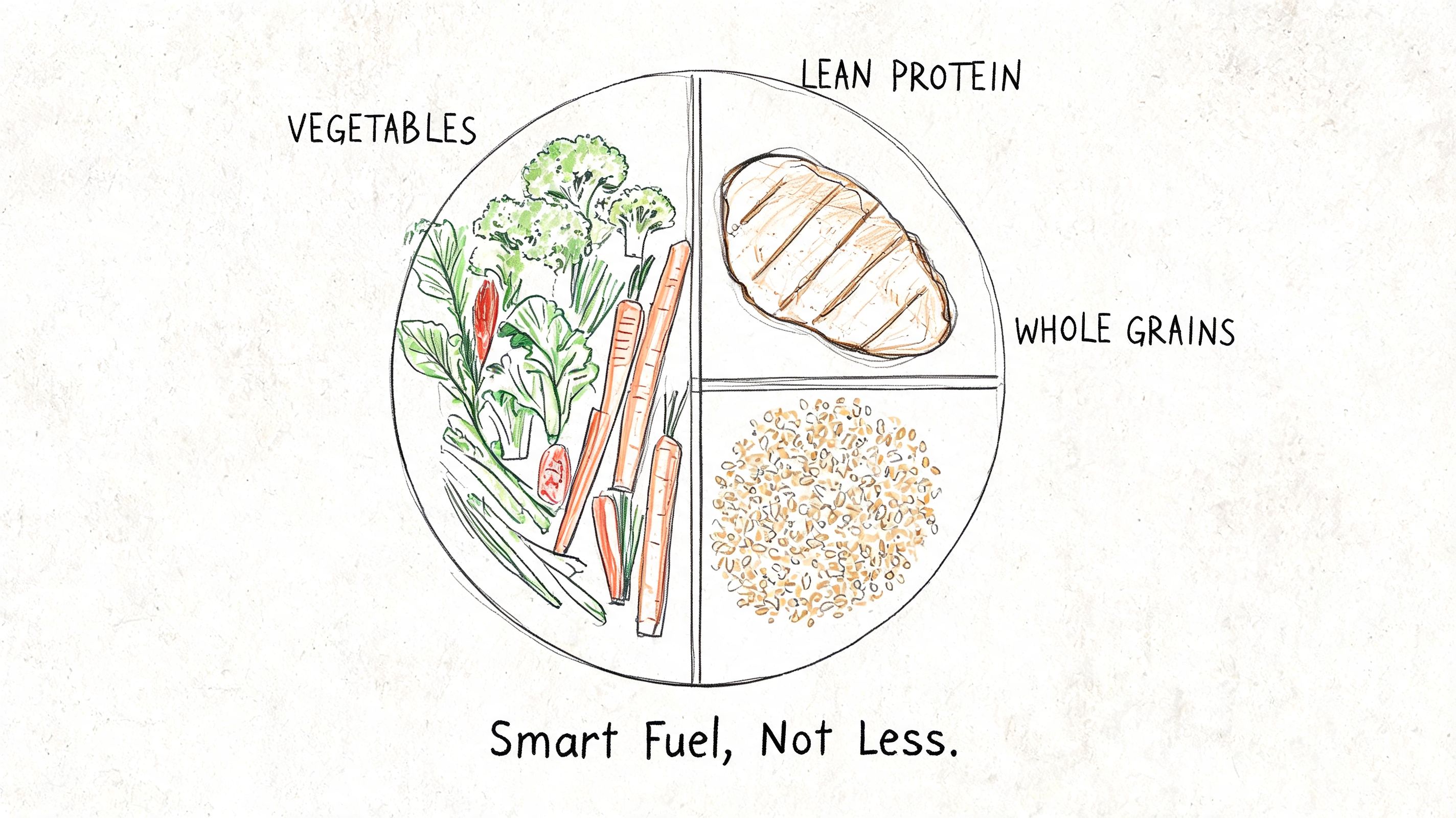
A lower carb pattern makes sense for this stage
I rarely see women over 50 do well on a low-fat, high-snack approach. It often leads to meals that look light on paper but leave you hungry an hour later. Then cravings rise, portions creep up at night, and blood sugar becomes harder to manage.
A better starting point is moderate to lower carb eating built around protein, fiber, and minimally processed foods. That does not mean cutting out carbs. It means choosing carbs that bring something useful with them, such as fiber, slower digestion, or better fullness.
In practice, carbs should support the meal, not dominate it.
That usually means building your plate around protein and vegetables first, then adding smart carb portions like beans, lentils, oats, quinoa, or sweet potato based on your activity level, hunger, and glucose response. Women who strength train or walk a lot may do well with more. Women dealing with strong cravings, afternoon crashes, or prediabetes often feel better with less.
Prioritize protein first
If I could fix one habit for most women in menopause, it would be meal construction. Too many meals start with toast, cereal, crackers, or fruit alone. That pattern is easy, but it does very little for appetite control or muscle maintenance.
Start with protein instead.
The brief for this article supports aiming for 1-1.5 grams of protein per kilogram of lean mass. That target matters because after 50, muscle is harder to keep and easier to lose during dieting. Protein helps protect it. It also makes meals more satisfying and supports recovery from strength training.
Reliable options include:
Greek yogurt or cottage cheese: Fast, high-protein breakfasts or snacks.
Eggs: Simple, filling, and easy to pair with vegetables.
Fish, chicken, tofu, or tempeh: Strong anchors for lunch and dinner.
Beans and lentils: Helpful for women who want both protein and fiber in one food.
A simple coaching question works well here: what is the main protein in this meal? If the answer is unclear, the meal usually needs adjusting.
Fiber helps with fullness and steadier eating
Fiber is one of the most useful tools for belly fat after 50 because it helps with fullness, digestion, and blood sugar control. It also makes a lower carb pattern easier to stick with, which matters more than any perfect macro split.
The brief recommends 25g+ fiber daily. Soluble fiber is especially helpful for many women in this phase. Foods like oats, apples, legumes, berries, and psyllium can help meals feel more substantial without relying on constant snacking. Increase gradually so your digestion has time to adapt.
A plate that works well for many women looks like this:
Plate element | What it might look like |
|---|---|
Protein base | Salmon, eggs, Greek yogurt, chicken, tofu |
Fiber-rich produce | Berries, leafy greens, broccoli, Brussels sprouts, apples |
Smart carbs | Beans, lentils, oats, quinoa, sweet potato |
Healthy fats | Olive oil, avocado, nuts, seeds |
For a fuller framework on building meals around menopause symptoms, appetite, and energy, this menopause diet plan guide is a useful next read.
A quick visual can help if you're rebuilding meals from scratch:
▶ PlayWhat to cut back on
Women often ask what they need to remove completely. Usually, full restriction backfires. A smarter move is to reduce the foods that make hunger and blood sugar harder to manage.
Start with these:
Sugary drinks and juices: They add fast-digesting carbs without much fullness.
Refined snack foods: Crackers, chips, and low-protein bars are easy to overeat.
Low-fat processed foods: Many leave women unsatisfied and grazing later.
Large carb-heavy breakfasts: These often set up an energy dip and stronger cravings later in the day.
I tell clients to make their meals boringly effective before they chase supplements, detoxes, or niche diet rules. Protein, fiber, produce, and fewer refined carbs solve more problems than most women expect.
Think sustainable, not perfect
The best plan is the one you can repeat when life gets messy. That is especially true in menopause, when poor sleep, stress, and hormone shifts can change hunger from one day to the next.
Use a rhythm that reduces decision fatigue:
Start the day with protein and fiber
Make lunch the least chaotic meal of the day
Keep dinner satisfying, not oversized
Use snacks only when needed, and make them protein-based
This systems approach works better than white-knuckling through smaller portions. Meals affect hunger. Hunger affects cravings. Cravings affect sleep and stress eating. Tracking those patterns together, including meals, symptoms, movement, and sleep, helps you see what is driving belly fat in your body and what changes are giving you the best return.
Move Smarter Not Harder Exercise to Burn Fat and Build Strength
Many women attack belly fat with more walking, more cardio classes, or longer sessions on the elliptical. Activity is good, but cardio alone usually isn't enough for the specific challenges that show up after 50.
The body you're living in now needs two things from exercise. It needs a reason to keep muscle, and it needs a reason to improve how it handles insulin.
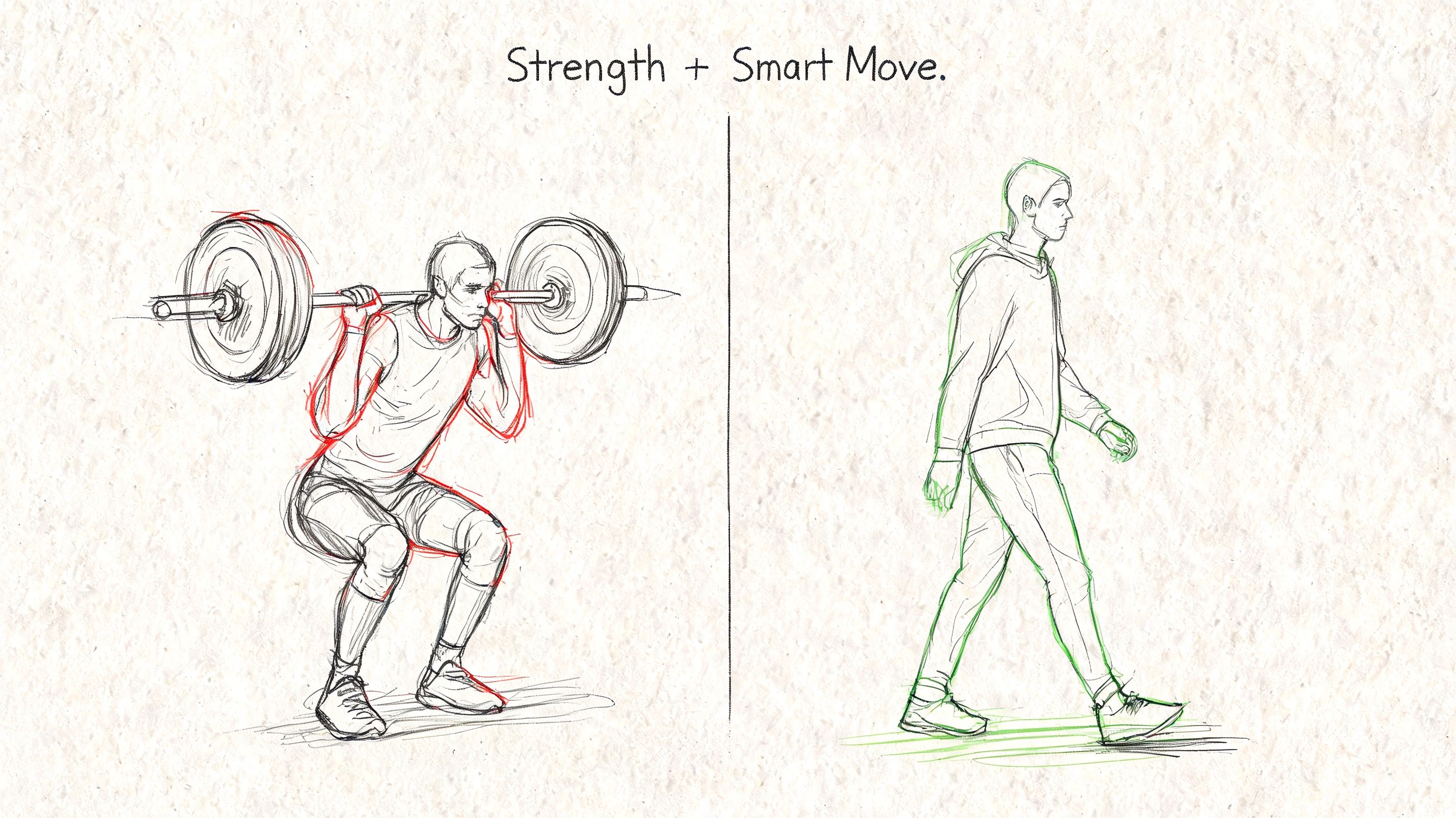
Strength training is the foundation
If your goal is a smaller waist, it may seem strange to focus on lifting weights. But with weightlifting, many women finally start to see meaningful change.
Muscle is metabolically active tissue. When you lose it, your body has less support for glucose control, less physical resilience, and fewer calories burned at rest. That's one reason random dieting can make midlife fat loss harder over time.
The Department of Health and Human Services recommendation included in the verified data calls for strength training twice weekly. For most women, that is the bare minimum worth protecting on the calendar.
A good beginner or return-to-fitness structure includes movements like:
Squats or sit-to-stands: For legs and glutes
Rows: For back strength and posture
Push movements: Such as wall push-ups or dumbbell presses
Hinges: Such as deadlift patterns with dumbbells
Carries or core bracing work: To improve stability
You don't need gym perfection. You need progression. That might mean going from bodyweight sit-to-stands to goblet squats, or from a light band row to a heavier dumbbell row over time.
HIIT works differently than steady cardio
There is a place for walks, easy cycling, and other moderate movement. But if your only plan is “burn more calories,” you may miss the bigger opportunity.
The AARP article on losing belly fat after fifty notes that High-Intensity Interval Training is especially effective for visceral fat. It also states that in menopause, women can see visceral fat increase by up to 50%, and that women can lose 1-2% of muscle mass annually after 50. HIIT helps counter that by lowering insulin levels and preserving muscle. The same source notes that 75 minutes of vigorous activity per week can meet federal guidelines.
That doesn't mean all-out punishment workouts. It means short bursts of hard effort followed by recovery.
A simple HIIT example could be:
Work interval | Recovery interval | Mode |
|---|---|---|
Brisk uphill walk or fast cycling | Easy pace | Treadmill, bike, outdoors |
Short bodyweight effort | Full recovery | Step-ups, marching, low-impact intervals |
What a realistic week can look like
Most women do better with a repeatable pattern than with an all-or-nothing schedule.
A strong weekly setup often looks like this:
Two strength sessions: Focus on major muscle groups
One or two HIIT sessions: Short, intentional, and scaled to your fitness level
Regular walks or light movement: Especially on recovery days
At least one easier day: Recovery is part of the plan
If you're not sure where to start, these exercise ideas for menopause can help you choose the right mix.
Training lens: The best workout isn't the one that leaves you wrecked. It's the one you can recover from and repeat next week.
Common exercise mistakes after 50
I see the same traps over and over.
One is doing too much cardio and not enough resistance work. Another is pushing through poor sleep and calling it discipline. A third is switching programs every week and never building skill or strength.
The better approach is usually less dramatic:
Pick a few foundational strength movements.
Add brief intense intervals once you're recovering well.
Keep walking because it supports stress regulation and consistency.
Adjust your training to your actual energy, not to what you did in your forties.
For belly fat, exercise works best when it's built to support hormones, insulin control, and muscle retention. That's very different from trying to out-burn every meal.
Your Integrated Weekly Plan for Lasting Results
When women feel overwhelmed, they often abandon good habits before they have a chance to work. A weekly template solves that problem because it removes daily guesswork.
Sample Weekly Routine for Belly Fat Loss After 50
Day | Morning (Nutrition & Activity) | Afternoon (Nutrition & Activity) | Evening (Nutrition & Wind-Down) |
|---|---|---|---|
Monday | Protein-rich breakfast such as Greek yogurt with berries and seeds. Strength training focused on upper body. | Balanced lunch with chicken or tofu, vegetables, and beans. Short walk after the meal. | Salmon or lentils with roasted vegetables. Light stretch and screen-light reduction before bed. |
Tuesday | Eggs with sautéed greens. Prioritize protein and fiber across all meals. | Large salad with protein and olive oil dressing. Brief walk or mobility break. | Soup or stir-fry built around protein and vegetables. Early wind-down if sleep has been off. |
Wednesday | Cottage cheese or yogurt with fruit and nuts. Easy walk or yoga. | Leftovers or a grain bowl with added protein. Gentle movement break outside if possible. | Simple dinner, then a calm evening routine with reading or breathwork. |
Thursday | Protein-forward breakfast and water early in the day. Strength training focused on lower body. | Tuna, tofu, or bean lunch with vegetables. Short walk after eating. | Satisfying dinner with fiber-rich vegetables and a moderate portion of starch if desired. |
Friday | Omelet or smoothie with protein and chia. Hydration focus all day. | Balanced lunch and easy movement to break up sitting. | Lighter dinner if you tend to snack late. Keep the evening calm and cool. |
Saturday | Slow breakfast with protein and produce. Outdoor activity such as hiking or a long walk. | Flexible lunch, keeping protein central. | Dinner out can still work. Choose a protein main and add vegetables first. |
Sunday | Quiet morning, no need to “make up” for the week. Gentle walk or mobility. | Prep a few simple staples for the week ahead. | Earlier bedtime routine and a restful close to the weekend. |
Why this works better than chasing perfection
This kind of plan gives each day a job. Some days emphasize strength. Others support recovery, hydration, or meal consistency. That variety matters because your nervous system, muscles, and appetite all respond better to rhythm than chaos.
A woman who sleeps poorly on Tuesday night may not be well served by a hard workout on Wednesday morning. In that case, a walk and a solid breakfast are often the smarter choice. The plan should be structured, but not rigid.
Here are the anchors I want women to protect first:
A reliable breakfast: It reduces random grazing later.
Two strength sessions each week: These pay off over time.
A few go-to lunches: Decision fatigue is real.
A wind-down routine: Better sleep makes everything else easier.
Keep the plan flexible enough to survive real life
The most effective weekly routine isn't the prettiest one on paper. It's the one that still works when work runs late, grandkids visit, or you wake up after a rough night.
Use a simple substitution mindset:
If this happens | Do this instead |
|---|---|
You miss a workout | Take a walk and resume the schedule tomorrow |
You eat off-plan at lunch | Make dinner protein- and fiber-focused instead of giving up |
You sleep badly | Reduce intensity and prioritize recovery that day |
You have social plans | Eat normally beforehand and focus on balance, not restriction |
Midlife fat loss responds well to consistency. It doesn't require spotless weeks.
A weekly template also helps you notice patterns. If Thursday cravings always hit after a poor Wednesday night of sleep, that tells you something useful. If strength days improve your appetite control, that matters too. Progress gets easier when you stop judging isolated moments and start observing the whole system.
Advanced Levers Sleep Stress and Targeted Nutrition
Some women do many things right and still struggle because the hidden drivers never get addressed. They clean up their diet, exercise hard, and stay frustrated because sleep is fragmented, stress is high, and their meals still don't contain enough of the nutrients that improve satiety and metabolic control.
Sleep needs to move higher on the priority list
If hot flashes, night sweats, or early waking are common for you, poor sleep may be amplifying belly fat retention in ways that are easy to miss. A rough night often leads to less patience, more cravings, lower workout quality, and a greater chance of reaching for convenience foods.
That creates a loop. You sleep badly, your body feels more stressed, your choices become harder to manage, and progress stalls. That's why I often tell women to stop treating sleep as something they’ll “fix later.”
A more useful evening routine might include:
Cooling the bedroom: Especially if temperature shifts wake you
Setting a reliable wind-down time: So your body gets a consistent cue
Reducing overstimulation at night: Less scrolling, more quiet
Tracking symptom patterns: So you can connect hot flashes, bedtime, and next-day appetite
If sleep disruption is part of your picture, this guide on sleeping better during perimenopause is worth reading.
Stress can show up as belly fat resistance
Women in midlife often carry a lot. Work pressure, aging parents, changing family roles, relationship strain, and the physical discomfort of menopause can all keep the nervous system switched on.
That doesn't just affect mood. It affects recovery, food choices, and the cortisol patterns that can make abdominal fat more stubborn. The answer isn't to “stress less” in a vague way. The answer is to build repeatable practices that lower the temperature of your day.
Useful options include:
A short walk after meals
Gentle yoga or stretching in the evening
Five quiet minutes of slow breathing before bed
Journaling when your thoughts race at night
If mental spiraling is part of what keeps you up, this resource on coping with overthinking and anxiety can give you practical language and tools.
A stressed body doesn't always need more effort. Often it needs fewer conflicting signals.
Use soluble fiber as a targeted lever
This is one of the few “advanced” strategies that is both practical and well supported in the data provided for this piece.
The Healthline article on evidence-backed belly fat strategies reports that for every 10-gram increase in soluble fiber, the rate of visceral fat accumulation decreased by 3.7% over five years. It also notes that for postmenopausal women, aiming for 25-30g per day from foods like oats, apples, and legumes can lead to a 5-10% reduction in visceral fat within 12 weeks.
The key is to build up slowly.
A practical approach looks like this:
Start where you are: Notice your current intake without judging it.
Add one food first: Oats at breakfast or beans at lunch is enough.
Increase gradually: This helps reduce bloating and discomfort.
Pair fiber with water: Fiber works better when hydration is adequate.
Foods worth repeating often include oats, apples, legumes, and psyllium. Whole foods usually make this easier to sustain because they support fullness in a way isolated fixes often don't.
Small adjustments can unlock better compliance
Women often think they need more discipline when what they really need is less friction.
That might mean prepping two repeat breakfasts instead of seven. It might mean moving intense exercise away from nights when sleep has been poor. It might mean keeping dinner simpler so late-night eating is less likely.
The invisible factors matter. Sleep quality affects exercise. Stress affects appetite. Fiber affects fullness. When these start working together, belly fat loss tends to feel less like a fight.
Conclusion Your Healthiest Chapter Is Still Ahead
Losing belly fat after 50 asks for patience, but it doesn't ask for punishment. The women who do best usually stop chasing extremes and start supporting the whole system. They eat in a way that protects muscle and steadies blood sugar, train with intention, and finally give sleep and stress the attention they deserve.
Your body isn't broken. It's asking for a better-matched plan. When you work with these shifts instead of against them, change becomes much more possible.
Lila can help make that process clearer. If you want one place to track symptoms, sleep, meals, energy, and progress, Lila gives you a practical way to connect the dots and follow a personalized plan with less guesswork.
Get Lila, your personal coach for perimenopause.
Built for women in their 40s. 24/7 coaching, in your pocket.