Best Supplements for Cortisol Reduction: A 2026 Guide
Find the best supplements for cortisol reduction. Our guide covers evidence-backed options, safety, and lifestyle tips for women in perimenopause.
 Michelle
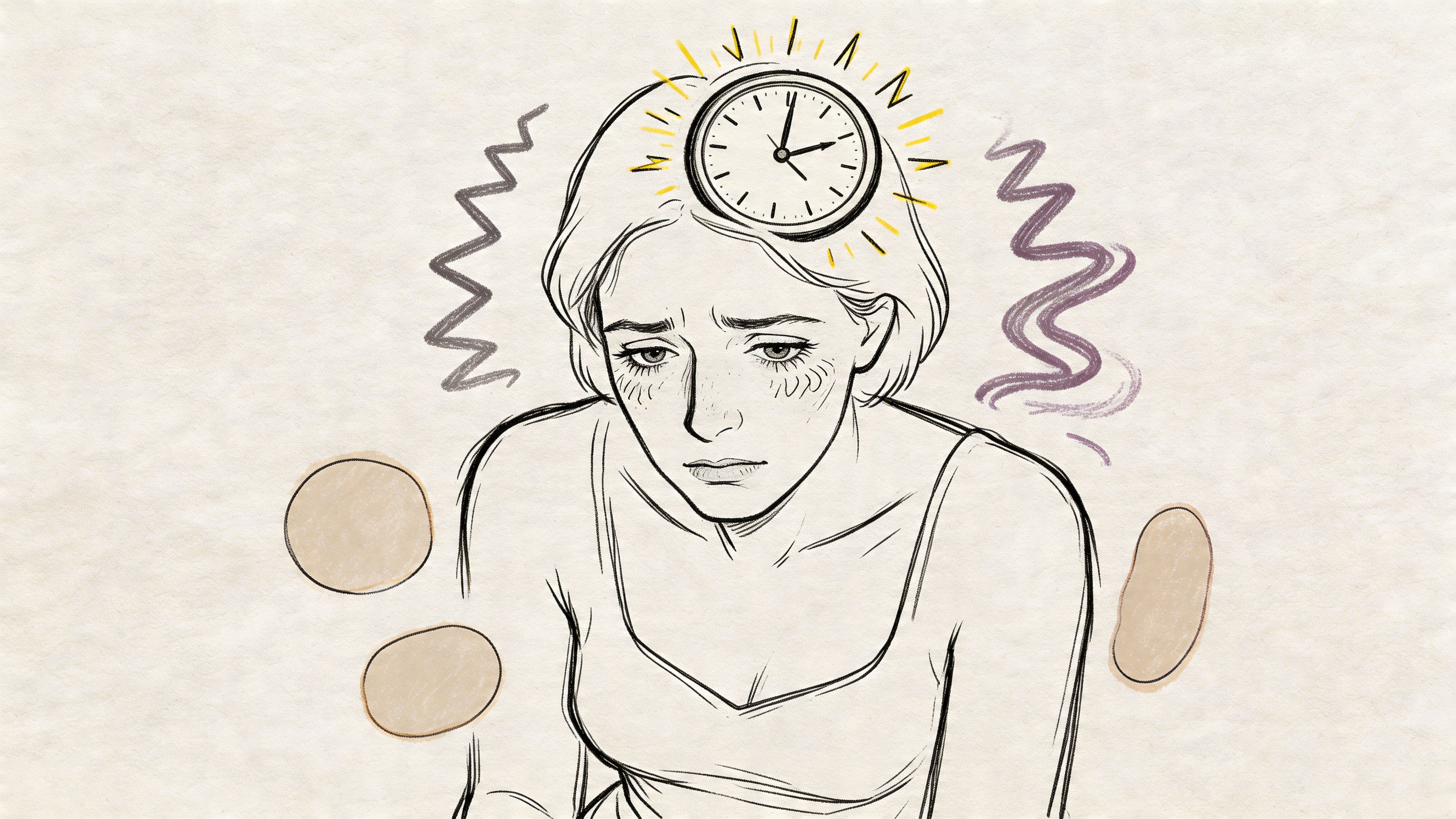
You wake up tired, push through your morning, hit a wall in the afternoon, then find yourself wide awake at 2 a.m. Your workouts feel harder, your patience feels shorter, and the weight that used to budge now seems glued in place. For many women in perimenopause, that pattern doesn’t feel random. It feels like your body has stopped cooperating.
Cortisol often gets blamed for everything, and that oversimplifies the story. But in midlife, it does matter. When stress biology collides with changing hormones, the result can look like anxiety, poor sleep, belly weight gain, sugar cravings, brain fog, and a nervous system that never quite powers down. That’s why the best supplements for cortisol reduction can be useful, but only if you choose them with perimenopausal considerations in mind.
The Perimenopause Stress Cycle You Need to Break
You go to bed tired, wake at 3 a.m., and still force yourself through work, family, and a workout that leaves you more depleted than accomplished. By the end of the week, you are snapping at people you love, craving sugar, and wondering why the strategies that used to work now seem to make things worse.
That pattern is common in perimenopause. It is also easy to misread.
Why generic cortisol advice misses midlife women
A lot of cortisol advice treats stress as a willpower problem. In women 40 to 55, the bigger issue is often a stress response that has become less forgiving while estrogen and progesterone are shifting in the background.
That distinction matters in practice. Hormonal fluctuation can make sleep lighter, recovery slower, and stress reactivity stronger. So the same job, same family load, and same exercise routine can suddenly feel much harder on your body than they did a few years ago.
I see this often. Women tell me, “Nothing major is wrong, but I feel constantly on edge.” That does not usually point to poor coping skills. It points to a nervous system getting pushed past its recovery capacity.
What the cycle looks like in real life
The cycle usually builds in a predictable order:
Sleep gets fragmented: You wake easily and do not get the same overnight reset.
Fatigue changes your inputs: More caffeine, less patience, and less stable appetite follow.
Blood sugar gets shakier: You start reaching for quick energy because you are running low.
Training becomes another stressor: Hard workouts can leave you more wired, sore, or hungry instead of stronger.
Mood gets less buffered: Everyday pressure feels sharper, more personal, and harder to shake.
Once that loop starts, women often respond by tightening control. They cut carbs, add fasting, increase HIIT, and try to push through. In perimenopause, that can backfire. The goal is not to drive cortisol as low as possible. The goal is to reduce unnecessary stress signals and rebuild a steadier day to night rhythm.
For some women, persistent stress reactivity overlaps with symptoms that deserve proper anxiety treatment, not just supplement shopping.
If you want a broader foundation beyond pills, natural perimenopause management strategies can help you identify where hormones, sleep, meals, and exercise are feeding the cycle.
Understanding Cortisol Your Body's Built-In Alarm System
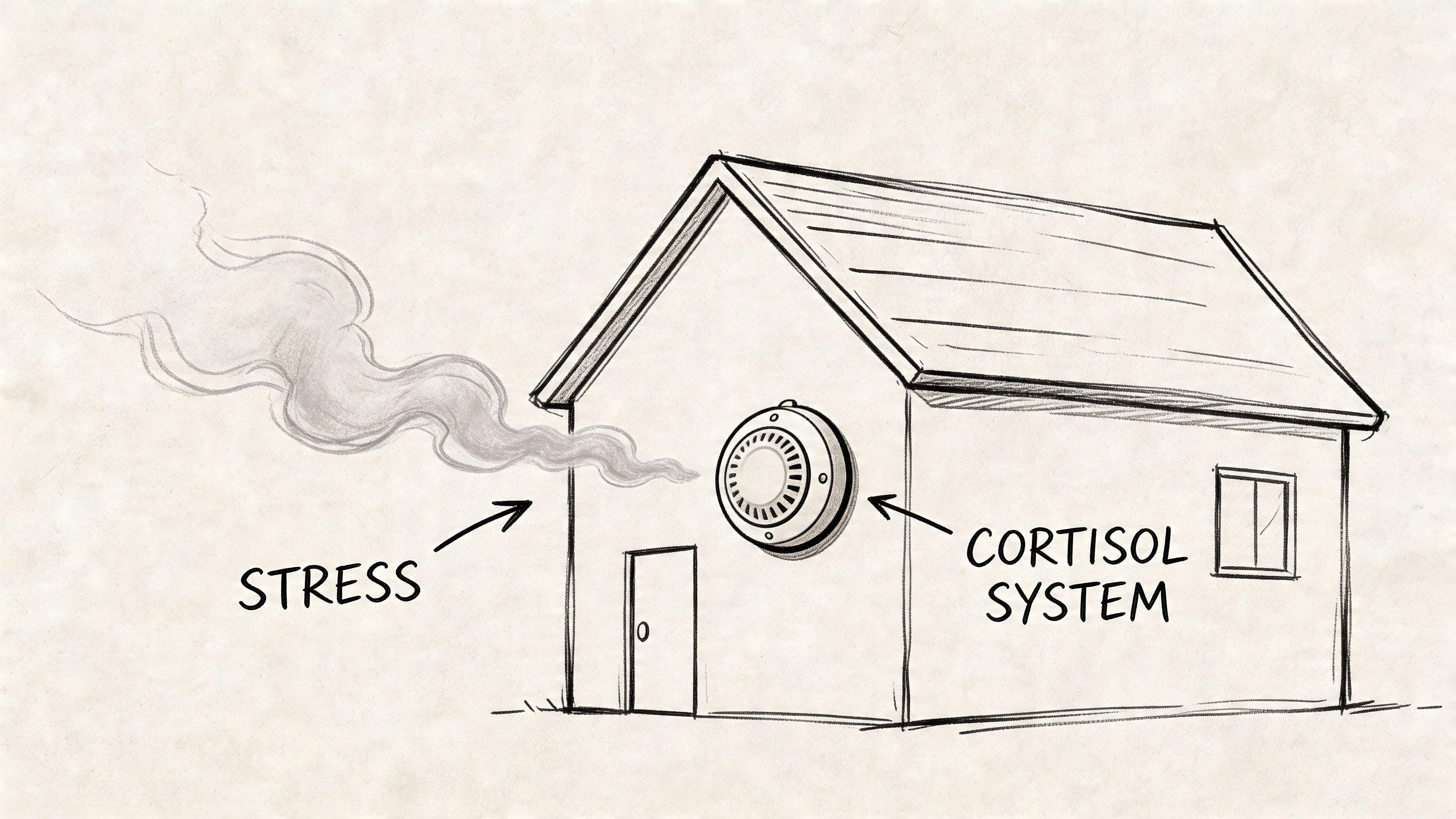
Cortisol is your body’s built-in alarm system. In the right pattern, it helps you wake up, stay alert, maintain blood sugar, and respond to real demands. The problem in perimenopause is often not cortisol itself. It is a stress response that fires too often, stays on too long, or shows up at the wrong time of day.
Why cortisol can feel different in perimenopause
A healthy cortisol response works like a well-calibrated smoke detector. It turns on when there is a real problem and quiets down when the situation passes. In your 40s and early 50s, that calibration often gets less steady.
Fluctuating estrogen and progesterone can change sleep quality, temperature regulation, mood buffering, and insulin sensitivity. That matters because poor sleep, missed meals, alcohol, intense exercise, and caffeine all push on the same stress system. A woman who used to handle those inputs without much trouble may suddenly feel wired after a normal workday, restless at 2 a.m., or shaky and irritable if lunch runs late.
That is why generic cortisol advice often misses the mark for midlife women. The issue is rarely, “How do I shut cortisol off?” The better question is, “Why is my body reading ordinary inputs as bigger threats than it used to?”
At the center of this process is the HPA axis, short for hypothalamic-pituitary-adrenal axis. Your brain interprets stress, sends signals, and your adrenal glands release cortisol. You do not need to memorize the anatomy. You do need to know that this system responds to physical stress, emotional stress, blood sugar swings, and sleep disruption, all of which become more relevant in perimenopause.
What dysregulated cortisol looks like in practice
Women often expect high cortisol to feel dramatic. More often, it feels inconsistent.
You may feel tired in the morning, overstimulated at night, hungry but not satisfied, or unusually reactive to small frustrations. Some women notice more belly fat, more cravings, more tension headaches, or a sense that recovery from workouts has changed. None of those signs proves cortisol is the whole story, but together they can point to a stress-response pattern worth addressing.
Two patterns show up often in clinic and in real life:
Poor downshifting at night. Your body stays alert when it should be easing into sleep.
Over-response to normal stressors. A hard workout, a skipped snack, or a tense email feels disproportionately activating.
If stress symptoms are intense, persistent, or starting to look more like panic, rumination, or functional anxiety, self-directed supplement use may not be enough. A good overview of anxiety treatment can help clarify when extra support makes sense.
For women who also want to address food patterns and daily habits that may be reinforcing this loop, this guide to a cortisol detox diet with natural remedies is a useful companion.
A short explainer can make the physiology easier to picture:
▶ PlayWhat cortisol support should do
In practice, a good cortisol plan should improve function, not just chase a lower number on a lab report.
Goal | What it looks like in practice |
|---|---|
Improve stress resilience | Small stressors feel manageable instead of overwhelming |
Support sleep onset and sleep quality | Your body settles more easily at night and sleep feels more restorative |
Reduce tired-but-wired energy | Fewer afternoon crashes and less evening overstimulation |
Limit overactivation | Less tension, irritability, stress eating, and stress-related restlessness |
That is the standard I use when evaluating supplements for women in perimenopause. The right option should match the pattern. Better sleep support is different from blood sugar support, and both are different from support for women who feel constantly keyed up.
Top 4 Evidence-Backed Supplements to Lower Cortisol
You wake at 3 a.m., tired but alert. By afternoon, you are running on caffeine and willpower. By evening, you feel wired, hungry, and less patient than you want to be. In perimenopause, that pattern is common, and it is one reason generic cortisol advice falls flat for women in their 40s and 50s.
The best supplement depends on the pattern in front of you. Some options are more helpful for chronic stress with poor sleep. Others fit stress reactivity, mental overactivation, or low recovery after a hard day. That distinction matters more in perimenopause, where shifting estrogen and progesterone can make the nervous system feel less buffered and sleep less stable.
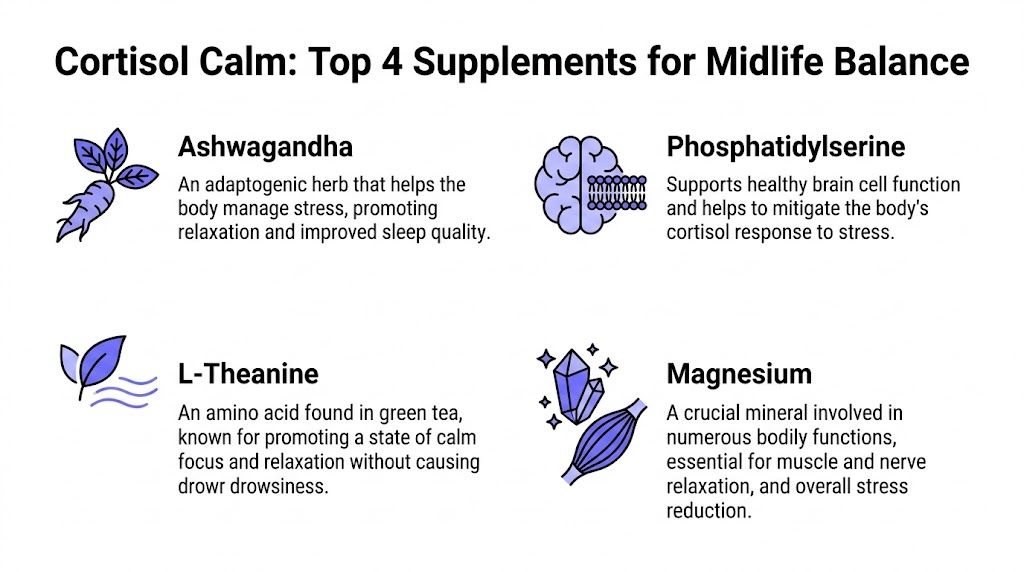
Ashwagandha for chronic stress and poor sleep
Ashwagandha is one of the better-studied options for women whose stress looks like constant activation plus restless sleep. In practice, I consider it most often when a woman says, “I am exhausted, but my body will not settle.”
A clinical overview from GoodRx on supplements that may reduce cortisol summarizes evidence showing ashwagandha has lowered cortisol in stressed adults and may also improve anxiety and sleep-related symptoms. That combination is relevant in perimenopause, where the problem is rarely stress alone. It is stress layered onto hormonal transition, lighter sleep, and a narrower margin for recovery.
Women who tend to do best with ashwagandha often have a pattern like this:
sleepiness without calm
feeling “on” from morning through bedtime
irritability, emotional fragility, or a shorter fuse
stress that feels persistent rather than situational
A common studied range is 300 to 600 mg of a standardized extract daily. Product quality matters. Standardization matters too. If you want help comparing options designed for this age group, this guide to supplements for women over 40 is a useful reference.
The trade-offs are real. Ashwagandha is not my first choice for every woman. I use more caution with thyroid concerns, medication overlap, and women who know they react strongly to herbs. A supplement can have decent evidence and still be the wrong starting point for your system.
Phosphatidylserine for stress spikes and overactivation
Phosphatidylserine is less talked about, but it deserves more attention. Its strongest use is not broad burnout. It is a better fit for women who have sharp stress surges, feel overstimulated after intense days, or cannot downshift at night even when the work is done.
As noted earlier in the article, some summaries of the research suggest phosphatidylserine may blunt cortisol responses to acute stress. Clinically, that lines up with how it is often used. It tends to fit the woman who says, “I get revved up too easily,” more than the woman who feels depleted all day long.
Patterns where it may fit well include:
pre-presentation or performance stress
post-workout overstimulation
racing thoughts at bedtime after a high-pressure day
a body that feels physically tense when the mind is still trying to solve problems
Where it falls short is just as important. If poor sleep is being driven by broad perimenopausal instability, frequent night waking, hot flashes, or all-day stress load, phosphatidylserine may be too narrow to do enough on its own.
For women who prefer a pre-formulated option rather than building a stack one capsule at a time, a clinician-guided blend like Cortisol™ 120 Capsules can be worth reviewing with your practitioner, especially if you want fewer separate bottles and clearer oversight.
L-theanine for calm focus without sedation
L-theanine is useful because it addresses a very specific problem. It can take the edge off without making you feel foggy. For busy women in midlife, that matters. You still need to work, think clearly, manage family logistics, and get through the day.
I use it most often when the main goal is calmer focus or smoother evening downshifting, not when someone needs deeper sleep support or broader hormone-related symptom relief.
It may be a reasonable fit when:
Pattern | Why it may help |
|---|---|
Your mind stays busy all day | It may support a calmer, steadier mental state |
Stress drives snacking or tension eating | Lowering mental pressure can reduce that stress loop |
You want support later in the day | It may help some women settle without heavy sedation |
L-theanine has limits. If cortisol symptoms are being driven by under-eating, overtraining, significant anxiety, alcohol-related sleep disruption, or untreated sleep apnea, it will not solve the main problem. It can still be helpful, but it is supportive, not foundational.
Magnesium for stress, sleep, and muscle tension
Magnesium earns a place on this list because many women in perimenopause need something gentler and more practical than a strong adaptogen. It is not a targeted cortisol supplement in the same way as ashwagandha, but it is one of the most useful tools for the broader picture around cortisol. Poor sleep, muscle tension, headaches, constipation, and a nervous system that does not relax well.
That is why I often consider magnesium when symptoms cluster together. A woman may come in asking about cortisol, but what she needs first is better sleep continuity, fewer tension symptoms, and more room for her body to settle at night.
Magnesium may be especially helpful when you notice:
trouble unwinding in the evening
muscle tightness or stress headaches
constipation that worsens under stress
poor sleep quality with nighttime restlessness
The trade-off is that form matters. Magnesium glycinate is often chosen for calming support, while magnesium citrate is more likely to affect bowel regularity. Too much can cause loose stools. Too little may do very little. This is one reason broad “anti-stress” blends can disappoint. They often include magnesium, but not enough in the right form to make a meaningful difference.
What separates a useful cortisol supplement from a disappointing one
The label is not the deciding factor. The match is.
In practice, the products that underperform usually share one of three problems:
too many ingredients, with none dosed meaningfully
poor herb standardization
the wrong supplement for the symptom pattern
A woman with nighttime overactivation may need a different tool than a woman with stress-triggered cravings and afternoon crashes. A woman in early perimenopause with rising anxiety may respond differently than a woman in later transition whose main issue is sleep fragmentation. Good cortisol support for midlife women accounts for those differences instead of treating all stress as the same.
How to Take Cortisol Supplements Safely in Your 40s and 50s
Midlife women often have more moving parts to consider. You may be taking thyroid medication, using hormone therapy, managing blood sugar changes, or trying to help sleep without feeling drugged the next morning. That’s why supplement choice matters, but timing and safety matter just as much.
The safest way to start
Don’t begin with a full stack. Start with one product that matches your main complaint. If your biggest problem is poor stress tolerance with bad sleep, an adaptogen may make sense. If your main issue is acute overstimulation, a more situational supplement may be the better first move.
Use a simple rule:
Pick one target symptom
Choose one supplement
Keep everything else stable
Watch for changes before adding more
That approach helps you tell what’s working and what’s irritating your system.
Where women in perimenopause need extra caution
Ashwagandha deserves a little more scrutiny in women with thyroid concerns, and any supplement deserves a medication review if you’re using prescription sleep aids, anti-anxiety medication, or hormone therapy. “Natural” doesn’t mean interaction-free.
A few practical checks are worth doing before you start:
Review your medication list: especially thyroid drugs, hormone therapy, and anything sedating
Consider timing: calming options often fit better later in the day, while more energizing protocols may fit earlier
Watch your body, not just your hope: if you feel more wired, nauseated, headachy, or off, stop and reassess
Safety first: The right supplement should make your life calmer, not more confusing.
For women building a broader midlife routine, this guide to supplements for women over 40 can help you think through overlap between stress support, sleep support, and overall symptom management.
Timing matters more than many women realize
Taking the right supplement at the wrong time can make it seem ineffective. A calming product taken too early may leave you flat. A stimulating or energy-supportive product taken too late may make it harder to downshift.
That’s why I prefer matching timing to the complaint:
Main issue | Better timing approach |
|---|---|
Daytime stress reactivity | Earlier use or split dosing |
Evening rumination | Later-day support |
Poor recovery and depleted energy | Morning or daytime use |
The safest routine is usually the simplest one you can follow consistently.
Lifestyle Strategies That Amplify Supplement Effects
You take the supplement consistently, but by 3 p.m. you are shaky, underfed, and running on coffee. Then you lie awake at 2 a.m. wondering why nothing is working. I see this often in perimenopause. The supplement is not always the problem. The body is still getting repeated signals that it is not safe to relax.
Hormonal shifts in the 40 to 55 window can make that stress signal louder. Estrogen and progesterone changes often affect sleep, appetite, insulin sensitivity, and stress reactivity at the same time. That is why generic cortisol advice falls flat for many women in perimenopause. You need a plan that lowers friction on the nervous system all day, not just a capsule that targets one pathway.
Start with steadier fuel
One of the fastest ways to make cortisol feel worse is to go too long without eating, especially if the day starts with caffeine and very little protein. For women in perimenopause, that pattern can intensify irritability, afternoon cravings, and nighttime wake-ups.
A steadier approach usually works better:
Eat within a reasonable window after waking: this helps if mornings bring anxiety, nausea, or a wired feeling
Build meals with protein, fiber, and enough total calories: under-eating can keep stress chemistry high even if food quality looks “clean”
Avoid the restrict-then-overeat cycle: the body reads inconsistency as stress
This does not mean eating perfectly. It means eating predictably enough that your brain stops having to compensate for low fuel.
Choose exercise that improves resilience
Exercise can lower stress reactivity, but only if recovery matches the training load. In perimenopause, I often see women push harder because they feel more tired, more inflamed, or less like themselves. That backfires. Poor sleep, heavy training, and low calorie intake are a rough combination for a nervous system that is already on edge.
A better training week usually includes variety:
Strength training: useful for midlife body composition, insulin sensitivity, and bone health, with enough recovery between harder sessions
Walking or moderate cardio: often better tolerated than repeated all-out intervals when you already feel wired
Gentler sessions: yoga, mobility work, or easy cycling can help the body come down from a high-alert state
If a workout leaves you flattened for the rest of the day, that matters. Cortisol support is not just about what helps in the moment. It is also about what your body can recover from consistently.
Protect the part of the day when cortisol should fall
Many women focus on lowering stress during the day and ignore the evening pattern that keeps the cycle going. If your brain speeds up at night, you wake between 2 and 4 a.m., or you get a second wind when you should be getting sleepy, your routine needs to support a clearer transition into rest.
A few habits pull more weight than they seem to:
Create a real wind-down hour: lower light, less scrolling, less work spillover
Use a short downshift practice: slow breathing, stretching, or a brief walk after dinner can reduce that “tired but alert” feeling
Be honest about stimulants: if caffeine now makes you anxious, jittery, or restless at night, your tolerance may have changed
As noted earlier, some supplements may help lower perceived stress or support recovery. They work better when sleep, food timing, and training are not pushing cortisol back up.
A good supplement plan can support the stress response. It cannot make up for under-eating, overtraining, and chronic sleep disruption.
The goal is not a perfect routine. It is a body that gets fewer false alarms. That is often the missing piece for women in perimenopause who are doing many things right and still feel stuck.
Your Personalized Path to Cortisol Balance
You wake at 3 a.m., tired but wired, then push through the next day on coffee and willpower. By late afternoon, you feel flat, anxious, or both. That pattern is common in perimenopause, and it does not always mean you need more supplements. It means your plan needs to match the way hormonal shifts are affecting your stress response.
The best cortisol plan is personal. Estrogen and progesterone changes can alter sleep, stress tolerance, recovery, and how strongly your body reacts to skipped meals, hard training, or evening stimulation. In practice, one woman may do well starting with an evidence-backed supplement such as ashwagandha. Another may get farther by fixing late-night wake-ups, eating more consistently, or reducing training intensity for a few weeks.
A simple way to decide what to try
Use this filter:
Name your dominant pattern
Is your main issue sleep disruption, constant tension, sudden stress spikes, or poor recovery after exercise?Pick one main change
Test one supplement or one routine shift at a time so you can tell what is helping.Track the signs that matter
Look at sleep onset, waking between 2 and 4 a.m., afternoon energy, cravings, irritability, and how recovered you feel the day after exercise.Adjust based on your response
Improvement is the target. You are looking for fewer stress surges, steadier energy, and better sleep, not a flawless routine.
The healthiest goal
You do not want zero cortisol. You want a cortisol rhythm that rises when it should and settles when the demand has passed. For women in their 40s and 50s, that often means choosing the lowest-effort plan that improves sleep, steadies energy, and feels sustainable with work, family, and changing hormones.
Generic cortisol advice misses this point. Perimenopause changes the context, so your supplement plan, dose tolerance, and recovery strategy often need more precision than standard stress advice gives.
Frequently Asked Questions About Cortisol Supplements
How long do cortisol supplements take to work
It depends on the supplement and the pattern you’re treating. The nicotinamide plus D-ribose study reported measurable effects within a short clinical window, while ashwagandha studies used multi-week protocols. In practice, some women notice early changes in stress tolerance or sleep, but most supplements deserve a consistent trial before you judge them.
Can I take cortisol supplements with HRT
Sometimes, yes. But “sometimes” is the only safe general answer. Hormone therapy, thyroid medication, sleep medication, and anxiety medication can all change the decision. Therefore, a clinician review matters, especially if you’re considering ashwagandha or combining multiple products.
Should I test cortisol before taking anything
Not usually as a first step for routine stress symptoms. Testing can be useful in select situations, but many women benefit more from careful symptom tracking, sleep review, medication review, and a basic health assessment first. If symptoms are severe, unusual, or escalating, that’s different.
Are blends better than single-ingredient supplements
Sometimes, but not automatically. A blend can be convenient. A single ingredient is easier to evaluate. If you’re sensitive or already take several supplements, single-ingredient products often make it easier to identify what helps and what doesn’t.
What’s the most evidence-backed first option
Based on the verified evidence in this article, ashwagandha has the strongest quantified clinical support for many stressed adults. That doesn’t make it the right first choice for every woman in perimenopause, but it does make it a leading option when stress and sleep disruption are central.
If you’re ready to stop guessing, Lila can help you turn symptoms into a personalized plan. The app tracks sleep, mood, energy, meals, cycles, and perimenopause symptoms in one place, then uses those patterns to guide what to change next. That makes it much easier to tell whether your stress is improving, whether a supplement is helping, and which habits are moving you forward.
Get Lila, your personal coach for perimenopause.
Built for women in their 40s. 24/7 coaching, in your pocket.