
7 Evidence-Based Menopause Weight Loss Tips for 2026
Struggling with weight gain? Explore our evidence-based menopause weight loss tips, from nutrition and exercise to hormone management, for lasting results.
 Michelle
Navigating weight changes during perimenopause and menopause can feel frustratingly complex. The standard advice of simply eating less and moving more often fails to address the profound physiological shifts happening in your body. Declining estrogen levels do not just trigger hot flashes and mood swings; they fundamentally alter your metabolism, muscle mass, insulin sensitivity, and even where your body prefers to store fat.
This hormonal shift means that strategies that worked in your 30s may now be ineffective, leading to stubborn belly fat and a sense of losing control. It is a common experience, but it is not a losing battle. Understanding these hormonal changes is the key to unlocking a new, more effective approach to managing your health and weight.
This article moves beyond generic advice to provide seven evidence-based, actionable menopause weight loss tips designed specifically for this life stage. You will not find vague suggestions here. Instead, we will delve into precise strategies for:
Nutrition focused on protein and fiber.
Targeted exercise for building and maintaining muscle.
Sleep optimization and stress management techniques.
Understanding medical considerations and treatments.
Our goal is to empower you with the knowledge to work with your body, not against it. By applying these specific methods, you can build a sustainable plan to feel strong, energized, and in control of your well-being.
1. Prioritize Protein Intake to Preserve Muscle Mass
As you navigate menopause, one of the most effective menopause weight loss tips involves a simple but powerful dietary shift: making protein the star of every meal. During this transition, declining estrogen levels directly contribute to sarcopenia, the age-related loss of muscle mass. Since muscle tissue is metabolically active and burns more calories at rest than fat does, this loss slows down your metabolism, making it easier to gain weight, especially around the abdomen.
Prioritizing protein directly counteracts this process. Adequate protein intake provides the essential amino acids your body needs to repair and build lean muscle, effectively protecting your metabolic engine. Research highlights a significant increase in protein needs during this life stage. While the standard recommendation is 0.8 grams per kilogram of body weight, studies from organizations like The North American Menopause Society (NAMS) suggest that menopausal women often need much more-closer to 1.2–1.6 grams per kilogram-to preserve muscle and support fat loss.
The Science-Backed Benefits
Protein's benefits extend beyond muscle preservation. It is the most satiating macronutrient, meaning it helps you feel fuller for longer after a meal. This increased satiety naturally reduces cravings and can lead to a lower overall calorie intake without feeling deprived.
Studies published in the Journal of the Academy of Nutrition and Dietetics have shown that protein-focused dietary interventions for menopausal women can outperform traditional low-fat diets by a significant margin, sometimes leading to double the fat loss while preserving more lean muscle.
How to Implement This Strategy
Making this change doesn't have to be complicated. The key is consistent, strategic intake throughout the day.
Aim for a Target: A practical goal is to consume 25–30 grams of protein with each of your three main meals. This ensures a steady supply of amino acids for muscle protein synthesis.
Front-Load Your Day: Including a protein-rich breakfast, like Greek yogurt with nuts or scrambled eggs, can stabilize blood sugar and prevent the mid-morning energy slumps that often lead to poor food choices.
Track Your Intake: Use a meal-logging app like Lila to monitor your daily protein grams. The app's AI coach can even provide personalized daily protein targets based on your specific goals and activity levels, removing the guesswork.
Diversify Your Sources: Combine both animal and plant-based proteins for a wider range of nutrients. Good sources include salmon, chicken breast, lean beef, eggs, cottage cheese, lentils, chickpeas, and tofu. To further support muscle preservation and satiety, consider integrating a structured high-protein meal plan into your daily routine.
2. Strengthen Resistance Training and Muscle-Building Exercise
If there's one non-negotiable component of a menopause weight loss plan, it's resistance training. As estrogen levels fall, the body's ability to maintain muscle tissue diminishes rapidly. This process, known as sarcopenia, accelerates after age 30, with a potential 3–8% loss of muscle mass per decade. Since muscle is your metabolic currency, burning more calories at rest than fat, this decline directly slows your metabolism and promotes fat storage, particularly visceral fat around the abdomen.
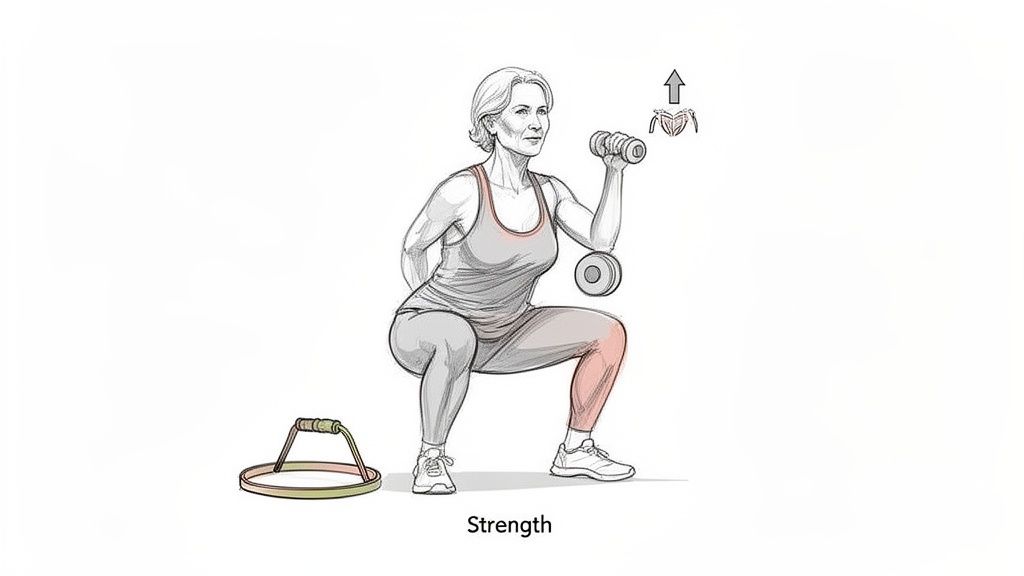
Strength training is the most direct and powerful tool to combat this. By challenging your muscles with weights, resistance bands, or even your own bodyweight, you stimulate muscle protein synthesis. This process not only preserves the muscle you have but also builds new, metabolically active tissue. For women navigating menopause, resistance training is even more crucial for maintaining bone density and metabolism. Learn more about effective strategies for muscle building after 40 to support your health journey. This helps you build a more robust metabolic engine, making weight management far more achievable.
The Science-Backed Benefits
The impact of adding strength training is profound. Research shows that each pound of muscle gained can increase your resting metabolic rate by 6–8%, helping you burn more calories around the clock. This is one of the most effective menopause weight loss tips because it shifts your body composition in favor of a higher metabolism.
▶ PlayA key study in the journal Menopause found that women who incorporated resistance training into their routine just twice per week lost twice as much body fat compared to a non-exercising control group. Other studies show women combining strength and aerobic work lose significantly more fat than those doing cardio alone.
How to Implement This Strategy
Getting started with resistance training is more accessible than many think. The goal is consistency, not intensity, especially at the beginning.
Schedule Your Sessions: Aim for 2–3 sessions per week on non-consecutive days, with each workout lasting 30–45 minutes. This allows your muscles 48 hours to recover and rebuild.
Focus on Compound Movements: Prioritize exercises that work multiple muscle groups at once, as they are most efficient for building strength and burning calories. Key movements include squats, deadlifts, rows, chest presses, and lunges.
Embrace Progressive Overload: To keep making progress, you must gradually increase the challenge. Every 2–3 weeks, aim to slightly increase the weight, add a few more repetitions, or reduce your rest time.
Track Your Progress: Log your workouts in an app like Lila. Seeing your strength metrics improve over time provides powerful motivation. Lila users who track 3 resistance training sessions per week often report steady fat loss while maintaining or even gaining weight as they build lean muscle. To explore more targeted routines, discover the best exercises for menopause that can support your goals.
3. Optimize Sleep Quality and Duration (7–9 Hours)
While diet and exercise often take center stage, one of the most fundamental menopause weight loss tips is mastering your sleep. Menopause can disrupt sleep through common symptoms like hot flashes and night sweats. This creates a vicious cycle where hormonal shifts make quality sleep elusive, and in turn, sleep deprivation sabotages the very hormones that regulate your weight. Poor sleep spikes cortisol (the stress hormone) and ghrelin (the hunger hormone) while simultaneously reducing leptin (the satiety hormone), making you feel hungrier and less satisfied after eating.
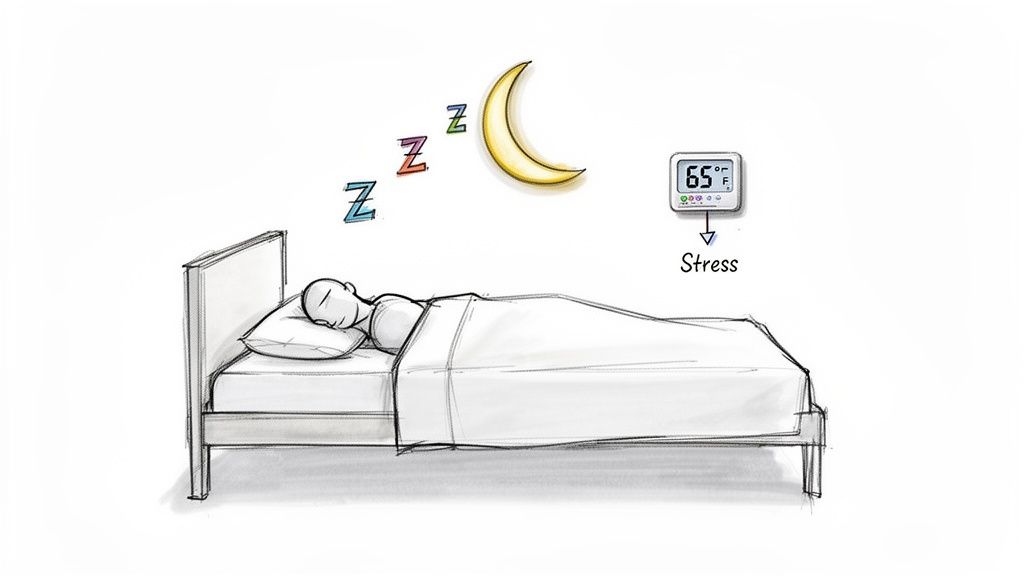
Failing to get adequate rest directly impacts your metabolism and fat storage. In fact, research shows that insufficient sleep can decrease your resting metabolic rate by 10-15% and makes your body more likely to store visceral fat around the abdomen. Prioritizing 7–9 hours of quality sleep each night is not a luxury; it is a non-negotiable foundation for effective and sustainable weight management during this transition.
The Science-Backed Benefits
The connection between sleep and weight is scientifically proven. When you are sleep-deprived, your body's ability to regulate blood sugar is impaired, and cravings for high-carb, high-sugar foods increase dramatically. This is a direct hormonal response designed for survival, but in modern life, it leads directly to weight gain.
According to sleep researcher Dr. Wendy Troxel, women who consistently achieve 7–8 hours of sleep can lose up to 55% more body fat on the same calorie-controlled diet compared to their sleep-deprived counterparts. Getting enough rest fundamentally changes how your body responds to your weight loss efforts.
How to Implement This Strategy
Creating a robust sleep routine is about consistency and environment. The goal is to signal to your body that it is time to wind down, helping to mitigate the disruptions caused by menopausal symptoms.
Create a Sleep Sanctuary: Keep your bedroom cool, ideally between 65–68°F (18–20°C), dark, and quiet. This specific temperature range is known to minimize the disruption caused by hot flashes and night sweats.
Establish a Rhythm: Go to bed and wake up at the same time every day, even on weekends. This consistency reinforces your body's natural sleep-wake cycle, or circadian rhythm.
Mind Your Intake: Avoid caffeine after 2 PM and limit alcohol within three hours of bedtime. While alcohol may make you feel drowsy initially, it significantly disrupts restorative REM sleep later in the night.
Track to Understand: Use the daily check-in feature in an app like Lila to log your sleep duration and quality. By also logging symptoms like hot flashes, you can identify patterns between your daily habits and your sleep disruptions, allowing for targeted adjustments.
Power Down Screens: Turn off all screens at least 60 minutes before bed. The blue light they emit suppresses melatonin production, the hormone that signals your brain it's time for sleep.
Consider Supplement Support: Speak with your doctor about taking magnesium glycinate (200–400mg) about 30 minutes before bed. This form of magnesium is known for its calming effects and can improve sleep quality without causing digestive upset.
4. Manage Stress and Cortisol Levels Through Mindfulness and Relaxation
The menopausal transition often amplifies your body’s stress response, making stress management one of the most critical, yet overlooked, menopause weight loss tips. As estrogen declines, it disrupts the production of serotonin, a neurotransmitter that helps regulate mood and calm the nervous system. This hormonal shift makes you more sensitive to stress and impairs your ability to recover from it. The result is chronically elevated levels of cortisol, the primary stress hormone, which directly encourages the body to store visceral fat around the abdomen, increase appetite, and slow down your metabolic rate.
This isn't just a minor inconvenience; the physiological impact is significant. Chronic high cortisol is directly linked to an average weight gain of 7–10 pounds per year in middle-aged women. Managing this hormonal cascade through intentional relaxation is not just about feeling calmer-it's a direct strategy for controlling the biological drivers of menopause-related weight gain.
The Science-Backed Benefits
Evidence strongly supports the connection between stress reduction and fat loss during this life stage. By actively lowering cortisol, you can shift your body out of its fat-storage mode. This helps curb the intense, hormonally driven cravings for high-sugar and high-fat foods that often accompany stressful periods.
A landmark study published in the Menopause journal found that women who practiced just 20 minutes of daily mindfulness for eight weeks reduced their cortisol levels by an average of 22% and lost 3–5 pounds more than the control group, without any other dietary changes.
How to Implement This Strategy
Integrating stress management into your daily life requires consistency, not intensity. A few minutes each day can create a powerful compound effect.
Start Small: Begin with a 5–10 minute daily meditation. Use guided meditation apps like Calm, Headspace, or Insight Timer to provide structure and make the practice easier to adopt.
Practice Mindful Breathing: Use the 4-7-8 breathing technique to quickly calm your nervous system. Inhale through your nose for 4 counts, hold your breath for 7 counts, and exhale slowly through your mouth for 8 counts. This activates the parasympathetic "rest and digest" state.
Track Your Mood: Use the Lila app's mood-logging feature to identify your personal stress triggers and see the direct correlation between high-stress days and weight fluctuations. Lila's data shows users often see a 0.5–1 lb weight gain the day after logging high stress.
Schedule "Stress Relief": Intentionally block time in your calendar for activities that lower cortisol, such as gentle yoga, walking in nature, journaling, or engaging in a creative hobby. You can learn more about a nutrition-focused approach in this guide to a cortisol detox diet.
5. Reduce Refined Carbohydrates and Increase Fiber Intake
A crucial menopause weight loss tip involves re-evaluating your relationship with carbohydrates, specifically by minimizing refined carbs and maximizing fiber. As estrogen declines, insulin sensitivity can decrease by as much as 20–30%. This makes your body less efficient at managing blood sugar, and refined carbohydrates like white bread, pasta, and sugary snacks become particularly problematic. They cause rapid blood sugar and insulin spikes, which signals your body to store fat (especially in the abdomen) and often leads to a crash in energy and a return of hunger just a few hours later.
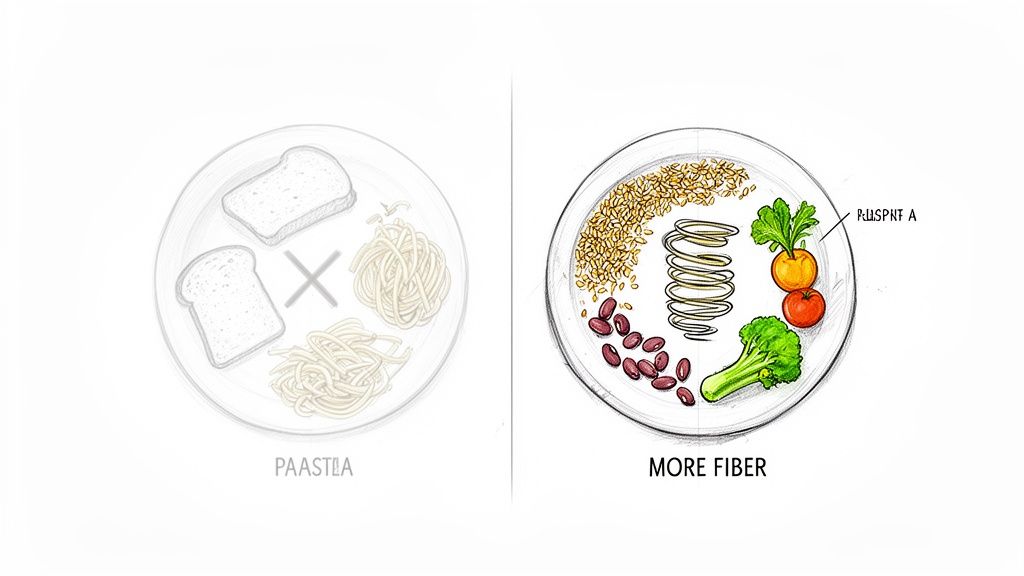
Conversely, a diet rich in fiber from whole foods has the opposite effect. Fiber slows down digestion, promoting a gradual release of sugar into the bloodstream. This helps stabilize insulin levels, improves insulin sensitivity, and supports appetite-regulating hormones. The result is sustained energy and increased satiety, making it easier to manage your weight without feeling deprived. The recommended daily fiber intake for women is a minimum of 25 grams, with many experts suggesting a target of 30–35 grams for optimal metabolic health.
The Science-Backed Benefits
The evidence supporting a high-fiber, low-refined-carb approach during menopause is robust. This dietary pattern is a cornerstone of protocols like the Mediterranean diet, which consistently shows positive results for weight management and metabolic health in menopausal women.
Research from the PREDIMED study and other trials on the Mediterranean diet demonstrate that this high-fiber, whole-grain-focused approach can lead to a 5–8 pound weight loss over 12 weeks, coupled with significant improvements in metabolic markers like insulin sensitivity and cholesterol levels.
How to Implement This Strategy
Shifting your carbohydrate sources from refined to fiber-rich is a gradual but powerful process. Focus on making simple, sustainable swaps.
Set a Fiber Goal: Aim for a minimum of 25 grams of fiber daily, increasing your intake by about 5 grams per week to allow your digestive system to adjust and avoid discomfort.
Prioritize Vegetables and Legumes: Make non-starchy vegetables the largest portion of your plate. Incorporate fiber powerhouses like broccoli, spinach, beans, lentils, and chickpeas into your meals.
Make Smart Swaps: Gradually replace refined grains with whole ones. Choose whole-grain bread instead of white, brown or wild rice instead of white, and explore grains like quinoa, barley, and farro.
Track Your Intake: Use a meal logger like Lila to see how much fiber you're actually consuming. The app's insights can help you see the correlation between high-fiber days and better energy, mood, and reduced hunger signals.
Pair Foods Strategically: When you eat carbohydrates, pair them with a source of protein and healthy fat. This combination further slows glucose absorption, preventing blood sugar spikes and keeping you full longer.
Stay Hydrated: Fiber needs water to work effectively. Aim to drink 2.5–3 liters of water daily to support digestion and prevent bloating.
6. Track Food Intake and Maintain Caloric Awareness (Without Extreme Restriction)
As your metabolism shifts during menopause, relying solely on intuitive eating can become unreliable. The slight but persistent metabolic slowdown, often requiring 150-200 fewer calories per day to maintain your weight, makes it incredibly easy to consume more energy than your body needs. This is where tracking your food intake becomes one of the most powerful menopause weight loss tips, creating essential awareness of your actual versus perceived consumption.
Tracking reveals the hidden calories in seemingly innocent foods like cooking oils, salad dressings, sauces, and between-meal snacks. This awareness is not about severe restriction but about making informed choices. Evidence consistently shows that women who track their food intake lose significantly more weight, sometimes two to three times more, than those who don't, even without making drastic cuts. The goal is to create a gentle, sustainable calorie deficit of about 300–500 calories below your maintenance level, not to starve yourself.
The Science-Backed Benefits
The effectiveness of tracking lies in data and accountability. By logging what you eat, you gain objective feedback on your habits, empowering you to make small, high-impact adjustments. This practice moves you from guessing to knowing, which is crucial when your body's old rules no longer apply.
A landmark study in the journal Obesity found that individuals who consistently tracked their food intake were far more successful at maintaining long-term weight loss (e.g., keeping off 30 pounds) compared to non-trackers, who were prone to regaining half their lost weight.
How to Implement This Strategy
Adopting food tracking can be a straightforward process that yields immediate insights. The key is consistency and using the data to guide, not judge.
Establish Your Baseline: Before making changes, simply track your normal intake for a few days. This will highlight your current calorie and macronutrient patterns and expose "hidden" calorie sources. You can use an online tool to get a precise estimate of your daily needs with a menopause calorie calculator.
Log in Real-Time: Get into the habit of logging meals as you eat them rather than trying to remember everything at the end of the day. This dramatically improves accuracy.
Measure Portions Initially: Use measuring cups or a food scale for a week or two, especially for calorie-dense items like oils, nuts, and grains. This will help calibrate your eye so you can estimate portions more accurately later.
Focus on Weekly Averages: Don't get discouraged by daily fluctuations. Look at your weekly calorie and protein averages to see the bigger picture and ensure you're on track without obsessing over a single day's numbers.
Use an Integrated App: A tool like Lila allows you to log your meals seamlessly. Its unique benefit is integrating this data with your menopause symptom and mood tracking, revealing connections between your diet and how you feel. Reviewing Lila’s weekly reports can help you pinpoint trigger foods or days of the week when you tend to overeat.
7. Manage Hormonal Fluctuations and Consider Evidence-Based Treatments (HRT/MHT)
While lifestyle adjustments are the foundation of menopause weight loss tips, addressing the underlying hormonal shifts can provide a significant advantage. The decline in estrogen during menopause directly impacts your metabolism, increases hunger cues, and promotes fat storage around the abdomen. For many women, Menopause Hormone Therapy (MHT), formerly known as Hormone Replacement Therapy (HRT), can be a powerful tool to complement diet and exercise efforts.
Contrary to old beliefs that it causes weight gain, modern evidence demonstrates that MHT can help prevent or even modestly reduce the weight gain associated with menopause. By restoring estrogen levels, MHT helps counteract the metabolic slowdown and unfavorable body composition changes that occur during this transition. It’s not a standalone weight loss solution, but it creates a more favorable physiological environment for your other efforts to succeed.
The Science-Backed Benefits
The primary role of MHT is to alleviate symptoms like hot flashes and night sweats, which can improve sleep and energy, leading to better exercise consistency. However, its metabolic benefits are also well-documented. It works by mitigating the estrogen-driven shift toward abdominal fat and preserving a healthier metabolic rate.
According to updated guidelines from The North American Menopause Society (NAMS), MHT initiated within the first several years of menopause can prevent a significant portion of the typical menopausal weight gain. When combined with diet and exercise, it can amplify results.
For example, studies have shown that women who start MHT alongside a structured lifestyle program may lose 5–7 pounds in 12 weeks, compared to 3–4 pounds with diet and exercise alone. It provides a biological boost that makes your hard work more effective.
How to Implement This Strategy
The decision to start MHT is highly personal and requires a thorough discussion with a qualified healthcare provider, such as a gynecologist or a menopause specialist.
Consult a Specialist: Your first step is to schedule an appointment to assess your individual candidacy. Your doctor will review your personal health history, symptoms, and risk factors to determine if MHT is a safe and appropriate option for you.
Track Symptoms and Progress: If you begin MHT, document your baseline weight, measurements, and symptom severity. Log your MHT type, dose, and timing in an app like Lila to track correlations between the treatment and improvements in sleep, mood, and energy. Lila users on MHT often report a 20–30% reduction in symptom severity, which directly supports their ability to stick to a new fitness routine.
Integrate, Don't Isolate: View MHT as a component of a comprehensive plan, not a replacement for healthy habits. Its benefits are maximized when combined with a high-protein diet, consistent resistance training, and effective stress management.
Discuss Alternatives: If MHT is not suitable for you, ask your doctor about non-hormonal alternatives like certain SSRIs or lifestyle-only approaches. The AI coach in the Lila app can help you build an effective plan regardless of your choice.
Regularly Re-evaluate: MHT is not a permanent solution. Plan for annual check-ins with your healthcare provider to assess its continued benefits and risks and adjust the plan as needed.
7-Point Menopause Weight-Loss Strategy Comparison
Strategy | Implementation Complexity 🔄 | Resource Requirements ⚡ | Expected Outcomes ⭐📊 | Ideal Use Cases 💡 | Key Advantages ⭐ |
|---|---|---|---|---|---|
Prioritize Protein Intake to Preserve Muscle Mass | Moderate 🔄 (daily targets, meal planning) | Moderate ⚡ (higher-cost foods, tracking time) | Preserves lean mass, increases satiety; modest weight loss (≈3–5 lb/6mo) | Women aiming to retain muscle while losing fat | Preserves metabolism, stabilizes blood sugar |
Strengthen Resistance Training and Muscle‑Building Exercise | Moderate–High 🔄 (2–3 sessions/wk, technique) | Low–Moderate ⚡ (bands/dumbbells, possible trainer) | Significant fat loss vs. cardio, ↑RMR, lean mass & BMD gains | Those prioritizing body composition, strength, bone health | Most effective for fat loss + functional fitness |
Optimize Sleep Quality and Duration (7–9 Hours) | Moderate 🔄 (habit + environment changes) | Low ⚡ (behavioral strategies, sleep tools) | Improves hormonal balance, reduces obesity risk; supports weight loss (reports ~3–4 lb/8wk) | Women with fragmented sleep, hot flashes, low energy | Addresses root cause; low cost; synergizes with other strategies |
Manage Stress and Cortisol Through Mindfulness & Relaxation | Moderate 🔄 (daily practice 15–30 min) | Low ⚡ (time, apps/resources) | Lowers cortisol (≈15–25%), reduces emotional eating; modest weight benefits | High-stress individuals or emotional eaters | Improves mood, reduces overeating triggers, low-cost |
Reduce Refined Carbs and Increase Fiber Intake | Moderate 🔄 (meal swaps, gradual fiber increase) | Moderate ⚡ (whole foods, planning) | Improves insulin sensitivity (≈15–25%), increases satiety; moderate weight loss (≈4–6 lb/12wk) | Those with insulin resistance, frequent cravings | Stabilizes glucose, supports gut health and satiety |
Track Food Intake and Maintain Caloric Awareness | Low–Moderate 🔄 (consistent logging) | Low ⚡ (app/time investment) | Greater weight loss adherence (2–3x vs non‑trackers); reveals hidden calories | People needing accountability and portion awareness | High efficacy for sustainable calorie control and flexibility |
Manage Hormonal Fluctuations & Consider Evidence‑Based HRT/MHT | High 🔄 (medical decision-making & monitoring) | High ⚡ (clinician visits, prescriptions) | Modest additional weight benefit (≈2–5 lb) plus symptom, sleep, bone improvements | Candidates with moderate‑severe menopausal symptoms seeking medical therapy | Addresses hormonal root cause; improves symptoms and aids adherence |
Your Integrated Plan for Sustainable Menopause Weight Management
Navigating the path of menopause weight loss can feel like trying to assemble a complex puzzle without the picture on the box. You have all the pieces – nutrition, exercise, sleep, stress management – but it’s unclear how they fit together. The true secret to success isn't found in a single magic bullet but in understanding how these elements work together as a cohesive system. The evidence-informed menopause weight loss tips outlined in this guide are not isolated suggestions; they are interconnected pillars supporting your metabolic health.
Think of it this way: when you prioritize resistance training to build lean muscle, you are directly boosting your resting metabolic rate. This makes the caloric awareness you practice through food tracking more effective, as you have a slightly larger metabolic engine to fuel. Similarly, when you focus on getting 7 to 9 hours of quality sleep, you are actively regulating the hormones ghrelin and leptin, which control hunger and satiety. This makes it significantly easier to resist the cravings for refined carbohydrates and sugar that often arise from fatigue and high cortisol levels. Every positive action creates a ripple effect, making the next healthy choice easier to make.
From Knowledge to Action: Building Your Personal Strategy
Reading about these concepts is the first step, but real change happens when you translate this knowledge into a personalized daily practice. The journey to a healthy weight during menopause is fundamentally about creating new, sustainable habits that address your body’s shifting hormonal landscape. It’s less about a restrictive diet and more about a strategic re-calibration of your lifestyle.
The most important takeaways from these menopause weight loss tips are:
Muscle is Metabolic Currency: Prioritizing protein intake and engaging in consistent strength training are non-negotiable. This combination is your primary defense against the natural loss of muscle mass (sarcopenia) and the resulting metabolic slowdown.
Hormones Dictate Hunger and Fat Storage: Your efforts in the kitchen and gym can be undermined by poor sleep and chronic stress. Managing cortisol and optimizing sleep are foundational to regulating appetite and preventing the accumulation of stubborn visceral fat around your midsection.
Consistency Trumps Intensity: Perfection is not the goal. A week of "perfect" eating followed by a return to old habits is less effective than consistently making better choices 80% of the time. This is a marathon, not a sprint.
Instead of feeling overwhelmed by the need to implement everything at once, start small. Pick one or two areas that feel most manageable. Perhaps you commit to a 15-minute walk after dinner every evening to help manage blood sugar and reduce stress. Or maybe you focus solely on adding a source of protein to every meal. These small, consistent actions build momentum and create a foundation for bigger changes.
Key Insight: The power of these strategies lies in their synergy. Better sleep reduces cortisol, which diminishes sugar cravings. More muscle from strength training improves insulin sensitivity, making your body more efficient at using carbohydrates for energy instead of storing them as fat. This interconnectedness is why a holistic approach is essential.
Mastering these approaches is about more than just seeing a number on the scale decrease. It's about regaining a sense of control over your body and your health. It’s about building strength that you can feel in your daily life, enjoying deeper and more restorative sleep, and navigating your days with more stable energy and a clearer mind. This is your opportunity to build a body that feels resilient, capable, and vibrant for decades to come.
Ready to turn these insights into a personalized action plan? The Lila app is designed to help you integrate these strategies seamlessly. It provides a single platform to track your meals, workouts, sleep, and menopausal symptoms, while its AI coach offers daily guidance to help you connect the dots and build sustainable habits. Start your journey to a stronger, healthier you with Lila.
Get Lila, your personal coach for perimenopause.
Built for women in their 40s. 24/7 coaching, in your pocket.


