A Modern Guide to Weight Loss for Perimenopausal Women
Tired of stubborn perimenopause weight gain? Get a science-backed plan for weight loss for perimenopausal women with tips on diet, exercise, and hormones.
 Michelle
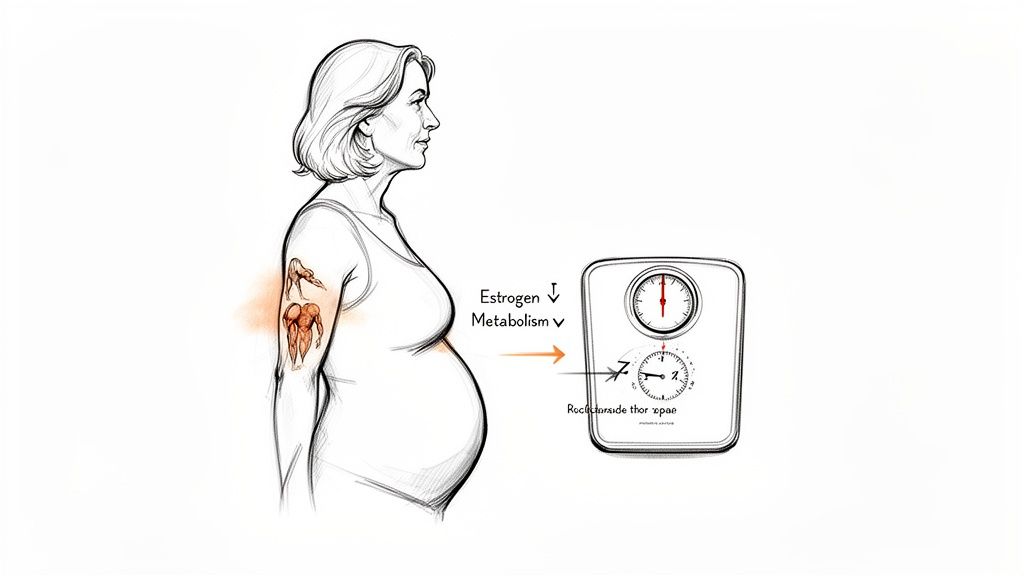
Losing weight during perimenopause is a whole different ball game. It’s not just a matter of tweaking your diet or adding another workout; it’s about understanding that your body’s entire operating system is getting an update. The biggest change? Dwindling estrogen. This single hormonal shift is a triple threat: it slows your metabolism, encourages belly fat, and chips away at muscle mass.
Getting your head around this biological reality is the first, most crucial step toward making changes that actually stick.
Why Perimenopausal Weight Gain Feels So Impossible
If you feel like you’re doing everything “right” but the scale refuses to budge—or even keeps creeping up—you’re not going crazy. And it's definitely not a failure of willpower. This frustrating experience is a classic sign of the perimenopausal transition, a time when all the old rules for managing your weight seem to have been thrown out the window.
The fact is, your body is simply responding to a massive biological shift. As you enter perimenopause, your hormones, especially estrogen, start fluctuating wildly before taking a nosedive. This isn't some minor adjustment; it’s a change that completely rewrites your body's metabolic code.
The Hormonal Driver Behind It All
That vague "it's your hormones" explanation you hear everywhere doesn't quite capture what's going on. Falling estrogen levels send very specific signals that change how your body uses and stores energy. For decades, estrogen acted like a master metabolic regulator, keeping everything in balance. As its influence fades, the whole system just doesn't run as efficiently.
This hormonal shift is the real reason why weight loss for perimenopausal women is so tough. It creates a brand-new physiological landscape where the strategies that worked in your 20s and 30s fall flat. Here are the biggest changes you’re up against:
A Sluggish Metabolism: Your resting metabolic rate—the number of calories you burn just by being alive—naturally starts to decline. Lower estrogen is a key contributor to this slowdown.
A New Fat Storage Pattern: Your body now prefers to store fat right around your midsection. This is what leads to that stubborn visceral fat, the "meno-belly" that sits around your internal organs.
Accelerated Muscle Loss: Estrogen plays a role in preserving muscle. As your levels drop, you start losing muscle mass more quickly, a process called sarcopenia.
The loss of metabolically active muscle is a critical piece of the puzzle. Muscle burns more calories than fat, even at rest. When you lose muscle, your body's "engine" gets smaller, meaning you burn fewer calories throughout the day, making weight gain easier and weight loss harder.
It's Not Just a Feeling, It's a Fact
This isn't just a collection of stories from frustrated women; the data backs it all up. Research confirms that the physical changes during this time are significant. We see that around 70% of women gain weight during the perimenopausal transition.
Drilling down, the numbers get even more specific. On average, fat mass can climb by about 1.7% per year, while precious muscle is lost at a rate of 0.5% annually. This one-two punch directly slams the brakes on your metabolism. It’s no wonder that nearly 75% of perimenopausal women report struggling with weight loss resistance. If you want to take a deeper dive, you can explore the science behind perimenopausal weight changes and see the research that validates these experiences.
Understanding this isn't meant to be discouraging. It's empowering. It lets you shift the focus from self-blame to smart, strategic action. The frustration you're feeling is completely valid and rooted in real biology. With this knowledge, you can finally move past that feeling of being stuck and start using a new playbook—one that works with your body, not against it.
Fueling Your Body for Hormonal Balance
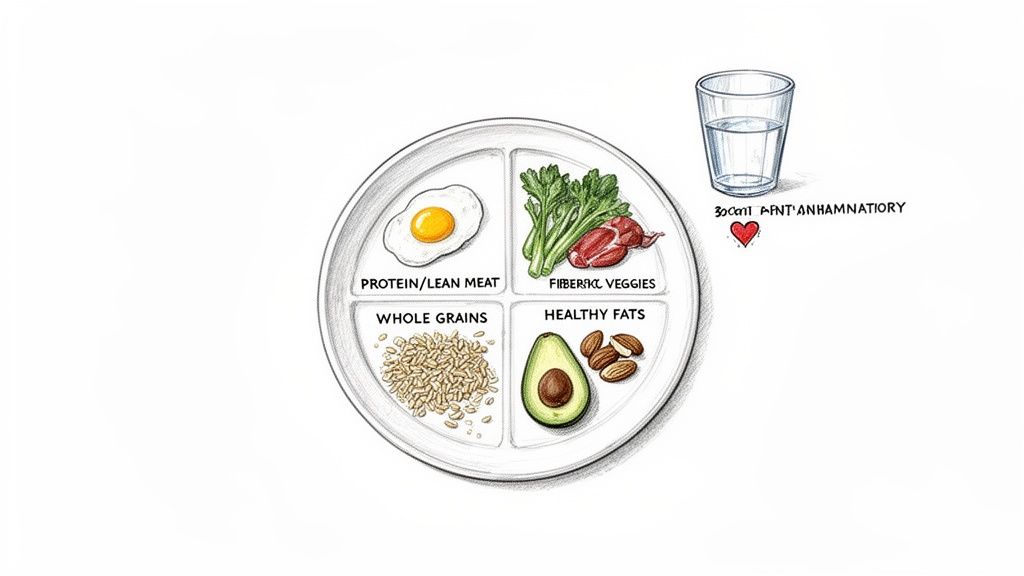
Let's get one thing straight: the old rules of dieting no longer apply. The restrictive, calorie-slashing playbook from your 20s and 30s is officially retired. During perimenopause, our focus has to shift from what we take away to what we add to our plates to support our new hormonal reality.
Think of food as information for your body, not the enemy. The right nutrients can help you manage blood sugar, cool down inflammation, and protect the precious muscle mass that keeps your metabolism fired up. This is where lasting, successful weight management begins.
Prioritize Protein Unapologetically
If you make only one change to how you eat, make it this: get serious about protein. As estrogen levels decline, our bodies become much more susceptible to muscle loss, a condition called sarcopenia. This directly slows down your metabolism, making it easier to gain weight.
Protein is your best defense. It provides the building blocks for muscle.
Aiming for 25-30 grams of protein with every meal is the sweet spot. This amount is what's needed to trigger muscle protein synthesis effectively. Not only that, but protein has a high thermic effect—your body actually burns more calories just digesting it. Best of all, it keeps you feeling full and satisfied, which is a game-changer for managing those intense cravings.
Here are some excellent protein sources to build your meals around:
Lean Meats: Chicken breast, turkey, and lean cuts of beef are fantastic staples.
Fish: Salmon and tuna are my favorites, as they also deliver a healthy dose of anti-inflammatory omega-3 fatty acids.
Eggs: A true nutritional powerhouse that's both affordable and incredibly versatile.
Dairy: Greek yogurt and cottage cheese offer a serious protein punch.
Plant-Based Options: Don't forget about lentils, chickpeas, tofu, edamame, and quinoa.
Here's a little mindset trick that I've seen work wonders with my clients: Build your plate around your protein first. Instead of asking, "What's for dinner?" start asking, "What's my protein for dinner?" Then, you can easily add your veggies and healthy carbs around that anchor.
Fill Up on Fiber
Fiber is your other secret weapon for navigating perimenopausal weight changes. It’s a multitasking marvel. First, soluble fiber (the kind in oats, apples, and beans) forms a gel in your digestive tract, which physically slows down digestion and helps you feel fuller, longer.
It’s also crucial for keeping your blood sugar stable. By slowing down how quickly sugar is absorbed, fiber prevents those jarring spikes and subsequent crashes that leave you feeling hungry and trigger fat storage.
Finally, fiber acts as a prebiotic, feeding the good bacteria in your gut. A healthy gut microbiome is directly linked to better weight management and lower levels of inflammation.
A Sample Day of Eating
Remember, this is just a template to give you an idea of what a balanced day looks like—it's not a rigid prescription. The key takeaway is how each meal includes a solid source of protein, fiber, and healthy fats to keep you going.
Breakfast (7 AM): A couple of scrambled eggs with a handful of spinach and half an avocado on the side. This combo of protein and healthy fat will keep you feeling steady and focused all morning.
Lunch (12 PM): A big salad with grilled chicken, mixed greens, cucumber, bell peppers, a scoop of chickpeas, and a simple vinaigrette. It's packed with lean protein and fibrous veggies that are both satisfying and nutrient-rich.
Snack (3 PM): A cup of Greek yogurt mixed with a handful of berries and a sprinkle of chia seeds. This is the perfect antidote to the 3 PM slump, giving you protein and antioxidants without the sugar crash.
Dinner (6 PM): A fillet of baked salmon served with roasted broccoli and a small portion of quinoa. You get high-quality protein, brain-boosting omega-3s, and complex carbs for lasting energy.
If this way of building meals resonates with you, you’ll find even more great ideas and recipes in our comprehensive menopause diet plan.
Make Smart Swaps to Fight Inflammation
Chronic, low-grade inflammation can make perimenopausal symptoms feel worse and make it much harder to lose weight. The biggest offenders are often hiding in plain sight: ultra-processed foods, refined sugar, and unhealthy fats. The good news is you can actively fight back by making some simple, strategic food swaps.
The goal is to load up on whole foods that are brimming with antioxidants and healthy fats. Think vibrant, colorful fruits and vegetables, nuts, seeds, and extra virgin olive oil. These foods help calm inflammation from the inside out and deliver the micronutrients your body is crying out for.
Making these changes doesn't have to be a huge overhaul. Here are a few simple swaps to get you started.
Perimenopause Power-Up Food Swaps
Instead Of This (Low Nutrient) | Try This (Nutrient-Dense) |
|---|---|
White pasta or bread | Quinoa, brown rice, or chickpea pasta |
Sugary breakfast cereal | A bowl of oats with berries and nuts |
Potato chips | A handful of almonds or raw veggies with hummus |
Creamy, bottled salad dressing | A simple mix of olive oil, lemon juice, and herbs |
By focusing on these core principles—protein first, plenty of fiber, and choosing anti-inflammatory foods—you create a way of eating that feels good, is sustainable, and truly supports your body through perimenopause and for years to come. It’s not about restriction; it’s about nourishment.
The Right Way to Exercise in Midlife
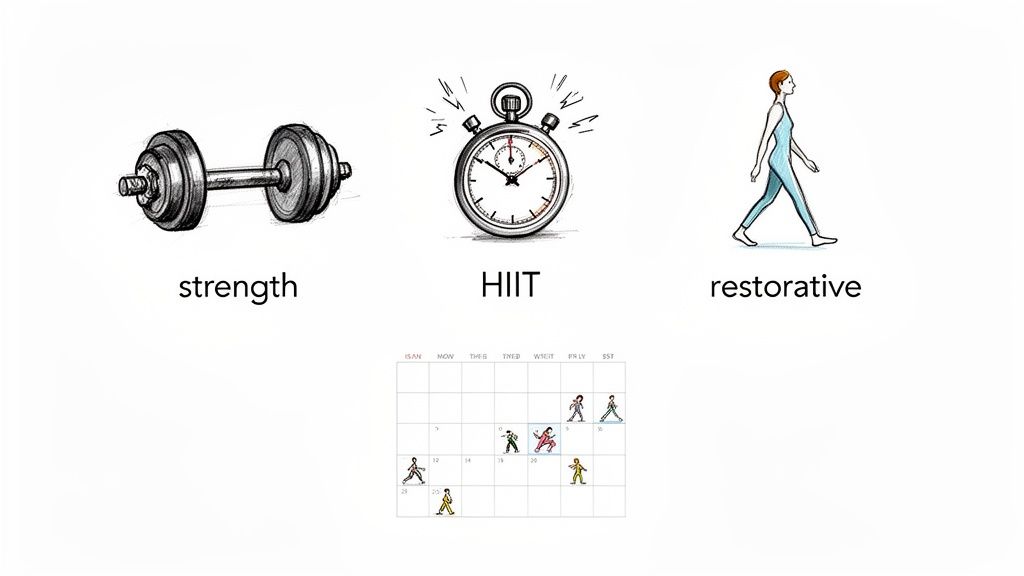
If you’re spending hours on the treadmill and seeing zero results, you're not alone. It's a common frustration, and it’s a sign that your body's rules have changed. The long, steady-state cardio that worked in your 20s and 30s can actually backfire now by raising stress hormones and failing to address the root cause of metabolic slowdown: muscle loss.
The key to exercising in midlife isn't about going harder; it's about being more strategic. We need to shift our focus to building strength, protecting our metabolism, and keeping stress in check.
Make Strength Training Your Foundation
Out of all the things you can do, strength training is your number one priority. It's non-negotiable. As estrogen declines, our bodies lose metabolically active muscle mass at a much faster rate. Lifting weights is the most direct and effective way to fight back.
When you build muscle, you're essentially turning up the dial on your metabolism. More muscle means your body burns more calories all day long, even when you're just sitting on the couch. This is how you begin to shift your body composition toward less fat and more lean, toned muscle.
It's also crucial to learn how to burn fat and build muscle in a way that supports your changing hormones. And don't worry, you don’t need to become a powerlifter to see incredible benefits.
Start where you are. You can get fantastic results just using your own bodyweight with exercises like squats, lunges, planks, and push-ups (doing them on your knees is a great starting point!).
Grab some bands. Resistance bands are inexpensive, travel-friendly, and perfect for adding a little extra challenge to your home workouts.
Introduce dumbbells. Start with a weight that feels tough but still allows you to complete 8-12 reps with good, solid form.
Try to get in 2-3 full-body strength sessions each week. Just make sure to schedule them on non-consecutive days to give your muscles the time they need to repair and grow stronger.
Get Smart with High-Intensity Interval Training
So what about cardio? This is where we work smarter, not longer. Grueling, hour-long cardio sessions can crank up cortisol, that pesky stress hormone that loves to store fat right around your midsection. A much better option is High-Intensity Interval Training (HIIT).
HIIT is all about short, explosive bursts of effort followed by a quick recovery. You might sprint on a bike for 30 seconds, then pedal slowly for 60 seconds, and repeat that cycle for just 15-20 minutes. This approach is brilliant for boosting insulin sensitivity, helping your body use blood sugar more efficiently instead of storing it as fat.
Because the workouts are so short, they give you a great metabolic boost without the prolonged stress of a long run. Just 1-2 HIIT sessions per week is the sweet spot to reap the rewards without overtaxing your system.
A simple and effective HIIT workout could be alternating 30 seconds of jumping jacks with 60 seconds of marching in place. The goal is to really push your intensity during the "work" interval and then allow yourself to catch your breath during the recovery.
Embrace Restorative Movement
The final, and equally important, part of a balanced fitness plan is movement that actively calms you down. This isn't just fluff—it's a critical tool for countering chronic stress, which is one of the biggest roadblocks to weight loss in perimenopause. Restorative movement is the antidote.
Think of these activities as nourishing, not punishing.
Walking: A daily walk is probably the most underrated tool we have for both mental and physical health. Getting outside makes it even better.
Yoga: A gentle or restorative yoga class can work wonders for lowering cortisol, improving your flexibility, and helping you feel more in tune with your body.
Stretching: Even just 10-15 minutes of focused stretching can release physical tension and calm your mind.
The goal here isn't to burn calories, but to help your body recover, de-stress, and simply feel good. We explore these concepts in more detail in our guide to the best exercises for menopause.
Sample Weekly Workout Schedule
Here’s what this might look like in a real week. This is just a template—the most important thing is to listen to your energy levels and adjust whenever you need to.
Day | Activity | Focus |
|---|---|---|
Monday | Strength Training | Full-body workout with dumbbells or bodyweight. |
Tuesday | HIIT & Walking | 15-minute HIIT session + a 30-minute walk. |
Wednesday | Active Recovery | Gentle yoga or a long, leisurely walk. |
Thursday | Strength Training | Full-body workout, focusing on proper form. |
Friday | Active Recovery | Light activity like stretching or a relaxed bike ride. |
Saturday | Fun Movement | Go for a hike, take a dance class, or play a sport you enjoy. |
Sunday | Rest | Complete rest to allow your body to recover. |
Why Sleep and Stress Are Your Secret Weapons for Weight Loss
You're eating well and trying to stay active, but the weight just isn't budging. Sound familiar? If you’re nodding along, the problem might not be what's on your plate or how many steps you're getting. For so many women in perimenopause, the real culprits are lurking in the background: poor sleep and chronic stress.
Think of diet and exercise as your offense in the weight loss game. But sleep and stress management? That's your defense. Without a strong defense, you'll find yourself constantly fighting to make progress, and it's an exhausting battle to wage.
The reason these two factors are so powerful is all about hormones. When you’re stressed out or sleep-deprived, your body floods with cortisol, our built-in stress hormone. Chronically high cortisol is bad news for body composition—it practically tells your body to hoard fat, especially around your middle. It also cranks up your cravings for the exact foods you're trying to limit, like sugary, fatty comfort foods. It’s a vicious cycle.
The Sleep-Weight Paradox
Waking up in the middle of the night drenched in sweat, feeling anxious for no reason... restless nights are a common complaint during perimenopause. But the consequences go way beyond feeling groggy the next day.
Poor sleep throws your hunger-regulating hormones completely out of whack. Your levels of ghrelin, the hormone that screams "I'm hungry!", spike. At the same time, leptin, the hormone that says "I'm full and satisfied," takes a nosedive. The result? You feel hungrier all day, you're less satisfied after meals, and your brain is screaming for a quick-energy hit from a doughnut or a bag of chips.
Prioritizing sleep isn't just another chore to add to your already packed schedule. It's the one thing that makes everything else easier. When you're rested, you have the mental fortitude to make good food choices, the physical energy to crush a workout, and your body is finally in a state that encourages fat release, not fat storage.
How to Actually Get Better Sleep
Creating a solid wind-down routine is about sending clear signals to your brain and body that the day is over. It doesn't have to be some elaborate, hour-long ritual.
Set a "Time for Bed" Alarm: You have one to wake you up, so set one for 30-60 minutes before you want to be asleep. When it goes off, that's your cue to start winding down.
Declare a Screen-Free Bedroom: The blue light from our phones, tablets, and TVs actively suppresses melatonin, the hormone that helps you fall asleep. Make your bedroom a no-screen zone. Try reading a real book or listening to a podcast instead.
Turn Your Bedroom into a Cave: The ideal sleep environment is cool, dark, and quiet. If you're dealing with night sweats or outside noise, blackout curtains and a white noise machine can be absolute game-changers.
Finding Calm Amidst the Chaos
Just like a lack of sleep, relentless stress keeps your body locked in a "fight or flight" mode, with cortisol calling all the shots. The goal isn't to live a stress-free life—that's impossible. The goal is to build your resilience so stress doesn't completely derail you.
Even just five minutes of intentional deep breathing can significantly lower your cortisol levels and help reset your nervous system. These small pockets of calm can make a huge difference.
If you're looking for more ways to quiet your mind and feel more in control, there are many proven stress management techniques you can explore. The trick is to find one or two that you genuinely enjoy and can realistically sprinkle throughout your day.
Don't underestimate the power of these changes. The link between managing your weight and easing menopausal symptoms is incredibly strong. One 12-week study showed that with a focused approach, women lost an average of 4.5 kg (about 10 pounds) and trimmed 6.5 cm (over 2.5 inches) from their waists. This shows that while it might feel harder, real progress is absolutely achievable.
Your Personalized Perimenopause Action Plan
▶ PlayAlright, we’ve covered the why and the what behind weight changes during perimenopause. Now, let’s get practical and put it all together into a plan you can actually use, starting today.
This isn't about a rigid, all-or-nothing diet or some punishing workout schedule. Instead, think of it as a strategic, compassionate way to build habits that truly stick. The secret to success isn't about being perfect—it's about being consistent. This action plan is designed to help you build that consistency, starting with a manageable four-week kickstart that will set you up for long-term health.
Building Your 4-Week Kickstart Plan
The first four weeks are all about gathering information. Your primary goal is to establish your baseline, introduce new habits one at a time, and listen carefully to how your body responds. We’re not aiming for a dramatic drop on the scale right away. We're building a solid foundation.
Here’s a week-by-week framework to get you started. Remember, this is a template—feel free to adjust it based on your own schedule, energy, and what feels right for you.
Week 1 Focus: Protein & Awareness
Nutrition: Make one simple change: make sure every meal has a solid source of protein. Don't stress about calories just yet. Simply build your plate around protein first.
Movement: Fit in two strength training sessions this week. They can be simple bodyweight exercises at home. On most other days, get out for a 20-minute walk.
Tracking: Start a simple journal. Just jot down your energy levels (on a scale of 1-10), your mood, and how well you slept.
Week 2 Focus: Fiber & Restorative Movement
Nutrition: Keep up the protein focus, but now add a good source of fiber to at least two meals a day. This could be as simple as adding chia seeds to your yogurt or having a side of black beans with lunch.
Movement: Stick with your two strength sessions. Now, add one 15-minute HIIT workout. Start a 5-minute stretching routine before bed to wind down.
Tracking: Continue journaling. Are you noticing any connections? For instance, does what you eat affect that afternoon energy slump?
The Power of Tracking Beyond Just Calories
Tracking often gets a bad reputation, but when it comes to weight loss for perimenopausal women, it's one of the most powerful tools for self-discovery. And I’m not just talking about counting calories. The real magic happens when you start connecting the dots between your daily habits and how you feel.
When you note your meals, sleep, energy, and mood, you begin to see clear patterns emerge. You might realize that when you skimp on protein at breakfast, you're absolutely ravenous by 3 p.m. Or that a quick 10-minute walk after dinner helps you sleep more soundly. This is the personalized data you need to fine-tune your approach. To get a clear picture of your starting point, it's helpful to understand your body's energy needs; our guide on how to calculate your TDEE is a great place to start.
Refining Your Plan in Weeks 3 and 4
By this point, you should have some personal data and be settling into a new rhythm. Now it's time to build on that progress and make a few more tweaks.
Week 3 Focus: Hydration & Sleep Hygiene
Nutrition: Continue with your protein and fiber goals. This week, add a focus on drinking enough water throughout the day.
Movement: If you're feeling good, try for three strength sessions this week. Keep your walks and your HIIT session in the mix.
Well-being: Implement one simple rule to improve your sleep hygiene, like making the bedroom a phone-free zone.
Week 4 Focus: Consistency & Non-Scale Victories
Nutrition: Look back at your food log. Is there one more smart swap you can make, like trading a sugary afternoon snack for some fruit and a handful of nuts?
Movement: Stick with your routine. Does it feel any easier than it did in week 1? That's progress!
Reflection: Take a moment to celebrate your wins! Do your jeans feel a little looser? Is your mood more stable? Acknowledge these non-scale victories.
This flowchart clearly shows the link between stress, cortisol, and fat storage—a major hurdle in weight loss for perimenopausal women.
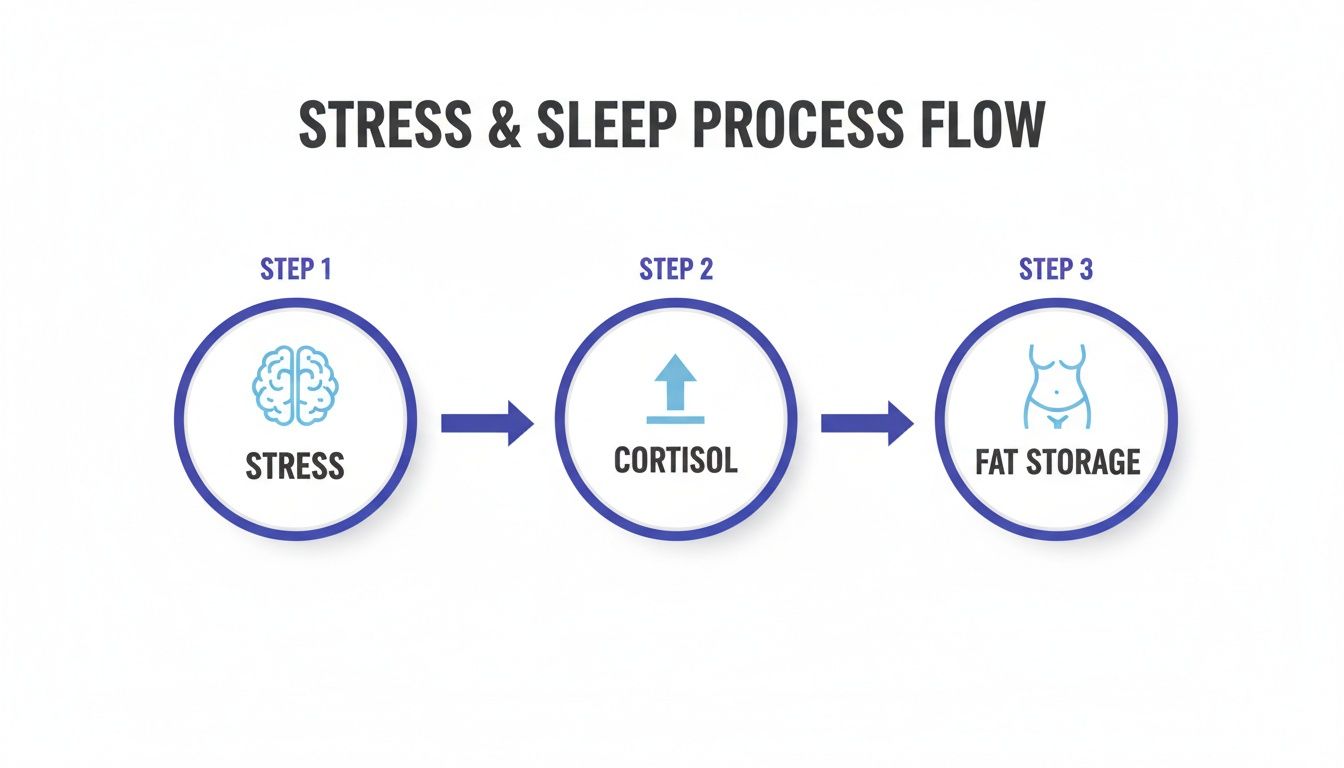
As you can see, unmanaged stress sets off a hormonal chain reaction that tells your body to hold onto fat, especially around your midsection.
When to Talk to Your Doctor
While lifestyle adjustments are incredibly effective, there are times when you might need more support. If you’ve been consistent with your efforts for several months but are still struggling, it's a good idea to chat with your doctor.
They can help rule out underlying medical conditions that can interfere with weight loss, like thyroid dysfunction or insulin resistance. This is also the right time to discuss whether hormone therapy (HT) might be a good option for you. While HT is primarily prescribed for symptoms like hot flashes and night sweats, the improved sleep and overall sense of well-being it provides can create a much better internal environment for managing your weight.
The reality is that weight management in midlife is a significant challenge, with rising rates of overweight and obesity among women aged 40-64. Structured programs have shown that a 3.8-4.5 kg loss is achievable in just 12 weeks. Even a modest 5-10% loss can drastically cut chronic disease risks. Modern tools like AI-powered apps that track everything from meals to mood can be a great way to stay on track. You can read more about these findings and the impact on midlife women's health.
Common Questions About Perimenopause and Weight
If you’re trying to lose weight during perimenopause, you’ve probably got a lot of questions. It's a confusing time, filled with myths and advice that just doesn't seem to work like it used to. Let's tackle some of the biggest concerns I hear from women every day.
Do I Have to Give Up Carbs and Sugar Completely?
I get this question all the time, and the answer is a resounding no! Thinking you have to eliminate carbs and sugar is one of the biggest myths out there. This all-or-nothing approach almost always backfires, leading to cravings, burnout, and quitting altogether.
The real key is being smarter about the types of carbs you eat and how you eat them.
Instead of cutting them out, focus on swapping refined carbs (white bread, pasta, pastries) for high-fiber, complex carbs. Think sweet potatoes, quinoa, berries, and whole-grain bread. These give you steady energy without the dramatic blood sugar roller coaster.
And here’s a pro tip: Never eat a carb alone. Always pair it with protein and healthy fat. Adding chicken to your pasta, a handful of nuts to your oatmeal, or avocado to your toast helps slow down digestion and keeps your blood sugar stable.
It’s all about mindful moderation. A black-and-white approach to food is rarely sustainable. Learning to enjoy treats intentionally, rather than making them forbidden, is a key skill for long-term success.
How Long Will It Take to See Results?
This is where you’ll need to practice patience. Weight loss during perimenopause is often slower than what you might have experienced in your 20s or 30s. That’s completely normal, and it’s due to the hormonal changes happening behind the scenes.
While some studies have shown noticeable weight loss within 12 weeks on a consistent plan, I encourage you to look beyond the number on the scale.
Focus on the "non-scale victories" that show up much sooner. Within the first 4-6 weeks, you’ll likely notice you have more energy, are sleeping better, or just feel more emotionally balanced. Your clothes might start to fit a little looser, which is a fantastic sign that your body composition is changing for the better.
These early wins are what keep you going when the scale is being stubborn. Celebrate them!
Should I Consider Hormone Replacement Therapy for Weight Loss?
This is a fantastic and important question. While Hormone Replacement Therapy (HRT) can be an incredible tool during this phase of life, it's not a direct weight loss solution. Think of it less as a magic pill and more as a way to clear the path.
The primary job of HRT is to relieve disruptive perimenopausal symptoms like hot flashes, night sweats, brain fog, and mood swings.
When those symptoms are managed, everything else gets easier. You sleep through the night, so you have the energy to work out. Your mood is more stable, so you're less likely to stress-eat. By creating a better internal environment, HRT removes some of the biggest roadblocks to weight loss.
Ultimately, HRT is a medical decision. It's essential to have a detailed conversation with your doctor to determine if it's a safe and appropriate option for your health plan.
What If I'm Doing Everything Right and Still Not Losing Weight?
First, know that this is an incredibly common and frustrating experience. If you feel like you're spinning your wheels, it’s time to play detective.
Get honest with your tracking. Are you truly measuring that pour of olive oil, or just eyeballing it? Are you accounting for the handful of nuts you grabbed on the way out the door? Those little things can add up and stall progress. Double-check your food and activity logs for a week with complete honesty.
Rule out underlying issues. This is the perfect time for a check-up. Ask your doctor to run a full panel to check for things that can interfere with weight loss, like a sluggish thyroid (hypothyroidism) or insulin resistance. These conditions are common in midlife and can make weight loss feel impossible without medical support.
Consider getting personalized support. Hitting a wall is often a sign that you have blind spots you can't see on your own. Working with a coach or joining a guided program can provide the outside perspective you need to identify what’s really going on and finally break through that plateau.
Navigating perimenopause can feel overwhelming, but you don't have to do it alone. Lila provides a personalized, AI-powered action plan to help you manage symptoms and achieve your health goals. With daily check-ins, 24/7 coaching, and comprehensive tracking, you get the support you need to feel like yourself again. Take control of your perimenopause journey by starting with Lila today.
Get Lila, your personal coach for perimenopause.
Built for women in their 40s. 24/7 coaching, in your pocket.