How to Reduce Hot Flashes Naturally and Regain Comfort
Learn how to reduce hot flashes naturally with proven diet, lifestyle, and stress-management strategies. Find lasting relief and regain control today.
 Michelle
If you’re looking to get a handle on hot flashes without jumping straight to medication, you’ve come to the right place. The good news is that you have a lot of power to reduce their frequency and intensity by making some smart changes to your diet, lifestyle, and even your breathing. It’s all about working with your body to manage the hormonal shifts and nervous system reactions that are at the root of these heat surges.
First, Why Are Hot Flashes Happening?
One minute you're fine, the next you feel an intense wave of heat creeping up your chest into your face, leaving you flushed and drenched in sweat. That's a hot flash, also known as a vasomotor symptom (VMS), and it's one of the most common signs of perimenopause and menopause.
This all starts when fluctuating estrogen levels throw off your brain's internal thermostat, the hypothalamus. It suddenly becomes hyper-sensitive to the slightest change in your core body temperature. When it mistakenly thinks you're overheating, it kicks off a dramatic cool-down sequence.
Your body's emergency response goes into overdrive:
Blood vessels near your skin rapidly dilate to get rid of heat, which is what causes that tell-tale red flush.
Your heart may start to race as it works harder to cool you down.
Sweat glands are activated, trying to bring your skin temperature back to normal.
Then, just as quickly as it came, the heat subsides, and you might even feel a wave of chills as your body overcorrects. This cycle can disrupt everything from a work presentation to a much-needed night of sleep. If you want to dig deeper into the science, our guide on why you might be having hot flashes breaks it all down.
Just How Common Are Hot Flashes?
Experiencing hot flashes is practically a universal part of the menopausal transition. Up to 85% of menopausal women worldwide deal with them. With about 6,000 women entering menopause every single day in the United States, that's a huge number of people looking for relief.
But here’s what I want you to focus on: natural, evidence-backed strategies can make a massive difference. For example, research has consistently shown a strong link between weight and hot flashes. Women who lose just 10% of their body weight can see their hot flashes decrease by as much as 50%. Why? Excess body fat can act as an insulator and also contribute to hormonal imbalances that fuel the fire. You can find more data on hot flash prevalence from DelveInsight.
Once you understand that a hot flash is a real physiological event—not just something in your head—you can see how natural approaches work. They aren’t just about symptom relief; they help address the underlying issues by supporting your hormones, calming your nervous system, and managing your personal triggers.
The Three Pillars of Natural Relief
I've found that the most successful approach to managing hot flashes naturally is a holistic one that focuses on three key areas. Think of it as a toolkit—each pillar gives you a different set of tools to address what’s triggering or worsening your symptoms.
Here are the foundations we'll build on:
Strategic Nutrition: This is about more than just "eating healthy." It means zeroing in on foods that help balance your hormones (like those with phytoestrogens) while steering clear of common triggers like spicy dishes, alcohol, and caffeine.
Simple Lifestyle Shifts: Small, consistent changes can have a huge impact. Think moderate daily exercise, dressing in breathable layers, and keeping your bedroom cool to help your body better regulate its own temperature.
Mind-Body Techniques: These are your secret weapons for calming an overactive nervous system. Practices like paced breathing and stress management can help you stop a hot flash in its tracks or reduce its intensity by taming that "fight-or-flight" response.
By weaving these strategies into your daily life, you start to create an internal environment that’s far less reactive to hormonal ups and downs. This guide will give you actionable steps in each of these areas, so you can build a personalized plan to cool things down and feel more like yourself again.
Using Strategic Nutrition to Cool Your System
What you put on your plate is one of the most powerful tools you have for managing hot flashes. Think of your diet as a way to work with your body, giving it the right resources to help stabilize hormones and calm that internal thermostat that’s gone haywire.
Certain foods are packed with plant-based compounds called phytoestrogens, which can gently mimic estrogen in the body. When your own estrogen levels are on a rollercoaster during perimenopause, these foods can provide a subtle balancing effect, often helping to dial down the frequency and intensity of hot flashes.
This diagram breaks down what's actually happening during a hot flash—it’s not just you. It's a physiological response to hormonal shifts.
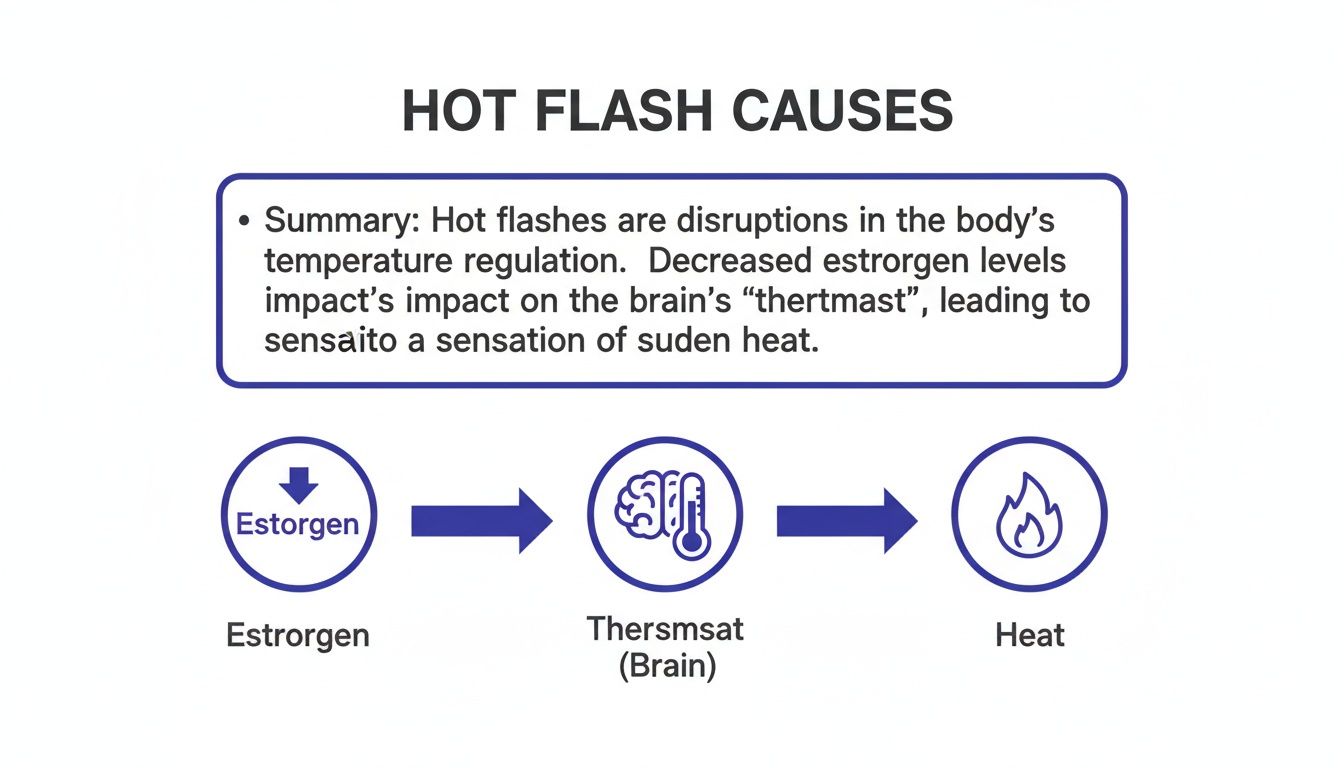
As you can see, dropping estrogen levels make your brain's "thermostat" (the hypothalamus) far more sensitive. It can mistakenly think you’re overheating, triggering a full-body alarm to cool you down—fast. Understanding this process is the first step in using nutrition to your advantage.
Embrace Hormone-Balancing Foods
You don't need a massive diet overhaul to see a difference. Small, consistent additions of phytoestrogen-rich foods can be surprisingly effective. Studies confirm this isn't just wishful thinking. With hot flashes affecting 52.7% of women globally, diet is a proven first line of defense.
For example, women following a Mediterranean diet saw a 28% reduction in vasomotor symptoms, and some meta-reviews found that red clover tea—a potent phytoestrogen source—cut hot flash frequency by an incredible 49%. These are big numbers, especially when you consider that in the US alone, 80% of women in menopause experience hot flashes.
To get started, try stocking your kitchen with some of these powerhouse foods. The table below offers simple, practical ways to bring more of them into your daily routine.
Phytoestrogen Power Foods for Your Pantry
Here is a simple guide to common foods rich in phytoestrogens, including easy serving ideas to help you start balancing your hormones today.
Food Source | Phytoestrogen Type | Simple Serving Suggestion |
|---|---|---|
Flaxseeds | Lignans | Add 1-2 tbsp of ground flax to your morning smoothie or oatmeal. |
Soy (Organic) | Isoflavones | Snack on edamame, or use firm tofu in a stir-fry. |
Chickpeas/Garbanzos | Isoflavones | Enjoy a scoop of hummus with veggie sticks, or add to a salad. |
Lentils | Coumestans | Make a hearty lentil soup or a cold lentil salad with feta. |
Dried Apricots | Lignans & Isoflavones | Chop and add to yogurt or trail mix for a naturally sweet boost. |
Making these foods a regular part of your meals gives your body a consistent, gentle supply of plant-based estrogens to help smooth out the hormonal ups and downs.
Pinpoint and Reduce Your Triggers
On the flip side, just as some foods can help, others can make things worse. These "trigger" foods can spark a hot flash out of nowhere or intensify one that’s already brewing.
Key Insight: A hot flash trigger is anything that raises your core body temperature or stimulates your nervous system. This tricks your already sensitive hypothalamus into thinking you’re overheating.
Becoming a bit of a detective about your own triggers is crucial. While they vary from person to person, some common culprits include:
Spicy Foods: That satisfying heat from chili peppers comes from capsaicin, which directly activates heat receptors in your body.
Caffeine: Your morning coffee can give your central nervous system a jolt, which for some women is enough to trigger a flash.
Alcohol: A glass of wine might feel relaxing, but alcohol widens blood vessels (vasodilation), which can bring on a sudden feeling of warmth.
High-Sugar Foods: A sugary snack causes a spike and then a crash in blood sugar, and this instability can sometimes be enough to set off a hormonal symptom like a hot flash.
The best way to figure out your personal triggers is to keep a simple food and symptom journal for a week or two. Just jot down what you eat and when hot flashes strike. You’ll likely start to see patterns emerge, empowering you to make smart swaps. For more ideas on what to add to your plate, check out our guide on the top 9 foods that fight hot flashes.
Quick Lifestyle Wins for Staying Cool
While changing your diet is a fantastic long-term strategy, you need relief now. The good news is that some of the most effective ways to manage hot flashes are simple, practical habits you can start today to feel more in control and, well, less hot.
Think of these as your go-to toolkit for cooling down in the moment and building up your body’s resilience to those sudden heat surges.
Engineer a Cooler Environment Around You
One of the easiest wins is to simply stay cool. This isn't about overhauling your home, but about making small, clever adjustments that can head off a full-blown hot flash before it takes over. Being prepared is half the battle.
Here are a few things I always recommend:
Dress in Layers: This is non-negotiable. Stick to natural, breathable fabrics like cotton, linen, or bamboo. A simple t-shirt with a cardigan or an open-front shirt means you can shed a layer instantly at the first sign of warmth, giving you immediate control.
Become a Fan of Fans: Seriously, don’t underestimate the power of moving air. Keep a small, portable fan in your purse or on your desk. At home, place fans in the rooms you use most. That gentle breeze can feel like a lifesaver.
Make Cold Your Best Friend: Stash a gel ice pack in the freezer or a cooling facial mist in the fridge. When you feel a flash coming on, apply something cold to your pulse points—the inside of your wrists or the back of your neck. It cools your blood down quickly and provides instant relief.
These little tricks help you get ahead of a hot flash, often stopping it from escalating into a sweat-drenched ordeal.
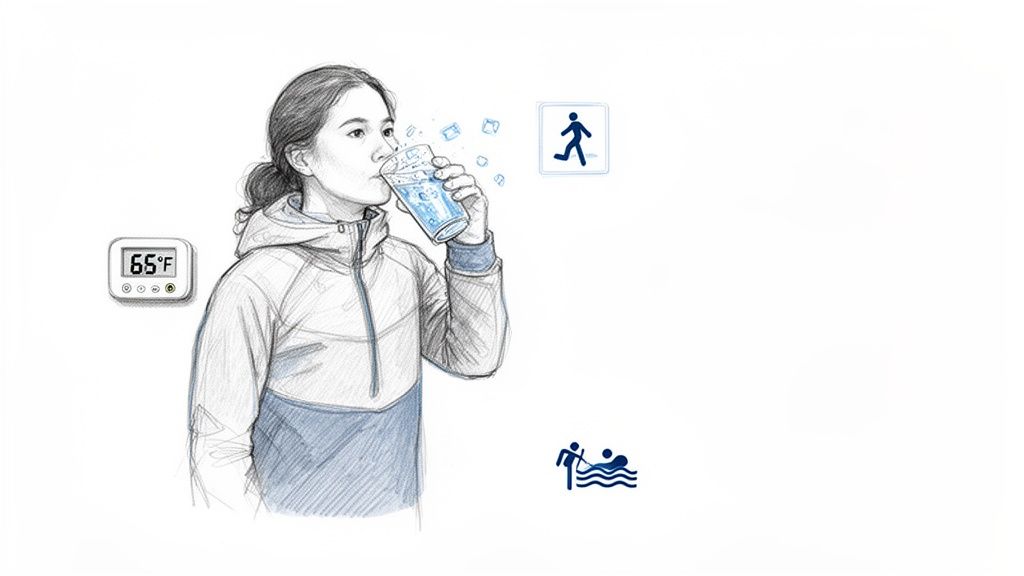
In-the-Moment Trick: The second you feel that first tell-tale warmth spreading across your chest, take a long, slow sip of ice water. I've found this simple act can sometimes be enough to trick your internal thermostat (the hypothalamus) into backing down, stopping the heatwave in its tracks.
Create a Better Sleep Zone
Night sweats are just hot flashes with terrible timing, and they can absolutely ruin your sleep. A few small changes to your bedroom can make a massive difference, helping you stay asleep and wake up feeling human again.
Your goal is to create a sleep environment that stays consistently cool all night long.
Drop the Temperature Try to keep your bedroom between 60-67°F (15-19°C). A cool room is probably the single most effective tool against night sweats. If your partner runs cold, a small bedside fan aimed just at your side of the bed is a great compromise.
Rethink Your Bedding
Moisture-Wicking Sheets: It's time to invest in sheets made from materials like bamboo, Tencel, or other performance fabrics specifically designed to pull moisture away from your skin.
Use Lighter Layers: Ditch the single heavy comforter. Instead, use several lighter blankets that you can easily peel off one by one if you start to feel warm.
Try a Cooling Pillow: Many modern pillows are made with cooling gel inserts or breathable foam that helps pull heat away from your head and neck, which can make a surprising difference.
Move Your Body—But Not Too Much
Consistent, moderate exercise is a game-changer for managing hot flashes. It helps your body get better at regulating its own temperature, lowers stress, and helps you maintain a healthy weight—all of which can lead to fewer, less intense episodes.
This isn’t about training for a marathon. In fact, pushing yourself too hard can actually trigger a hot flash for some people. The key here is consistency, not intensity.
Aim for about 30 minutes of moderate activity most days of the week. Things like a brisk walk, a swim, gentle yoga, or a bike ride are perfect. Exercise helps calm your nervous system, making it less likely to overreact to the hormonal shifts that are causing the flashes in the first place.
Beyond what you eat and how you move, there are two more powerful tools for managing hot flashes: your own mind and some well-researched herbal allies. These strategies work by soothing an overactive nervous system and using plant-based support to help your body better navigate its hormonal shifts. Think of them as another layer of relief you can add to your routine.
Taming the Heat With Your Breath
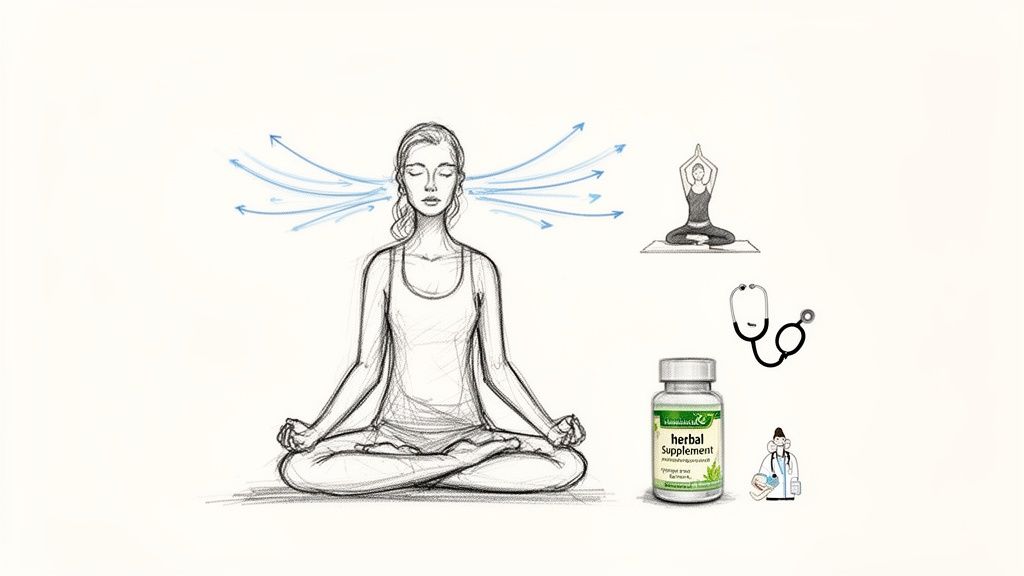
When a hot flash ignites, your body’s “fight-or-flight” response kicks in, which just pours fuel on the fire, worsening the heat, flushing, and anxiety. Your breath is the quickest way to break that cycle. The technique is called paced breathing, and it's all about intentionally slowing down your breathing to send a powerful "all clear" signal to your brain.
The moment you feel that familiar warmth creeping in, try this:
Breathe in slowly and gently through your nose for a count of four.
Then, breathe out even more slowly through your mouth for a count of six.
Try to focus on the feeling of the cooler air coming in and the warmer air going out.
Keep this rhythm going for at least a minute, or until you feel the intensity start to fade.
This is more than just a distraction. It directly activates your parasympathetic nervous system—the "rest and digest" side of the coin. Doing so helps lower your heart rate, dials down that panicky feeling, and gives you back a sense of control right when you need it most.
The Power of Mindfulness and Stress Reduction
It’s no secret that stress is a major trigger for hot flashes. If you're running on a high-stress baseline, your internal thermostat is already on high alert, making it much easier to overreact. This is where a daily mindfulness practice can make a huge difference.
Mindfulness doesn't have to mean an hour of silent meditation. It can be as simple as taking two minutes to really feel your feet on the floor or pay attention to the warm water on your hands while doing the dishes. Incorporating calming practices like aromatherapy for stress relief can also help quiet a frazzled nervous system and potentially reduce how often hot flashes strike.
The real magic of mindfulness is that you train your brain to notice a sensation—like that rising wave of heat—without reacting to it with panic. This little bit of emotional distance can make a hot flash feel significantly less disruptive.
Considering Well-Researched Herbal Allies
While lifestyle tweaks are the foundation, certain herbal supplements have shown real promise in supporting women through menopause. They offer a way to address symptoms from the inside out, but it's essential to approach them with both knowledge and caution.
And with 75% of women around the world dealing with hot flashes, having effective non-hormonal options is more important than ever. The research is quite encouraging. One study found that black cohosh, a traditional remedy, helped reduce hot flashes by 26% over a 12-week period. In another, women who practiced daily mindfulness meditation saw their symptom severity drop by up to 40% in just eight weeks.
Two herbs are frequently discussed for hot flash relief:
Black Cohosh: This is probably one of the most-studied herbs for menopausal symptoms. It’s thought to work on the brain's temperature-regulating pathways. Many women I've worked with find it helps take the edge off both the frequency and intensity of their hot flashes.
Evening Primrose Oil: This oil is rich in an omega-6 fatty acid called gamma-linolenic acid (GLA). It's often recommended for cyclical breast pain, but some women also find it helps with night sweats. The scientific evidence is a bit mixed, but anecdotally, many report feeling a difference.
A Crucial Word on Supplement Safety
Please remember, "natural" doesn't automatically mean "safe." Herbal supplements are powerful substances that can interact with medications or cause problems for people with certain health conditions.
You must talk to your doctor or a qualified healthcare provider before starting any new supplement.
They need to review your health history and medication list to make sure something like black cohosh is appropriate for you, especially if you have a history of liver problems or hormone-sensitive cancers. This conversation isn't just a suggestion—it's a critical safety step to ensure you’re choosing remedies that will truly help, not harm.
Getting Personal: How to Pinpoint Your Unique Hot Flash Triggers
If there's one thing I've learned after years of helping women navigate menopause, it's that there is no magic bullet for hot flashes. A strategy that works wonders for your friend might do absolutely nothing for you. This is exactly why a one-size-fits-all approach so often falls flat.
The real key to finding relief is to become a bit of a detective for your own body. And in this investigation, smart tracking is your most powerful tool.
▶ PlayBy keeping a simple log, you can start to connect the dots between what you do, eat, and feel each day and when those waves of heat strike. It’s how we move from guessing what might be causing them to knowing for sure. This process turns vague advice into powerful, personal insights about what truly helps—and what hurts.
What Should You Actually Be Tracking?
To get the full picture, you need to look beyond just the hot flash itself. Think of it as gathering clues. The more data points you collect, the clearer the patterns become.
Here’s what I recommend my clients focus on:
The Hot Flash Itself: Don't just tick a box. When did it happen? How long did it last? On a scale of 1-5, how intense was it? Jot down any other feelings that came with it, like a racing heart or a sudden sense of anxiety.
Food and Drink: This is a big one. Write down your meals, snacks, and beverages. Be brutally honest! Pay close attention to common culprits like caffeine, alcohol, super sugary treats, and spicy foods. You might be surprised to find your mid-afternoon coffee is the real troublemaker.
Your Day-to-Day Activities: Note your exercise—what you did and for how long. Also, make a quick note of any major stressors. A high-stakes presentation at work or a tense family argument can absolutely be a trigger.
Sleep (Or Lack Thereof): How was your night? Log when you went to bed, when you woke up, and how many times night sweats made an appearance. A bad night's sleep can tank your resilience and make you more vulnerable to hot flashes the next day.
This might sound like a chore, but it doesn't have to be. To keep it simple, you could look into a dedicated menopause symptom tracker app that puts all this in one place, making it much easier to spot your patterns.
Connecting the Dots: From Data to Relief
After a week or two of consistent tracking, it's time to review your notes. Look for the patterns. Do your hot flashes reliably show up an hour after that second glass of wine? Are they less intense on the days you get in a 30-minute walk?
For example, you might look at your log and have a lightbulb moment: on the three nights you had ice cream after dinner, you woke up drenched in sweat. That's incredibly powerful information. It gives you a clear, simple experiment to run—try swapping the ice cream for a handful of berries and see what happens.
My biggest piece of advice: This is about information, not judgment. The goal is to identify your personal triggers and, just as importantly, your "super-soothers"—the things that consistently bring you relief.
This is how you fine-tune your approach. Maybe you find that a 15-minute morning meditation session does more for your hot flashes than cutting out spicy food ever did. Without tracking, you’d just be guessing.
From Tracking to Lasting Habits
Ultimately, the point of tracking is to build new habits that you can stick with for the long haul. Seeing the proof in your own data is incredibly motivating.
When you can look back and see that your daily hot flashes have dropped by 30% since you started that simple paced-breathing exercise, it’s a whole lot easier to keep doing it.
This evidence-based approach helps you build your own personal playbook for managing hot flashes naturally. You're no longer just trying random things and hoping for the best. Instead, you're making smart, targeted changes based on what your body is telling you. That feeling of control is empowering, and it’s often the first real step toward feeling like yourself again.
Common Questions About Natural Hot Flash Relief
When you start exploring natural ways to manage hot flashes, it’s normal for a million questions to pop up. Am I doing this right? When will I feel better? Let’s walk through some of the most common concerns I hear so you can feel more confident about your next steps.
How Long Until Natural Remedies Reduce Hot Flashes?
This is probably the number one question women ask, and the honest answer is: it depends. The timeline for relief really hinges on which strategies you're trying.
Right Now: Some things give you instant, in-the-moment relief. Sipping ice water, pointing a fan at your face, or wearing layers you can shed quickly can stop a hot flash in its tracks. The relief is temporary, but it helps.
A Few Weeks: When you start making changes to your diet, like adding phytoestrogen-rich foods or cutting out triggers like spicy meals, give your body some time to adjust. Most women start to notice a difference within 2 to 4 weeks. Using one of the best free food diary apps can be a game-changer for spotting which foods help and which ones hurt.
One to Three Months: Herbal supplements are often a long game. Real-world results and clinical studies show it can take anywhere from 4 to 12 weeks of consistent daily use to feel the full effects of herbs like black cohosh.
Mind-body work has a two-part benefit. Paced breathing can calm you during a hot flash, while the long-term stress reduction from a daily practice can take a few weeks to lower the overall number of hot flashes you experience.
Can I Combine Different Natural Strategies?
Yes, and you absolutely should! I've found that the women who get the best results are the ones who layer their strategies. Think of it as creating a personalized support system for your body.
For example, you could combine a nutritional change (adding ground flaxseeds to your morning smoothie) with a lifestyle tweak (a brisk 30-minute walk every day) and a mind-body practice (10 minutes of guided breathing before bed). This approach works on your hormonal balance, nervous system, and body temperature regulation all at once.
The trick is to introduce new things one by one. That way, you can clearly see what moves the needle for you and build a toolkit that’s perfectly customized to your body.
Key Takeaway: Layering strategies is the most effective path to relief. Your ideal plan might be a unique combination of diet, movement, and stress management that provides more comprehensive support than any single remedy could alone.
Are Herbal Supplements for Hot Flashes Safe?
Just because something is labeled "natural" doesn't mean it's automatically risk-free. These are powerful plant compounds, and they can have very real effects on your body.
It’s crucial to know that some herbs can interfere with prescription medications, like blood thinners or antidepressants. Others aren't a good fit for people with certain health conditions, such as liver disease or a history of hormone-sensitive cancers. For example, black cohosh is generally not recommended if you have any liver issues.
Always talk to your healthcare provider before starting any new supplement. This isn't just a suggestion; it’s a critical safety check to make sure what you want to try is genuinely safe for you.
When Should I See a Doctor?
Natural strategies are a fantastic place to start and bring a lot of relief to many women. But it's just as important to recognize when you need to bring in a medical professional.
Make an appointment with your doctor if:
Your hot flashes are so bad they’re ruining your sleep or making it hard to get through your day.
They come with other strange symptoms like heart palpitations, sudden dizziness, or unexplained weight loss.
You’ve given natural approaches a solid, consistent try and they just aren’t cutting it.
Your doctor can help rule out other medical issues and talk to you about the full spectrum of treatments, including non-hormonal medications or Menopause Hormone Therapy (MHT). Together, you can create a plan that truly helps you feel like yourself again.
Ready to turn these insights into a personalized action plan? Lila combines smart tracking with an AI-powered coach to help you identify your unique triggers and find what works for you. Start feeling better, faster, and regain control of your well-being. Explore Lila today.
Get Lila, your personal coach for perimenopause.
Built for women in their 40s. 24/7 coaching, in your pocket.